Reported by Simon Daniel Yusuph l Journalist at Weng Global
ABUJA, Nigeria – With Nigeria’s 2027 presidential election scheduled for January 16, 2027, the leading candidates have increasingly set out competing proposals on the economy, fuel prices, security, education, healthcare, infrastructure, jobs and governance.
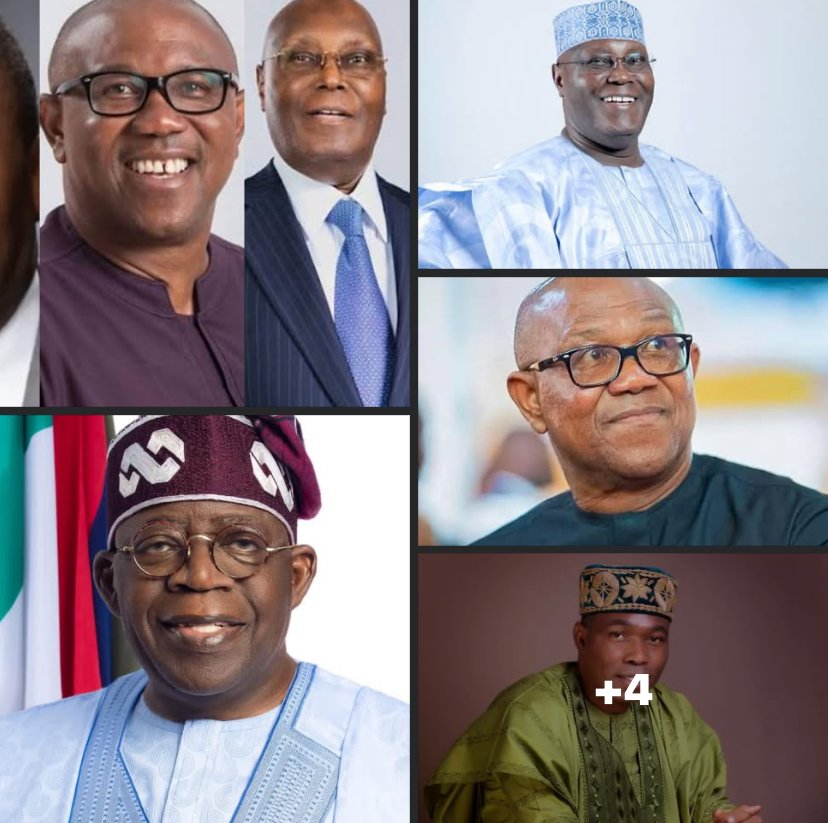
The Independent National Electoral Commission has published the final list of 18 presidential candidates and their running mates for the election, formally establishing the field for the presidential contest. Among the candidates are President Bola Ahmed Tinubu of the All Progressives Congress, former Vice President Atiku Abubakar of the African Democratic Congress and former Anambra State Governor Peter Obi of the Nigeria Democratic Congress.
The policy debate has become particularly focused on the direction of Nigeria’s economy after more than three years of major reforms under Tinubu, including the removal of petrol subsidies and changes to the foreign-exchange regime.
While Tinubu is seeking continuity with his administration’s reform programme, Atiku has proposed changes including a form of fuel subsidy, while Obi has campaigned on shifting Nigeria from consumption towards production and expanding investment in human capital.
Other candidates have also presented proposals, but the three have generated substantial public discussion because of their national profiles and the scale of their policy positions.
Tinubu: Continue and Consolidate Economic Reforms
Tinubu’s 2027 message is centred largely on continuing the economic reforms introduced since he took office in May 2023.
At his May 2026 acceptance speech after securing the APC presidential nomination, Tinubu argued that his administration had laid the foundation for further economic expansion, industrialisation, energy security, infrastructure development, food sufficiency and democratic consolidation.
He has defended the removal of petrol subsidies and the government’s foreign-exchange reforms, arguing that the measures were necessary to address longstanding structural problems.
The President has also pointed to investments and policy initiatives in power, roads, rail, housing, agriculture, digital infrastructure and education.
Among the programmes highlighted by the administration is the Nigerian Education Loan Fund, which Tinubu said had provided more than 1.5 million students with access to higher education.
His administration has also promoted the CNG initiative as part of efforts to reduce transportation costs following the increase in petrol prices.
On security, Tinubu has pledged continued investment in the armed forces and other security agencies. In his June 2026 Democracy Day address, he said the government had approved the recruitment of more than 50,000 new police officers alongside additional military recruitment.
The administration has also continued to advocate decentralised policing, including the possibility of state police subject to constitutional and institutional safeguards.
Tinubu’s Economic Argument
The central argument of the Tinubu campaign is that Nigerians should continue with reforms rather than reverse them.
The President has said his administration inherited an economy affected by fiscal pressures, fuel subsidies, exchange-rate distortions, debt-servicing costs and infrastructure weaknesses.
He has pointed to higher government revenues, increased investment, domestic refining capacity, infrastructure construction and financial-sector developments as evidence of progress.
The government’s position is that the next phase should focus on ensuring that the benefits of reform become more visible in household incomes, employment, food production and living standards.
However, the administration itself has acknowledged that many Nigerians continue to face economic hardship.
That tension is likely to remain central to the 2027 campaign because the reform debate is not limited to macroeconomic indicators. It also concerns the effect of higher energy, transportation and food costs on households.
Reuters reported in September that rising global oil prices had pushed petrol prices sharply higher in Nigeria, renewing cost-of-living pressure ahead of the election.
Atiku: Restore a Form of Petrol Subsidy
Atiku’s economic message takes a different approach.
The former Vice President and ADC presidential candidate has made fuel prices and the consequences of subsidy removal major elements of his campaign.
In August, Atiku said he would restore petrol subsidy if elected, maintaining that Nigerians had not received sufficient benefits from the removal of the policy.
More recently, he has described his proposal as a production subsidy for locally refined petroleum products rather than a return to the previous import-dependent system.
The proposal has triggered a renewed debate over how government support for domestic refiners would work under Nigeria’s current petroleum-sector framework.
The Presidency has challenged Atiku to explain the legal, fiscal and practical basis of the proposal.
The State House cited Section 205 of the Petroleum Industry Act, which provides for market-based determination of wholesale and retail petroleum prices, while the Nigerian Midstream and Downstream Petroleum Regulatory Authority has said it does not ordinarily fix pump prices except under conditions provided by law.
Atiku has also argued that the government should reduce the burden of high energy and transportation costs on households, farmers and businesses.
Atiku’s Wider Priorities
Beyond fuel prices, Atiku has identified security, education, the economy and healthcare among his major priorities.
His campaign has also proposed measures aimed at stimulating small businesses and employment.
According to recent reporting on his campaign programme, Atiku has discussed a proposed N10 billion economic stimulus fund during the first 100 days of an administration, alongside measures addressing insecurity, housing and investment.
He has also pledged stronger action on insecurity, including recruitment, equipment, training and improved welfare for security personnel.
His campaign’s economic position is therefore built around changing aspects of the current reform direction rather than simply maintaining it.
A major unresolved question concerns the financing and implementation of the proposed subsidy arrangement and other spending commitments.
The APC Presidential Campaign Council has publicly asked Atiku to provide details on the legal, fiscal and operational framework of his proposal.
Obi: Production, Human Capital and a Different Approach to Subsidies
Peter Obi, the NDC presidential candidate, has placed production, investment, enterprise and human capital development at the centre of his campaign.
Obi formally launched his 2027 campaign in August and said Nigeria needed to reduce its dependence on imports by increasing domestic production and processing.
His campaign has repeatedly argued that economic growth should be built around agriculture, manufacturing, enterprise, skills and productive investment.
Obi has also highlighted education and healthcare as major areas of government responsibility.
In July, he said his priorities would include national unity, human capital development, education, healthcare and skills acquisition.
His campaign has also promoted infrastructure development and expanded electricity supply.
Recent reporting on his campaign commitments says he has proposed increasing electricity generation and distribution by at least 10,000 megawatts within four years and redirecting fiscal savings from subsidy removal towards agriculture and small businesses.
Obi’s Position on Fuel Subsidy
Obi’s position on petrol subsidies has developed into another major point of discussion in the 2027 campaign.
On September 29, he said he would introduce a transparent fuel subsidy regime if elected, with safeguards intended to ensure that any subsidy retained by his government directly benefits Nigerians.
He has criticised the previous subsidy system, arguing that corruption undermined its effectiveness.
His running mate, Rabiu Kwankwaso, also said in September that an NDC administration would introduce its own form of subsidy.
The proposal differs in presentation from Atiku’s approach but places the cost of fuel and government intervention in the petroleum market at the centre of the opposition debate.
Where the Candidates Differ on Fuel
Fuel pricing has emerged as one of the clearest policy dividing lines in the 2027 contest.
Tinubu’s administration removed the petrol subsidy in 2023 and has defended the decision as part of its broader economic reform programme.
Atiku has called for a return of subsidy in a different form, particularly through support for locally refined petroleum products.
Obi has also proposed a transparent subsidy framework, while maintaining that government must prevent the abuses associated with the previous system.
The disagreement goes beyond petrol prices.
It raises broader questions about how Nigeria should balance fiscal sustainability, consumer protection, domestic refining, transportation costs and investment in the petroleum industry.
Nigeria’s current petroleum framework is also significantly different from the environment that existed before the 2023 subsidy removal, making the practical design of any new intervention an important part of the debate.
Security Remains a Major Campaign Issue
Security is another major area where the presidential candidates have made commitments.
Tinubu has promised continued investment in the military, police, intelligence and surveillance capabilities.
His administration has also advocated decentralised policing and greater use of technology in security operations.
Atiku has promised stronger action against insecurity, including recruitment, equipment, training and welfare for security personnel.
Obi has made national security one of the core pillars of his campaign, alongside economic production and human capital development.
The security debate comes against a backdrop of continuing threats from terrorism, banditry, kidnapping and other forms of criminality in different parts of Nigeria.
For voters, the key policy questions include how the candidates intend to finance their security plans, how federal and state security institutions would coordinate, and what institutional reforms they would pursue.
Education and Human Capital
Education is another common feature of the competing programmes.
Tinubu has highlighted NELFUND, technical education, digital skills and other programmes aimed at expanding access to education and employment.
His administration has also said it wants to increase opportunities for young Nigerians through technology, entrepreneurship and skills development.
Obi has placed human capital development much closer to the centre of his proposed economic model, with emphasis on education, healthcare, scholarships, research and technical training.
Atiku has similarly identified education as one of his principal priorities.
The common emphasis reflects the scale of Nigeria’s youth population and the pressure on successive governments to improve access to quality education while connecting graduates and young workers to productive employment.
Jobs, Business and Economic Growth
The candidates also differ in how they propose to generate employment.
Tinubu’s administration is emphasising investment, infrastructure, digital businesses, agriculture, manufacturing, energy and private-sector expansion.
In September, the Presidency announced progress towards implementing a Digital Free Zones initiative designed to help Nigerian technology and service companies access international markets and create jobs from within Nigeria.
Obi’s programme places greater emphasis on production and enterprise, with the argument that Nigeria should manufacture and process more of what it consumes.
Atiku has proposed economic stimulus measures aimed at supporting small businesses and employment.
The debate therefore extends beyond the number of jobs promised. It also concerns whether employment will be created through government spending, private-sector investment, industrialisation, agriculture, technology or a combination of these approaches.
Infrastructure and Electricity
Electricity is another area where the campaigns have offered significant commitments.
Tinubu’s administration has pointed to ongoing investment in generation, transmission, metering and renewable energy.
The President said in his May 2026 acceptance speech that power generation had at times reached 6,000MW, while the government had supplied 2.5 million meters through the Presidential Metering Initiative.
He also said a N4 trillion bond programme had been established to address verified legacy debts in the power sector.
Obi has proposed a substantial expansion of electricity generation and distribution as part of his production-led economic strategy.
Atiku has also identified electricity and infrastructure as areas requiring stronger government intervention.
The challenge for any administration will be not only to increase generation but also to address transmission capacity, distribution losses, gas supply, metering, electricity pricing and the financial health of the sector.
The Wider 2027 Field
Although Tinubu, Atiku and Obi have attracted much of the attention surrounding the policy debate, they are not the only candidates in the election.
INEC’s final list contains 18 presidential candidates, including Oluseyi Makinde of the Allied Peoples Movement, Donald Duke of the Peoples Redemption Party, Omoyele Sowore of the African Action Congress, Adewole Adebayo of the Social Democratic Party and candidates of several other parties.
The presence of 18 candidates means Nigerians will have a broader range of political programmes to examine before voting.
However, detailed and widely documented policy proposals have not yet received equal public attention across all the campaigns.
That makes it important for candidates and parties to publish clear plans that explain their objectives, implementation mechanisms, funding sources and timelines.
The Questions Behind the Promises
The 2027 campaign is increasingly moving beyond broad political slogans towards questions about implementation.
A promise to reduce fuel prices, for example, raises questions about how the government would finance the intervention without creating unsustainable fiscal pressure.
A promise to increase electricity supply raises questions about generation, transmission, gas availability, distribution and investment.
Plans for new jobs raise questions about the sectors that would create them and how businesses would receive the infrastructure, finance and regulatory environment required to expand.
Similarly, security commitments require clear strategies for recruitment, equipment, intelligence, coordination and accountability.
These questions do not determine whether a proposal is desirable or undesirable. They are practical issues voters can examine when assessing the feasibility of competing programmes.
What Nigerians Should Watch Before 2027
As the election approaches, campaign promises are expected to become more detailed.
The most important developments to watch include the publication of full manifestos, detailed economic plans, financing proposals, sector-specific targets and implementation timelines.
The candidates will also face questions about how their proposed policies would interact with existing laws and institutions.
For Tinubu, the central issue is the continuation and consolidation of reforms already introduced.
For Atiku, the focus includes changing aspects of the current economic approach, particularly through intervention in the petroleum market and measures aimed at reducing hardship.
For Obi, the campaign is centred on production, human capital, enterprise, infrastructure and a proposed approach to targeted and transparent government intervention in fuel pricing.
The other candidates will also have opportunities to set out their own alternatives.
Ultimately, the 2027 presidential contest is developing around different policy approaches to many of the same problems: high living costs, insecurity, unemployment, weak infrastructure, energy constraints and pressure on public services.
The next stage of the campaign will be to determine how far those promises are accompanied by detailed plans showing how they would be financed, implemented and measured.
Weng Global – stories beyond borders
Sources:
Independent National Electoral Commission
The State House, Abuja
Punch Newspapers
Premium Times
Channels Television
The Guardian Nigeria
Voice of Nigeria
Reuters