Reported by Simon yusuph, | Journalist at wengglobal
Nigeria’s Federal Government has reaffirmed its commitment to completing the long-awaited Digital Switch Over (DSO) project, announcing an ambitious plan to provide 40 million households across the country with access to 100 free-to-air digital television channels. The renewed initiative is expected to significantly expand access to quality broadcasting, promote digital inclusion, create employment opportunities, and stimulate growth within Nigeria’s creative and technology sectors.
The announcement marks a fresh push to revive one of Nigeria’s most significant digital broadcasting reforms after years of implementation delays. Authorities say the renewed rollout will ensure millions of Nigerians enjoy improved television services without recurring subscription fees while aligning the country’s broadcasting infrastructure with international digital standards.
The Digital Switch Over programme replaces analogue television broadcasting with digital transmission technology, offering viewers clearer picture quality, better sound, increased channel capacity, and more efficient use of broadcast spectrum. It also creates room for new digital services, including interactive broadcasting and expanded content distribution.
Speaking on the government’s renewed commitment, officials said the project forms part of the broader digital economy agenda aimed at improving nationwide access to information, education, entertainment, and public service broadcasting.
The Federal Government noted that once fully implemented, the DSO programme will deliver approximately 100 free television channels to homes equipped with compatible digital set-top boxes or integrated digital television sets. The channels are expected to include news, sports, education, entertainment, children’s programming, religious content, cultural programming, and regional broadcasts.
For millions of Nigerians, particularly those in underserved and rural communities, the initiative promises broader access to information and educational programming without the financial burden associated with pay-TV subscriptions. Government officials believe the project will bridge existing information gaps while strengthening national cohesion through wider access to local content.
Industry experts have long argued that digital broadcasting provides far greater efficiency than analogue transmission. A single digital frequency can carry multiple television channels, enabling broadcasters to expand programming while reducing transmission costs over time.
The renewed implementation also carries substantial economic significance. Beyond improving broadcasting services, the DSO project is expected to generate employment opportunities across several sectors, including manufacturing, electronics, engineering, broadcasting, software development, logistics, installation services, and digital content production.
Analysts say increased channel availability will stimulate demand for locally produced films, documentaries, educational programmes, music, sports coverage, and cultural content. This expansion could further strengthen Nigeria’s globally recognised creative industry, particularly Nollywood, while creating new revenue streams for independent producers and media entrepreneurs.
The initiative equally supports the government’s efforts to deepen the country’s digital economy by encouraging investment in communications infrastructure and modern broadcasting technologies.
Nigeria’s transition to digital broadcasting has experienced multiple setbacks since the country committed to the International Telecommunication Union (ITU)’s global digital migration framework. Although pilot implementations were launched in several states over the past decade, nationwide rollout has progressed more slowly than initially anticipated because of funding challenges, infrastructure gaps, regulatory complexities, and logistical constraints.
The latest announcement signals renewed political commitment to completing the migration and expanding digital broadcasting coverage across all regions of the federation.
Broadcast industry stakeholders have consistently maintained that completing the Digital Switch Over remains critical for modernising Nigeria’s media ecosystem. They argue that full implementation will improve broadcast quality, increase competition, attract private investment, and unlock the economic value of the digital spectrum.
The migration also enables more efficient utilisation of radio frequencies. Spectrum freed through digital broadcasting can be reassigned to telecommunications services, including broadband internet expansion, thereby supporting wider digital connectivity and economic development.
Media experts further note that digital broadcasting provides broadcasters with opportunities to improve audience engagement through enhanced programme guides, interactive features, multilingual broadcasting, emergency information services, and specialised niche channels.
The Federal Government has repeatedly described the DSO programme as a strategic national infrastructure project capable of transforming both the broadcasting industry and Nigeria’s wider digital economy.
For households, the transition means improved viewing experiences characterised by sharper images, improved sound quality, reduced signal interference, and access to significantly more television content than analogue broadcasting can accommodate.
Education stakeholders have also welcomed the renewed project, noting that wider access to educational television programming can complement classroom learning, particularly in remote communities where educational resources remain limited.
Similarly, health agencies and emergency management institutions may benefit from expanded broadcasting capacity to disseminate public information campaigns, disease prevention messages, disaster alerts, and other essential government communications to larger audiences nationwide.
Despite renewed optimism, experts caution that successful implementation will require sustained funding, transparent procurement processes, reliable infrastructure deployment, and extensive public awareness campaigns to educate citizens about digital migration requirements.
Consumer education remains an essential component of the programme. Millions of households will require digital-compatible television sets or certified set-top boxes capable of receiving digital terrestrial television signals. Industry observers stress that affordability and widespread availability of certified equipment will be critical to achieving the government’s ambitious target of reaching 40 million homes.
Broadcasters have equally called for supportive regulatory policies to ensure the digital ecosystem remains commercially sustainable while promoting fair competition among content providers.
Nigeria’s creative economy stands to benefit significantly from increased broadcasting capacity. More television channels will likely create stronger demand for indigenous programming, encouraging investments in local storytelling, journalism, educational broadcasting, children’s programming, animation, documentaries, and cultural productions that reflect Nigeria’s diversity.
For advertisers, digital broadcasting presents improved audience segmentation opportunities, enabling businesses to reach more targeted consumer groups through specialised channels.
The broader African broadcasting industry is also closely monitoring Nigeria’s digital migration progress. As Africa’s largest economy and one of the continent’s biggest media markets, Nigeria’s successful DSO implementation could influence digital broadcasting strategies across neighbouring countries pursuing similar transitions.
The renewed commitment also aligns with broader continental efforts to accelerate digital transformation under the African Union’s digital development agenda, promoting innovation, connectivity, and inclusive access to information technologies.
While implementation timelines remain subject to operational realities, the Federal Government’s latest commitment represents one of the strongest indications in recent years that Nigeria intends to complete its migration from analogue to digital terrestrial broadcasting.
If successfully executed, the initiative could reshape the country’s broadcasting landscape, expand media accessibility for millions of citizens, strengthen Nigeria’s creative economy, improve information dissemination, and position the nation more competitively within Africa’s rapidly evolving digital communications sector.
For millions of households awaiting affordable, high-quality television services, the renewed Digital Switch Over programme offers renewed hope that universal access to modern digital broadcasting may finally become a nationwide reality.
Sources:
- Federal Ministry of Information and National Orientation
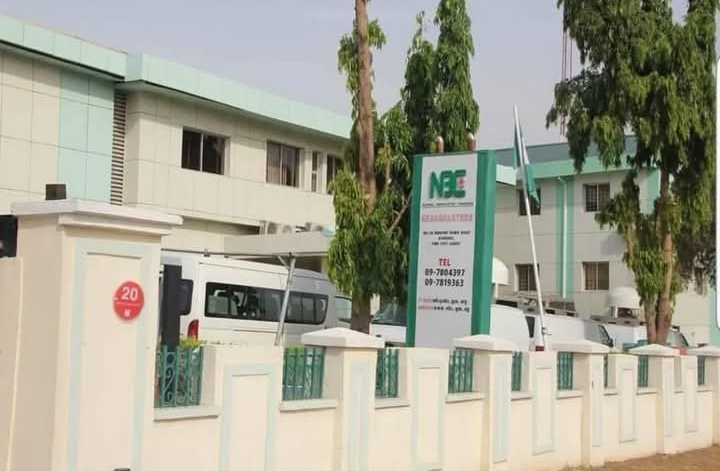
- National Broadcasting Commission (NBC)
- News Agency of Nigeria (NAN)
- Premium Times
- The Guardian Nigeria
- Channels Television
- Punch Newspapers
- International Telecommunication Union (ITU)