Reported by Simon yusuph,| Journalist at wengglobal
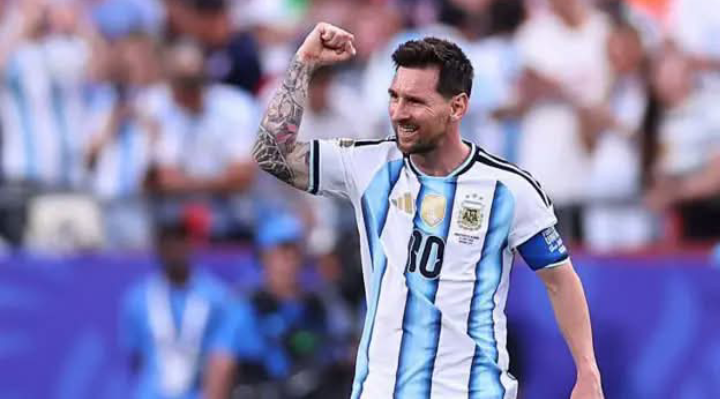
Lionel Messi has once again demonstrated why he remains one of football’s greatest icons, climbing to the top of the successful dribblers’ chart at the 2026 FIFA World Cup. The Argentine captain has overtaken Spain’s teenage sensation Lamine Yamal, reaffirming his enduring influence on the global stage despite entering the latter stages of his remarkable career.
Messi’s latest milestone has become one of the standout statistical highlights of the tournament, underlining that technical brilliance, vision, and intelligence continue to define his game. While goals often dominate headlines, dribbling remains one of football’s purest expressions of creativity and individual skill. Messi’s ability to beat defenders consistently has long been one of the defining features of his career, and the 2026 FIFA World Cup has provided another stage for that artistry.
According to official tournament statistics, Messi now leads all players in successful dribbles, moving ahead of Barcelona and Spain winger Lamine Yamal, whose exciting performances have captivated football fans throughout the competition.
The development has reignited debates among football analysts about longevity, experience, and the ability of elite players to continue performing at the highest level even as younger stars emerge.
Messi’s Enduring Legacy
For nearly two decades, Lionel Messi has set standards that few footballers have managed to match. His close ball control, balance, acceleration, and exceptional decision-making have made him one of the most effective dribblers in football history.
Although much attention entering the 2026 FIFA World Cup focused on emerging stars such as Lamine Yamal, Jamal Musiala, and Jude Bellingham, Messi has quietly reminded the football world that experience remains invaluable.
Throughout Argentina’s campaign, Messi has consistently broken defensive lines, created goal-scoring opportunities, and maintained an impressive success rate in one-on-one situations.
Unlike many attacking players who rely primarily on pace, Messi’s dribbling is built on anticipation, rapid changes of direction, and extraordinary technical precision. Those qualities have allowed him to remain highly effective against younger and physically stronger opponents.
Lamine Yamal Continues to Shine
Despite surrendering the top spot in successful dribbles, Lamine Yamal has enjoyed a breakthrough World Cup.
The Spanish teenager has emerged as one of the tournament’s brightest talents, impressing fans and pundits alike with fearless attacking football, creativity, and maturity beyond his years.
Yamal’s performances have strengthened his reputation as one of Europe’s most exciting young footballers and a cornerstone of Spain’s future.
His willingness to challenge defenders repeatedly has made him one of the tournament’s most entertaining players, earning widespread praise from coaches, former professionals, and supporters worldwide.
Although Messi now leads the dribbling rankings, Yamal’s presence near the top illustrates the transition currently taking place in world football, where established legends continue to compete alongside a new generation of elite talents.
Full List of the Tournament’s Leading Dribblers
Based on the latest FIFA World Cup statistics, the tournament’s top successful dribblers include:
- Lionel Messi (Argentina)
- Lamine Yamal (Spain)
- Jamal Musiala (Germany)
- Désiré Doué (France)
- Michael Olise (France)
- Khvicha Kvaratskhelia (Georgia)
- Vinícius Júnior (Brazil)
- Pedro Neto (Portugal)
- Jeremy Doku (Belgium)
- Rodrygo (Brazil)
The rankings continue to evolve as teams advance deeper into the competition, meaning further changes remain possible before the tournament concludes.
Dribbling: More Than Entertainment
Modern football analytics increasingly recognize successful dribbles as an important indicator of attacking effectiveness.
Players capable of beating defenders create numerical advantages, stretch defensive structures, generate scoring opportunities, and force tactical adjustments from opponents.
While goals and assists remain the most celebrated statistics, successful dribbling often serves as the foundation for dangerous attacking moves.
Messi’s continued dominance in this area demonstrates that technical excellence remains one of football’s most valuable assets.
Football analysts note that elite dribblers frequently draw multiple defenders toward them, creating space for teammates and increasing offensive efficiency.
This influence extends beyond individual statistics, shaping the overall attacking strategy of successful teams.
Experience Meets Youth
One of the defining narratives of the 2026 FIFA World Cup has been the clash between football’s established superstars and its emerging generation.
Messi represents arguably the greatest player of his era, while Lamine Yamal symbolizes football’s future.
The coexistence of both players near the top of the dribbling rankings reflects the tournament’s broader story: a passing of the torch that remains incomplete.
Veteran players continue to influence matches through intelligence and technical mastery, while younger stars bring speed, fearlessness, and innovation.
For football supporters, the opportunity to witness both generations competing simultaneously has become one of the World Cup’s greatest attractions.
Statistical Excellence Beyond Goals
Although goals frequently determine match outcomes, tournament statistics increasingly reveal the broader contributions made by elite players.
Messi’s leadership in successful dribbles highlights his continued ability to influence matches beyond scoring.
His movement between defensive lines, ability to retain possession under pressure, and chance creation remain central to Argentina’s tactical identity.
Similarly, Yamal’s statistics reflect his growing importance to Spain’s attacking system.
As football continues embracing advanced performance metrics, dribbling has become one of several indicators used to assess player impact, alongside expected goals (xG), progressive carries, key passes, and successful take-ons.
Global Reaction
Football supporters across social media platforms have praised Messi’s latest achievement, describing it as another example of his extraordinary consistency.
Many observers noted that maintaining such technical standards against elite international defenders underscores his enduring quality.
At the same time, fans have celebrated Lamine Yamal’s remarkable tournament, viewing his performances as confirmation that Spain possesses one of football’s brightest emerging talents.
Pundits have also highlighted the symbolic nature of the rankings, where arguably football’s greatest player shares statistical prominence with one of its youngest global stars.
Looking Ahead
With the 2026 FIFA World Cup entering its decisive stages, both Messi and Yamal are expected to remain central figures for their respective national teams.
Further standout performances could reshape individual statistical rankings, but Messi’s return to the summit of successful dribbles reinforces his status as one of football’s finest technicians.
Whether measured by trophies, goals, assists, or individual brilliance, Lionel Messi continues to demonstrate why his influence on world football remains unmatched.
For fans across Africa and beyond, the tournament continues to showcase the beauty of football through moments of creativity, courage, and exceptional skill—qualities perfectly embodied by both Messi and the rising generation led by Lamine Yamal.
Sources:
- FIFA World Cup Official Statistics
- FIFA.com
- ESPN FC
- BBC Sport
- Reuters
- Sky Sports
- The Athletic