Reported by Simon Daniel Yusuph l Journalist at Weng Global
A Kenyan court has ordered parties to maintain the existing status quo on a disputed parcel of land in Lamu County linked to Aliko Dangote’s planned oil refinery, after 133 local residents challenged the project over alleged land rights violations.
The Malindi Environment and Land Court, presided over by Justice Jane Onyango, issued the order concerning land identified as LR No. 13061 in the Hindi/Manda Magogoni area of Lamu County. The court directed that the status quo remain in place until October 14, 2026, when the residents’ application will be heard between the parties.
The ruling comes just days before the scheduled September 30 groundbreaking ceremony for the proposed Dangote East Africa Refinery.
Importantly, the court did not grant the residents’ request to stop the planned groundbreaking or the wider refinery project. The application was not certified as urgent, and the respondents were given 14 days to file their responses.
133 Residents Challenge Land Acquisition
The legal challenge was brought by 133 residents of Chandavai who say their families have occupied, cultivated and developed portions of the disputed land for generations.
According to their court filings, the affected area contains homes, farms, livestock-grazing areas and community sites, including mosques, shrines and family graves.
The residents argue that government-backed development activities have affected property and livelihoods without adequate compensation or a clear resettlement process.
They have named several government institutions and project-related entities as respondents, including the Office of the President, the Ministry of Defence, the State Department for Lands and Physical Planning, the Attorney General, the National Land Commission, the Lamu Port-South Sudan-Ethiopia Transport Corridor Development Authority, the Lamu County Government and Dangote Industries, alongside two companies described as contractors.
The residents say they are not opposed to development but want their land interests recognised and addressed before activities affecting the disputed property proceed.
Residents Allege Evictions and Property Destruction
The petitioners have alleged that government officers and agencies involved in earlier infrastructure development entered parts of the land and carried out works that affected crops, trees and other property.
According to reports based on the court filings, residents say some of the land had previously been associated with projects under the LAPSSET corridor and Ministry of Defence infrastructure around Manda Bay.
The residents allege that previous works included road construction and other infrastructure activities connected to facilities in the area.
They further contend that the compulsory acquisition process did not adequately recognise the interests of families who have occupied the land for generations.
The allegations remain part of an ongoing court dispute and have not been established as facts by the court.
Court Orders Status Quo Until October 14
Justice Onyango declined to certify the residents’ application as urgent.
Instead, the court ordered the respondents to be served and granted them 14 days to respond. The substantive application will then be considered at an inter partes hearing scheduled for October 14.
In the interim, the court directed that the existing status quo on LR No. 13061 be maintained.
This distinction is significant.
While some reports initially described the development as a court order halting the Dangote refinery, the available court reporting indicates that the judge declined to grant the requested order stopping the groundbreaking.
The ruling therefore creates a legal constraint around the disputed parcel while leaving the planned September 30 ceremony in place, according to reports on the ruling.
Dangote Says Groundbreaking Will Proceed
Dangote Group has said the court decision will not prevent the planned groundbreaking ceremony.
Reuters reported on Tuesday that the Nigerian conglomerate intends to proceed with the September 30 launch of the planned refinery, although the court order could affect some ongoing or future activities on the disputed site.
The announcement comes as preparations for the project have accelerated.
The Port of Lamu recently received 2,930 metric tonnes of heavy construction machinery aboard the vessel MV Da Yang. The equipment is intended for the proposed refinery, according to the Kenya News Agency.
The planned ceremony is expected to be attended by Kenyan President William Ruto and Dangote.
$15–17 Billion Refinery Project
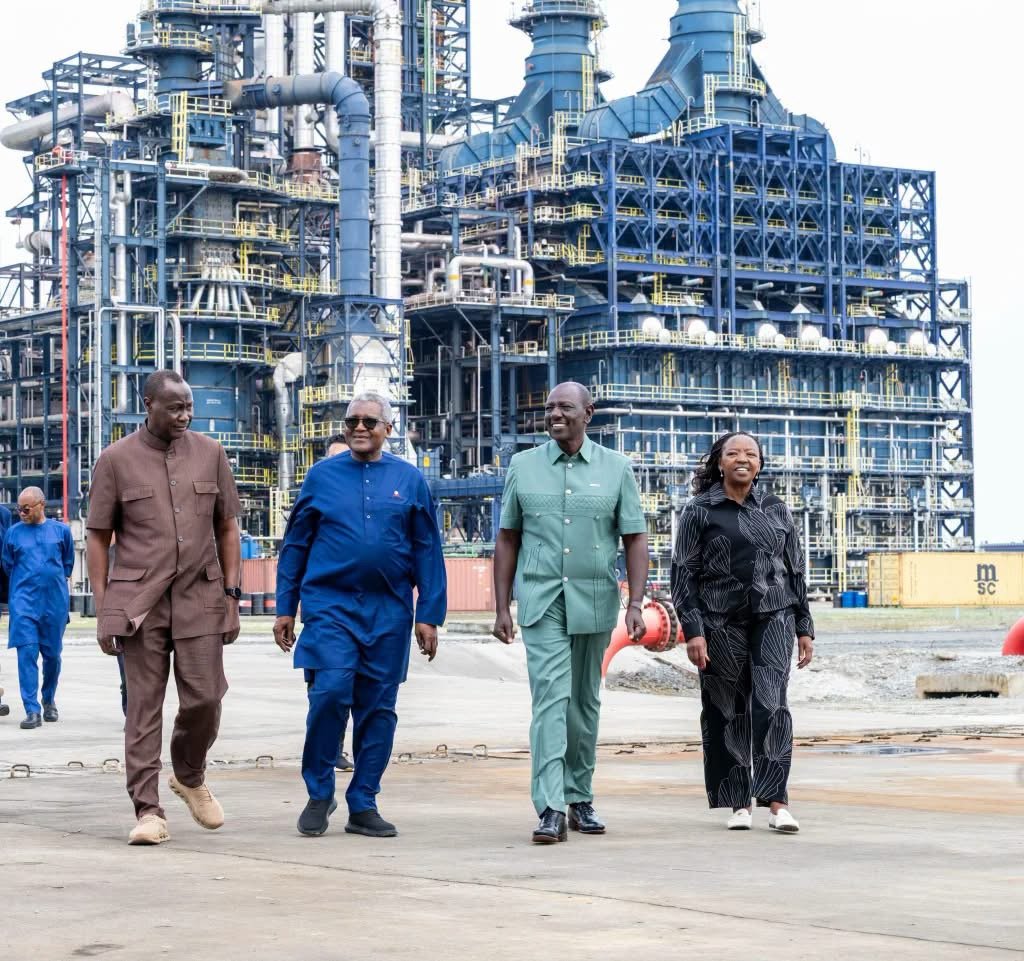
The proposed Dangote East Africa Refinery is expected to have a processing capacity of 700,000 barrels of crude oil per day.
Estimates of the project’s cost have varied in recent reporting, with figures ranging from approximately $15 billion to $17 billion.
The facility is planned for the Lamu area and is expected to become one of the largest refining projects in East and Central Africa if completed.
Kenyan authorities have presented the project as an important industrial investment, while Dangote Group has positioned the refinery as part of its expansion across Africa.
The project is also expected to serve petroleum markets beyond Kenya, potentially supplying refined products to other countries in East and Central Africa.
Why the Lamu Project Matters
The proposed refinery comes at a time when many African countries remain heavily dependent on imported refined petroleum products.
Kenya currently imports substantial quantities of refined fuel to meet domestic demand. A large-scale refinery in Lamu could potentially change regional fuel supply patterns if the facility is completed and achieves its planned capacity.
Reuters has also reported that the project faces challenges beyond the current land dispute, including questions about crude-oil supply, financing and infrastructure. Kenya’s own crude production plans could eventually provide part of the feedstock, while other possible sources include crude from neighbouring countries and international markets.
The scale of the proposed facility means its development could have implications for Kenya’s energy security, regional petroleum trade and the wider East African economy.
At the same time, the legal dispute highlights the challenges large infrastructure projects can face when they intersect with land rights, community interests and environmental requirements.
Land Rights Remain Central to the Dispute
The Chandavai residents’ case centres on whether their historical occupation and use of the land should be recognised in the acquisition and development process.
The residents contend that formal ownership documentation does not fully reflect the interests of families who have lived and worked on the land for generations.
They are seeking court protection while asking authorities to address questions surrounding identification of affected occupants, valuation, compensation and resettlement.
These claims will be considered as the case proceeds. The court has not yet made a final determination on the residents’ substantive land-rights allegations.
The October 14 hearing is therefore expected to provide the next significant judicial development in the dispute.
Groundbreaking Remains Scheduled
Despite the court case, preparations for the refinery’s groundbreaking have continued.
The Kenya News Agency previously reported that preparations were underway for the September 30 ceremony, with authorities making logistical and security arrangements for the event.
Dangote has also maintained that the court ruling will not prevent the launch.
However, the status-quo order means activities concerning the specific disputed parcel remain subject to the court process.
That creates an important distinction between the ceremonial launch of the project and the legal question of what activities may proceed on contested land.
What Happens Next
The immediate next step is the October 14, 2026 inter partes hearing, when the court is expected to hear arguments from the residents and the respondents.
The respondents have been given 14 days to file their responses to the application.
Until then, the status quo on LR No. 13061 is to be maintained under the court’s interim order.
The September 30 groundbreaking, meanwhile, remains scheduled, with Dangote saying the court ruling will not prevent the ceremony.
The outcome of the land case could determine how the disputed portion of the project site is treated and whether additional steps are required concerning compensation, acquisition or community claims.
For now, the confirmed position is that the Kenyan court has not cancelled the Dangote refinery project or stopped its planned groundbreaking, but it has placed the disputed land under a status-quo order while the residents’ legal challenge proceeds.
Weng Global – stories beyond borders
Sources
Reuters
Malindi Environment and Land Court reporting
The Star Kenya
Kenya News Agency
Business Daily Africa
Dangote Group