Reported by Simon yusuph,| Journalist at wengglobal
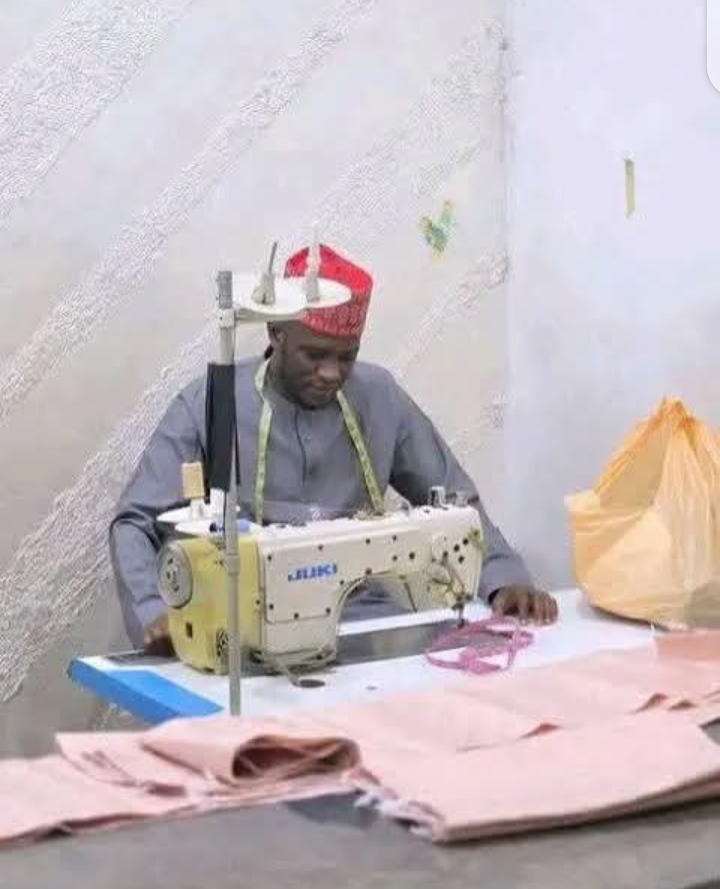
Former Chairman of Kumbotso Local Government Area in Kano State, Abdullahi Gali Shitu, has drawn widespread public attention after returning to his tailoring business following the completion of his tenure in office, offering a powerful message about self-reliance, vocational skills, and the dignity of labour.
Shitu’s decision to resume his profession as a tailor after serving in public office has been widely applauded across Nigeria, with many describing it as a refreshing example of humility and responsible leadership in a political environment where former officeholders are often associated with lifelong dependence on government privileges.
Speaking about his decision, the former council chairman explained that politics should be viewed as a temporary opportunity to serve society rather than a permanent career or source of livelihood. He maintained that every public official should have a legitimate profession or business to return to after leaving office.
According to Shitu, his tailoring workshop has always remained part of his identity despite his years in politics. Rather than seeking another political appointment immediately after completing his tenure, he chose to reopen his sewing shop and continue the trade he practiced before entering public service.
His story has resonated strongly with young Nigerians, especially amid rising unemployment and increasing concerns about economic opportunities across the country. Many observers believe his example reinforces the importance of vocational education and entrepreneurship as practical pathways to financial independence.
A Message Beyond Politics
Shitu emphasized that vocational skills remain valuable regardless of one’s social or political status. He argued that no profession should be considered inferior and encouraged Nigerian youths to acquire practical skills capable of generating sustainable income.
According to him, political offices come with fixed terms, making it risky for individuals to depend solely on politics for survival. Instead, he advised aspiring politicians and public servants to maintain businesses or professions that can support them after leaving office.
His comments align with longstanding calls by educators, economists and development experts who have consistently advocated greater investment in technical and vocational education across Nigeria.
The former chairman also urged government institutions to expand access to vocational training programmes capable of equipping young people with marketable skills. He noted that skilled trades such as tailoring, welding, carpentry, plumbing, electrical installation and information technology continue to provide employment opportunities despite broader economic challenges.
Renewed Focus on Skills Development
Nigeria has increasingly promoted entrepreneurship and skills acquisition as part of efforts to tackle youth unemployment. Federal and state governments have introduced several initiatives aimed at supporting vocational education, small businesses and innovation among young people.
Development experts argue that strengthening technical education can reduce dependence on white-collar jobs while boosting local manufacturing, self-employment and economic productivity.
Shitu’s return to tailoring has therefore become more than a personal decision. It has evolved into a broader public conversation about the value of practical skills and the need to redefine success beyond political appointments.
Across social media, many Nigerians praised the former chairman for demonstrating that public office should never replace personal enterprise. Others described his decision as an example worthy of emulation by serving politicians.
Public Reaction
The story has generated significant reactions online, with citizens expressing admiration for Shitu’s willingness to return to his previous occupation without hesitation.
Many commentators argued that the development challenges the perception that political leaders should remain dependent on government after leaving office. Others noted that his action sends a positive message about accountability and responsible leadership.
Some observers also pointed out that successful democracies encourage politicians to maintain careers outside politics, allowing public service to remain exactly that—service to the people rather than a permanent occupation.
Analysts believe such examples can help rebuild public trust by demonstrating that elected officials are ordinary citizens with professions and businesses beyond government.
Lessons for Young Nigerians
For many young Nigerians navigating an uncertain labour market, Shitu’s experience underscores several important lessons.
First, acquiring vocational skills provides long-term economic security regardless of changing political or economic circumstances. Second, entrepreneurship remains a viable path to self-employment and wealth creation. Third, public office should complement not replace personal enterprise and professional development.
Education experts have repeatedly emphasized that countries with strong vocational sectors often experience lower unemployment rates because graduates possess practical skills that meet labour market demands.
Tailoring, in particular, remains one of Nigeria’s largest informal sector industries, supporting thousands of small businesses involved in garment production, fashion design, textile processing and retail.
As Nigeria’s creative and fashion industries continue to expand domestically and internationally, skilled tailors remain essential contributors to employment and economic growth.
Promoting the Dignity of Labour
Beyond politics, Shitu’s decision has revived discussions about restoring respect for vocational professions.
Across many African societies, formal office jobs are often viewed as more prestigious than skilled trades. However, economists argue that sustainable economic growth depends on a balanced workforce that includes artisans, technicians, manufacturers and entrepreneurs.
Countries that have successfully industrialised have historically invested heavily in vocational education and technical skills, creating employment while supporting local production.
By returning to tailoring without embarrassment, Shitu has challenged long-standing stereotypes surrounding manual professions and demonstrated that honest work deserves respect irrespective of one’s previous political status.
His example also reinforces the broader principle that leadership is measured not only by time spent in public office but also by integrity, humility and commitment to productive work.
Wider Significance
While the story centres on one former local government chairman, its broader significance lies in what it represents for governance, youth empowerment and economic resilience.
As Nigeria continues to address unemployment, poverty and economic diversification, encouraging entrepreneurship and vocational excellence remains a critical policy priority.
Public figures who openly embrace skilled professions after leaving office can help reshape societal attitudes towards vocational careers, inspiring younger generations to pursue practical skills alongside formal education.
For many observers, Abdullahi Gali Shitu’s return to tailoring serves as a reminder that political office is temporary, but professional skills can provide lasting value throughout a person’s lifetime.
His decision illustrates that public service and entrepreneurship are not mutually exclusive. Instead, they can complement one another in promoting responsible leadership, economic independence and sustainable national development.
As conversations around youth employment, entrepreneurship and governance continue across Nigeria, Shitu’s journey from the council office back to the sewing machine offers an enduring lesson: true dignity lies in honest work, regardless of status or title.
Sources
- BBC News
- Daily Trust
- Premium Times Nigeria
- Punch Newspapers
- The Cable
- Daily Nigerian
- Leadership Newspaper