Reported by Simon yusuph, | Journalist at wengglobal
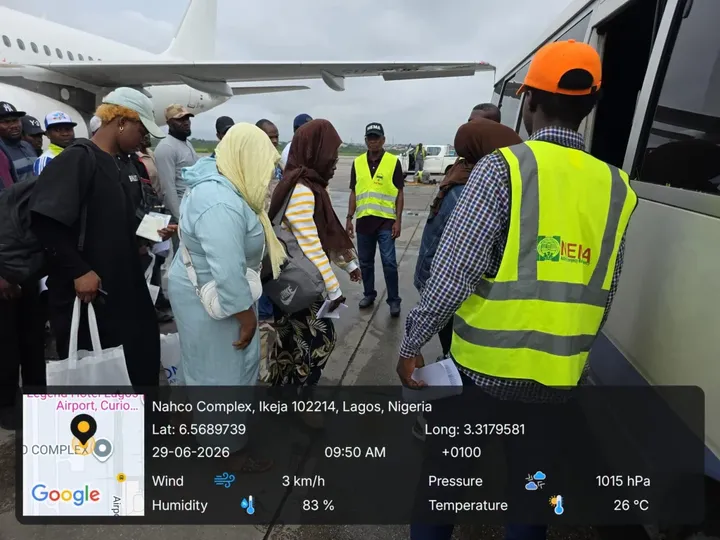
The Nigerian government has successfully concluded the evacuation of stranded citizens from South Africa following the arrival of the final batch of 40 Nigerians, marking the completion of a coordinated repatriation exercise that brought hundreds of vulnerable nationals back home over several weeks.
The return of the sixth and final group represents the culmination of a humanitarian intervention led by the Federal Government through the Nigerians in Diaspora Commission (NiDCOM) in collaboration with the Nigerian High Commission in Pretoria, the International Organization for Migration (IOM), South African authorities, and other strategic partners.
Officials described the exercise as a demonstration of Nigeria’s commitment to the welfare and protection of its citizens abroad, particularly those facing hardship, legal challenges, unemployment, or other humanitarian concerns.
Completion of a Six-Phase Repatriation Exercise
According to Nigerian authorities, the latest group of 40 returnees arrived safely in Nigeria, bringing to a close the sixth batch of voluntary evacuations from South Africa.
The repatriation programme was designed to assist Nigerians who had indicated their willingness to return home after experiencing various forms of distress in South Africa. Many had struggled with unemployment, expired immigration documents, financial hardship, family-related issues, or other personal circumstances that made continued residence increasingly difficult.
Government officials noted that each phase of the evacuation was carefully coordinated to ensure that returnees travelled safely and received appropriate support upon arrival in Nigeria.
The successful completion of the exercise underscores growing cooperation between Nigerian diplomatic missions, South African authorities, and international humanitarian organisations in addressing migration-related challenges affecting African citizens.
Humanitarian Collaboration Across Borders
The evacuation was coordinated through close collaboration involving multiple institutions.
NiDCOM played a central role in identifying eligible Nigerians, maintaining communication with those seeking voluntary return, and coordinating logistics with relevant agencies.
The Nigerian High Commission in Pretoria worked closely with South African authorities to facilitate documentation and travel arrangements, while the International Organization for Migration provided technical and humanitarian assistance throughout the repatriation process.
Officials praised the collaborative effort, describing it as an example of effective regional and international partnership aimed at protecting migrants in vulnerable situations.
The involvement of humanitarian organisations also ensured that returnees received support before departure and after arriving in Nigeria, helping ease their reintegration into society.
Reasons Behind the Voluntary Returns
Authorities indicated that the Nigerians who participated in the evacuation programme came from diverse backgrounds and circumstances.
Many reportedly lost employment due to changing economic conditions, while others faced immigration-related complications, financial difficulties, or family emergencies.
Some returnees had exhausted their means of livelihood and voluntarily requested assistance to return home.
Government officials emphasised that the programme was entirely voluntary and intended to provide a dignified pathway home for Nigerians who no longer wished or were unable to remain in South Africa.
The initiative also reflects broader international migration management practices that encourage voluntary return over irregular migration where appropriate.
Nigeria Reaffirms Commitment to Citizens Abroad
The Federal Government reiterated its constitutional responsibility to protect Nigerians regardless of where they reside.
NiDCOM has repeatedly stressed that the welfare of Nigerians in the diaspora remains a national priority and that the Commission will continue working with Nigerian diplomatic missions worldwide to assist citizens facing genuine humanitarian challenges.
Officials also encouraged Nigerians travelling abroad to comply with immigration laws, maintain valid travel documents, and seek lawful employment opportunities to minimise the risk of becoming stranded.
The Commission has consistently advised prospective migrants to avoid irregular migration routes and fraudulent recruitment schemes that often leave individuals vulnerable to exploitation.
Broader Context of Nigeria–South Africa Relations
Nigeria and South Africa maintain one of Africa’s most significant bilateral relationships, characterised by extensive economic, diplomatic, educational, and cultural cooperation.
Citizens of both countries contribute significantly to commerce, education, entertainment, healthcare, and professional services across the continent.
However, the relationship has periodically experienced strain due to attacks on foreign nationals, including Nigerians, concerns over criminal activities involving some migrants, and public debates surrounding immigration.
Despite these challenges, both governments have continued to strengthen diplomatic engagement aimed at protecting lawful residents, improving security cooperation, and promoting peaceful coexistence.
The successful completion of the evacuation exercise demonstrates continued institutional collaboration despite occasional diplomatic tensions.
Reintegration Support Remains Critical
Experts note that successful repatriation extends beyond transportation.
Returning migrants often require psychosocial support, employment assistance, vocational training, and access to social services to rebuild their lives after returning home.
Migration specialists have repeatedly emphasised that reintegration programmes are essential for preventing repeated irregular migration and helping returnees contribute positively to local economies.
Federal agencies, state governments, development partners, and private-sector organisations are therefore expected to continue supporting reintegration initiatives aimed at improving economic opportunities for returnees.
Such efforts align with broader African Union migration frameworks that encourage safe, orderly, and regular migration while protecting the dignity and rights of migrants.
Migration Challenges Across Africa
Migration continues to shape Africa’s socio-economic landscape.
Many Africans relocate within the continent in search of employment, education, business opportunities, or improved living conditions.
South Africa remains one of Africa’s largest destination countries due to its relatively diversified economy and established industrial sector.
However, economic pressures, unemployment, immigration enforcement measures, and periodic social tensions have created significant challenges for many foreign nationals.
International organisations have consistently called for stronger regional cooperation, improved migration governance, and expanded legal migration pathways to reduce humanitarian risks associated with irregular migration.
Government Calls for Responsible Migration
Following the completion of the evacuation programme, Nigerian authorities renewed calls for citizens considering overseas migration to obtain accurate information before travelling.
Officials advised prospective migrants to verify employment opportunities, comply with immigration regulations, and register with Nigerian diplomatic missions where possible.
The government also encouraged Nigerians living abroad to maintain regular communication with embassies and high commissions, noting that diplomatic missions often provide critical support during emergencies.
Authorities stressed that migration should remain safe, legal, and informed rather than driven by misinformation or unrealistic expectations.
A Symbol of National Responsibility
The successful return of the final batch of 40 Nigerians represents more than the conclusion of an evacuation exercise.
It highlights the importance of diplomatic engagement, humanitarian cooperation, and regional solidarity in addressing migration-related challenges facing African citizens.
For many returnees, the journey home offers an opportunity to rebuild their lives with family support and renewed hope.
For policymakers, it reinforces the need to strengthen employment opportunities, skills development, and economic growth within Nigeria while expanding international cooperation on migration management.
As Africa continues to experience increasing cross-border mobility, governments are expected to deepen collaboration aimed at protecting migrants’ rights, preventing exploitation, and ensuring that citizens abroad have access to assistance when required.
The completion of the South Africa evacuation programme stands as a significant milestone in Nigeria’s ongoing efforts to safeguard the welfare of its diaspora community and uphold its responsibility to citizens wherever they may be.
Sources
- Nigerians in Diaspora Commission (NiDCOM)
- International Organization for Migration (IOM)
- Nigerian High Commission, Pretoria
- News Agency of Nigeria (NAN)
- Reuters
- BBC News
- Channels Television
- Premium Times
- Punch Newspapers
- The Guardian Nigeria