Reported by Simon yusuph,| Journalist at wengglobal
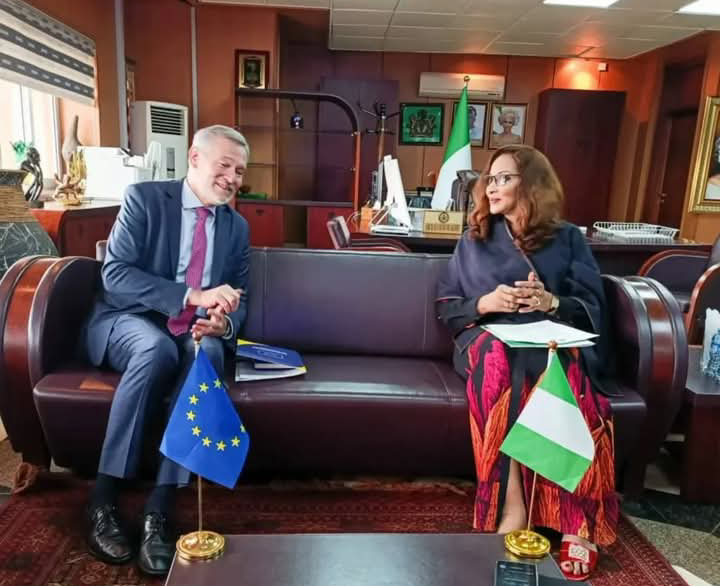
The European Union (EU) has announced a €70 million financial support package for Nigeria, reinforcing its long-standing partnership with Africa’s largest economy through investments aimed at strengthening security, promoting peacebuilding, and improving agricultural productivity.
The new funding package comprises €45 million dedicated to security, conflict prevention and peacebuilding initiatives, alongside €25 million earmarked for agricultural development and food security programmes. The announcement underscores the EU’s continued commitment to supporting Nigeria’s efforts to address growing security concerns while enhancing sustainable economic development.
The latest intervention comes at a time when Nigeria continues to confront complex security challenges, including insurgency in the North-East, banditry in parts of the North-West, communal conflicts in the Middle Belt, and criminal activities affecting economic growth and rural livelihoods. Simultaneously, the country is seeking to improve food production amid inflation, climate-related disruptions and rising concerns over food insecurity.
Strengthening Nigeria–EU Strategic Partnership
The newly unveiled funding package reflects the expanding strategic relationship between Nigeria and the European Union, built on cooperation in governance, economic development, trade, security, climate resilience and humanitarian assistance.
European officials said the initiative is designed to complement Nigeria’s national development priorities by supporting institutions responsible for maintaining peace, protecting vulnerable communities and strengthening resilience in conflict-affected regions.
The €45 million security allocation is expected to support programmes focused on conflict prevention, community stabilisation, early warning systems, capacity building for security-related institutions, and initiatives that encourage dialogue among communities affected by violence.
According to EU officials, sustainable peace requires more than military responses. The bloc has consistently advocated integrated approaches combining security reforms with governance, justice, community participation and economic opportunities for young people vulnerable to recruitment by violent groups.
Agriculture Takes Centre Stage
Alongside security assistance, the €25 million agricultural component aims to improve food production, strengthen rural livelihoods and increase resilience among farming communities.
Agriculture remains one of Nigeria’s largest employers and contributes significantly to national GDP. However, the sector has experienced considerable pressure from insecurity, climate change, flooding, rising production costs and limited access to finance.
The EU support is expected to enhance agricultural value chains, encourage climate-smart farming practices, improve access to modern farming technologies and strengthen market opportunities for smallholder farmers.
Experts note that improving agricultural productivity is closely linked to national security. In many rural communities, farming disruptions caused by conflict have contributed to food shortages, displacement and worsening poverty. Investments that restore agricultural activities can therefore help stabilise communities while improving economic opportunities.
Supporting Food Security Amid Global Challenges
Nigeria has intensified efforts to boost domestic food production following global supply chain disruptions and the economic impact of international conflicts, climate change and inflation.
The EU has increasingly prioritised food security across Africa through partnerships that support sustainable agriculture, irrigation systems, improved seed varieties, climate adaptation and access to financing.
Development specialists argue that expanding agricultural investment is essential to reducing dependence on food imports while creating employment for millions of young Nigerians entering the labour market each year.
The latest package aligns with broader international efforts to strengthen food systems across the continent and improve resilience against future economic shocks.
Peacebuilding Beyond Security Operations
Beyond funding security institutions, the EU’s peacebuilding programmes traditionally focus on addressing the underlying causes of conflict.
These initiatives often include support for local governance, conflict mediation, women’s participation in peace processes, youth empowerment, human rights promotion and community reconciliation projects.
Such interventions are particularly significant in areas affected by prolonged violence, where rebuilding trust between communities and public institutions remains critical to achieving lasting stability.
Analysts say combining security interventions with social and economic development improves the likelihood of sustainable peace compared with approaches centred solely on military operations.
EU Remains One of Nigeria’s Largest Development Partners
The European Union continues to rank among Nigeria’s most significant development partners, providing financial and technical assistance across multiple sectors.
Past EU-supported programmes have focused on electoral reforms, education, healthcare, renewable energy, humanitarian assistance, digital innovation, governance reforms, migration management and support for internally displaced persons.
The partnership has also expanded through the EU Global Gateway strategy, which seeks to mobilise investments in sustainable infrastructure, digital connectivity, renewable energy, education and healthcare across Africa.
Nigeria, as one of Africa’s largest economies and most populous nation, remains a strategic partner under the initiative.
Broader Regional Importance
The announcement carries significance beyond Nigeria. Stability in Nigeria has far-reaching implications for West Africa due to the country’s economic influence, population size and leadership role within the Economic Community of West African States (ECOWAS).
Security improvements in Nigeria could contribute to stronger regional cooperation against terrorism, organised crime and cross-border insecurity affecting neighbouring countries.
Likewise, increased agricultural productivity in Nigeria has the potential to strengthen regional food supply chains and support broader economic integration within West Africa.
Development Experts Welcome the Initiative
Development economists and policy analysts have welcomed the announcement, describing balanced investments in security and agriculture as an important approach to addressing interconnected challenges.
They argue that while improved security creates conditions for economic growth, investments in agriculture generate employment, reduce poverty and help address some of the structural drivers of instability.
However, experts also stress that the effectiveness of international development assistance depends heavily on transparency, accountability and efficient implementation by relevant institutions.
They emphasise the importance of ensuring that funded projects reach intended beneficiaries, particularly vulnerable rural communities affected by insecurity and food shortages.
Looking Ahead
As Nigeria pursues economic reforms and seeks sustainable solutions to longstanding security and development challenges, international partnerships remain an important component of national progress.
The European Union’s €70 million support package reflects continued confidence in Nigeria’s potential while recognising the urgent need for coordinated investments in peacebuilding and agricultural transformation.
If effectively implemented, the funding could strengthen community resilience, improve food production, create economic opportunities and contribute to long-term stability in Africa’s largest economy.
For Nigeria, the announcement represents more than financial assistance it signals sustained international cooperation aimed at supporting inclusive development, strengthening institutions and advancing shared prosperity between Africa and Europe.
Sources
- European Union Delegation to Nigeria and ECOWAS
- Reuters
- AFP (Agence France-Presse)
- Premium Times Nigeria
- The Cable Nigeria
- Channels Television
- European Commission