Reported by Weng Patrick Atokor l Journalist at Weng Global
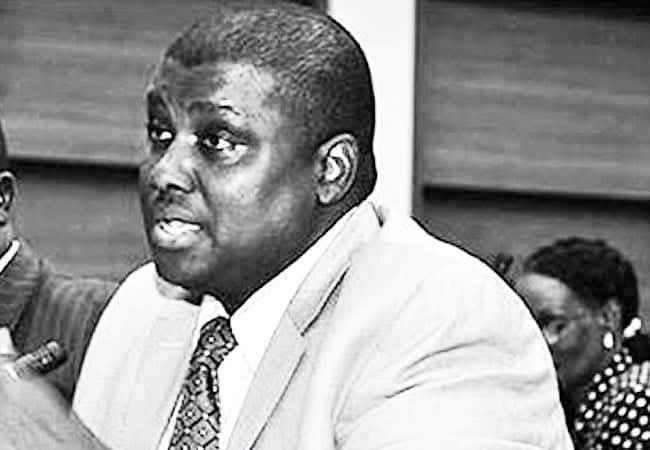
The Economic and Financial Crimes Commission (EFCC) has again declared former Chairman of the defunct Pension Reform Task Team (PRTT), Abdulrasheed Abdullahi Maina, wanted over an alleged case of receiving stolen property.
The latest declaration was contained in a public notice issued on Wednesday, September 23, 2026, and signed by the EFCC’s Head of Media and Publicity, Dele Oyewale.
The commission identified Maina, 61, as an indigene of Biu in Borno State and appealed to members of the public with information about his whereabouts to contact the EFCC, the police or other security agencies.
The development has renewed attention on Maina’s long-running legal battles, which include a previous money-laundering conviction and a separate criminal case that remains before an FCT High Court.
But what exactly is behind the latest wanted declaration, and how does it relate to the earlier pension-fraud case?
Weng Explain: Why has the EFCC declared Maina wanted again?
The latest EFCC notice concerns an alleged case of receiving stolen properties.
The wording is important. The EFCC’s notice identifies the matter as an allegation; it does not, by itself, establish that Maina committed the alleged offence.
The agency asked anyone who knows his whereabouts to provide information through its offices across Nigeria or through other security agencies. Channels Television and other Nigerian news organisations reported the same details from the EFCC notice.
The latest matter is therefore distinct from the earlier case in which Maina was convicted of money-laundering offences.
Who is Abdulrasheed Maina?
Maina became a prominent figure in Nigeria’s pension-reform efforts when he headed the Presidential Task Force on Pension Reforms, also referred to in subsequent reporting as the Pension Reform Task Team.
The task force was involved in efforts to address problems surrounding Nigeria’s pension system, including the identification and verification of pensioners and efforts to recover funds associated with pension-related irregularities.
His role later became the subject of intense controversy and criminal investigations by the EFCC.
Maina subsequently faced multiple legal proceedings involving allegations connected to pension funds and other financial transactions.
What happened in the earlier pension case?
One of the most significant cases against Maina was the money-laundering prosecution that eventually resulted in his conviction.
The EFCC arraigned Maina in October 2019 on a 12-count charge involving money laundering and related offences. He pleaded not guilty.
On November 8, 2021, the Federal High Court in Abuja convicted him and imposed an eight-year prison sentence, with the terms running concurrently. The court also ordered the forfeiture of funds and properties linked to the case.
The case involved allegations concerning more than ₦2 billion.
The trial court found Maina guilty on the charges brought against him. Among the issues considered by the court were bank accounts linked to Maina and his company, Common Input Property and Investment Limited, as well as transactions involving substantial sums of money and property purchases.
Maina appealed the conviction
Maina challenged the Federal High Court judgment at the Court of Appeal.
In May 2023, the Court of Appeal in Abuja upheld his conviction and eight-year prison sentence.
A three-member panel held that the trial court had not denied Maina a fair hearing and affirmed the lower court’s judgment.
The appellate decision is significant because it means the earlier conviction was not simply an unresolved allegation. It was a conviction by the Federal High Court that was subsequently upheld on appeal.
That earlier conviction, however, should not automatically be treated as proof of the separate allegation contained in the EFCC’s latest wanted notice.
Why was Maina released from prison?
The length of Maina’s sentence has also generated questions because he was released before eight calendar years had elapsed from his conviction.
According to information later provided by the Nigerian Correctional Service, Maina was released on February 25, 2025, after qualifying for statutory remission based on the rules governing custodial sentences and good conduct.
The correctional service said his sentence was treated as having commenced from October 25, 2019, the date of his arrest, and that he qualified for remission under the applicable rules.
This means the release did not amount to the reversal of his conviction.
His conviction had already been upheld by the Court of Appeal in 2023.
Is the latest wanted notice connected to the old conviction?
The available reports indicate that the latest EFCC wanted notice concerns a separate alleged case of receiving stolen property.
This distinction is important for readers.
Maina’s earlier case resulted in a conviction and an eight-year sentence. The new wanted declaration relates to an allegation identified by the EFCC as receiving stolen properties.
The two matters should therefore not be presented as though the new allegation were simply another name for the old conviction.
There is also another pending criminal case
Maina’s legal troubles did not end with his release from prison.
The EFCC is also prosecuting him alongside Ann Igwe Olachi in a separate nine-count case before the High Court of the Federal Capital Territory in Abuja.
The case involves allegations concerning approximately ₦738.6 million in funds. The defendants were arraigned in 2019.
In February 2026, proceedings in that case were delayed after Maina’s newly engaged lawyer requested additional time to study the case.
Justice Abubakar Kutigi reportedly expressed frustration with the repeated delays and questioned the continued procedural challenges surrounding the proceedings.
The allegations in that case remain subject to judicial proceedings and should not be presented as established facts unless and until determined by a competent court.
Maina’s earlier encounter with the EFCC
The latest declaration is not the first time Maina has appeared on the EFCC’s wanted list.
According to reporting by TheCable and Punch, the EFCC previously declared him wanted in November 2015 over allegations connected with a pension biometric-contract case involving former Head of Service Steve Oronsaye and others.
The 2015 matter was separate from the later money-laundering prosecution that led to Maina’s 2021 conviction.
The repeated appearances of Maina in major EFCC investigations therefore span several years and involve different allegations and legal proceedings.
What does it mean when the EFCC declares someone wanted?
A wanted notice is an enforcement measure used by a law-enforcement agency to seek information about a person’s whereabouts or facilitate the person’s apprehension in connection with an investigation or criminal proceeding.
It should not automatically be interpreted as a conviction.
In Maina’s latest case, the EFCC’s notice specifically describes the matter as an alleged case of receiving stolen properties.
That distinction is important because Nigerian criminal justice proceedings require allegations to be tested through the legal process.
At the same time, Maina’s earlier money-laundering case reached a different stage: he was convicted by the Federal High Court, and the Court of Appeal subsequently upheld that conviction.
Why the development matters
The latest declaration puts renewed public attention on the enforcement of financial-crime laws and the long-running legal proceedings surrounding Nigeria’s pension system.
Pension funds affect millions of Nigerians, particularly retirees who depend on payments accumulated during their working lives.
Cases involving alleged diversion, laundering or improper handling of pension-related funds therefore carry significance beyond the individuals involved.
They raise broader questions about the protection of public funds, accountability within government programmes and the ability of law-enforcement agencies and courts to pursue complex financial cases over extended periods.
However, each allegation must still be considered according to the evidence presented in the relevant proceeding.
What happens next?
The immediate issue is whether the EFCC will locate Maina and take whatever lawful enforcement or investigative steps are required in connection with the latest allegation.
The EFCC has asked members of the public with information about his whereabouts to contact the commission or other security agencies.
The separate ₦738.6 million case also remains part of Maina’s broader legal history, with proceedings continuing before the FCT High Court.
For the latest wanted declaration itself, further developments will depend on the EFCC’s investigation and any subsequent court proceedings.
The bigger picture
Abdulrasheed Maina’s case illustrates why different stages of a criminal matter need to be separated when reporting complex legal stories.
There is the earlier money-laundering case, in which Maina was convicted in 2021 and whose conviction and eight-year sentence were upheld by the Court of Appeal in 2023.
There is the separate ₦738.6 million case, which has continued before an FCT High Court.
And there is now the latest EFCC wanted notice, concerning an alleged case of receiving stolen properties.
These developments are related by the identity of the defendant and his history with the EFCC, but they should not be treated as one single criminal case.
For readers, the key point is that the latest declaration represents a new development in a long-running series of legal proceedings involving the former pension-reform official. The latest allegation remains an allegation unless established through the appropriate legal process.
Weng Global – Stories beyond borders
Sources
- Economic and Financial Crimes Commission (EFCC) — latest wanted notice, as reported by Channels Television and other Nigerian media.
- Channels Television — report on the September 23, 2026 wanted declaration.
- Punch — report on the latest EFCC declaration and Maina’s previous wanted status.
- TheCable — background on Maina’s previous conviction and separate pending case.
- Channels Television — Court of Appeal decision upholding Maina’s eight-year sentence in 2023.
- Nigerian Correctional Service information reported by Premium Times — explanation of Maina’s February 2025 release.