Reported by Simon Daniel Yusuph l Journalist at Weng Global
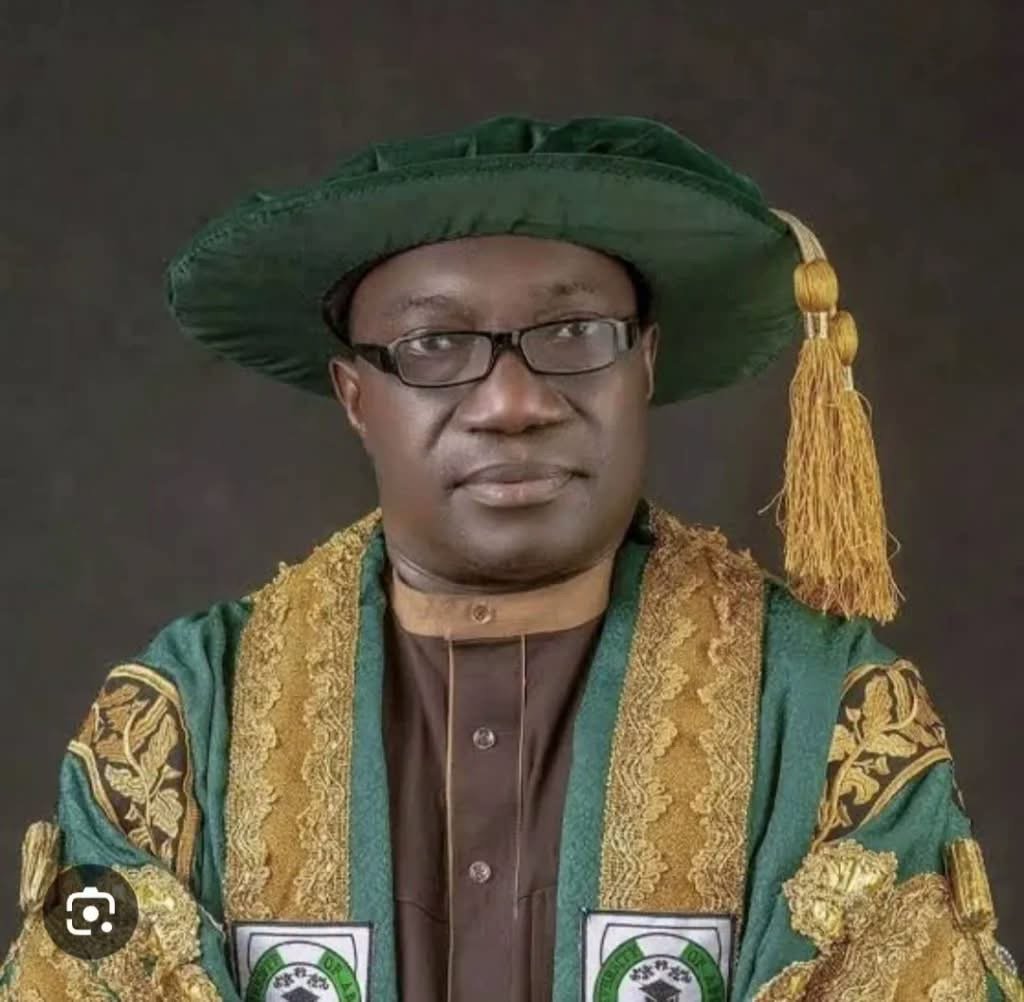
Professor Philip Afaha, the pioneer Vice-Chancellor of the newly established Akwa Ibom State University of Education, Afaha Nsit, says the institution is positioned to reshape teacher education and produce graduates equipped with skills relevant to Nigeria and the global economy.
Afaha’s appointment comes as Akwa Ibom State moves to transform the former Akwa Ibom State College of Education, Afaha Nsit, into a university dedicated to education and related areas of human-capital development. The state government had approved the upgrade as part of its efforts to strengthen teacher education.
Governor Umo Eno announced Afaha’s appointment during the state’s 2026 World Teachers’ Day celebration in Uyo. The appointment was subsequently confirmed in reports on the new institution.
The development marks an important stage in the state’s plan to reposition teacher training, particularly as governments across Nigeria face increasing demands for better-trained teachers and graduates with practical skills suited to a changing labour market.
Afaha takes charge of new institution
Afaha, a professor of History and Inter-Group Relations, becomes the first Vice-Chancellor of the institution at a formative stage in its development.
Unlike taking over an established university with existing academic traditions, faculties and administrative systems, the pioneer Vice-Chancellor will be responsible for helping establish the structures, culture and academic direction of the new university.
Reports on his appointment said the transformation followed the enactment of legislation establishing the Akwa Ibom State University of Education and changing the former College of Education, Afaha Nsit, into a university.
The Akwa Ibom State Government had already announced the planned upgrade in October 2025. At a State Executive Council meeting on October 13, 2025, the government said it had adopted a proposal to upgrade the College of Education, Afaha Nsit, to the Akwa Ibom State University of Education as part of efforts to improve teacher education and human-capital development.
The state government has since described the transformation as part of its broader education agenda.
In a recent anniversary broadcast, Governor Eno said his administration had advanced the transformation of the College of Education into a University of Education, linking the initiative to its wider investment in education and human capital.
A university built around education
The new institution is expected to give greater institutional attention to teacher preparation, professional development and the production of graduates capable of responding to emerging educational and economic needs.
The transition from college to university changes more than the name of the institution. It creates the opportunity for broader academic programmes, stronger research capacity, expanded postgraduate education and deeper partnerships with other universities, education agencies and employers.
For Akwa Ibom, the development also represents an attempt to strengthen the education pipeline within the state.
Teachers remain central to the quality of primary and secondary education. Their preparation, subject knowledge, classroom skills and ability to use modern technology can directly influence the quality of learning available to children.
A university focused specifically on education therefore has the potential to become an important centre for teacher training and educational research if it is supported by adequate funding, qualified academic staff, modern facilities and strong quality-assurance systems.
Afaha brings extensive academic experience
Afaha comes into the role with a substantial background in university administration and scholarship.
The University of Abuja identifies him as Professor Philip Uso Afaha and records that he was appointed Deputy Vice-Chancellor, Administration, on May 5, 2023. The university’s profile says he joined its Department of History and Diplomatic Studies in January 2013 and subsequently rose to the rank of professor.
His academic qualifications include a bachelor’s degree and master’s degree from the University of Uyo, obtained in 1995 and 2004 respectively, and a PhD in History from the University of Abuja in 2011.
At the University of Abuja, he held several academic and administrative responsibilities, including serving as Head of the Department of History and Diplomatic Studies and Director of the Institute for Legislative Studies. The university also lists his research interests as including inter-group relations, conflict resolution and diplomatic studies.
His administrative experience is particularly relevant to his new assignment because the new university will require the establishment of systems covering academic planning, staff recruitment, student administration, governance, research and institutional development.
Pioneer leadership comes with significant responsibilities
Afaha has described his appointment as unexpected but said he regarded the opportunity as a major responsibility.
According to reporting by The Abuja Inquirer, he said he intended to begin work immediately and work to build the university from the ground up. He also acknowledged the expectations attached to the appointment and pledged to approach the assignment with seriousness.
That responsibility will extend beyond the administration of day-to-day university affairs.
A pioneer Vice-Chancellor typically has to help translate the founding vision of an institution into functioning academic and administrative structures. This includes building institutional policies, recruiting and developing staff, establishing academic programmes, developing research priorities and creating systems that can withstand leadership changes in the future.
The quality of these early decisions can have long-term consequences for the reputation of the institution.
Akwa Ibom’s broader education strategy
The university project forms part of a wider education agenda pursued by the Akwa Ibom State Government.
The state government says education is a major pillar of Governor Eno’s ARISE Agenda and has highlighted investments in model primary schools, model secondary schools and international educational exposure for selected students.
The government has also said it has recruited thousands of teachers and approved further recruitment as part of efforts to strengthen the education sector. In October 2026, Eno declared a state of emergency in education and announced additional interventions, including the recruitment of 2,000 teachers.
The decision to establish a University of Education therefore comes alongside other measures aimed at expanding the state’s education infrastructure and workforce.
The combination of teacher recruitment and specialised higher education could create a more complete pathway for developing educators if the policies are properly coordinated.
From college to university: what changes?
The former College of Education, Afaha Nsit, had operated within Nigeria’s teacher-training system for decades.
Historical federal education records list the institution as Akwa Ibom State College of Education, Afaha-Nsit.
Its transition into a university gives the state an opportunity to build on that existing educational foundation while expanding the institution’s academic mandate.
The upgrade could potentially support a broader range of degree-level programmes, more advanced research and greater opportunities for academic collaboration.
However, university status alone does not automatically guarantee improved educational outcomes.
The new institution will still need sufficient financial resources, qualified lecturers, laboratories, libraries, digital infrastructure, accommodation and other facilities. It will also need effective governance and compliance with the relevant national standards for university education.
For students and parents, the most important measure will ultimately be the quality and relevance of the education the university provides.
The skills question
The emphasis on producing skilled graduates comes at a time when employers increasingly expect graduates to possess more than formal academic qualifications.
Nigeria’s young population continues to create strong demand for tertiary education, while graduates face a labour market affected by technological change, entrepreneurship, global competition and evolving professional requirements.
For a University of Education, this means teacher preparation may need to extend beyond traditional classroom methods.
Modern teachers increasingly require digital literacy, curriculum-development skills, assessment expertise, communication abilities and an understanding of how technology can be used to improve learning.
The institution could therefore play a role not only in preparing conventional classroom teachers but also in developing specialists capable of contributing to curriculum design, educational technology, research, policy development and professional training.
Its long-term contribution will depend on how successfully it translates that potential into measurable academic outcomes.
Why the development matters to Akwa Ibom
The establishment of the university gives Akwa Ibom another institution capable of contributing to the state’s human-capital development.
It could create opportunities for young people seeking education-related careers while also strengthening the local academic community.
A successful University of Education could attract students from outside Akwa Ibom, create employment for academic and non-academic workers, stimulate demand for services around Afaha Nsit and contribute to research addressing educational challenges in the state and beyond.
There is also a wider regional dimension.
Akwa Ibom is located within Nigeria’s South-South region, where universities and colleges serve students from several states. A specialised institution with strong programmes could potentially become a regional destination for teacher education.
But that outcome will depend on the institution’s ability to establish a reputation for academic quality rather than relying solely on its new university status.
Building the institution from the ground up
One of the biggest challenges facing Afaha will be converting the legal and administrative creation of the university into a fully functioning institution.
That process requires more than appointing a Vice-Chancellor.
Academic departments and programmes must be properly developed. Staff must be recruited and trained. Students must have access to appropriate facilities. Administrative systems must be established. Research and postgraduate activities must be planned. Quality assurance must be maintained.
The institution will also need to develop a clear identity.
Its focus on education gives it an opportunity to specialise rather than simply replicate programmes already offered by other universities. Strong partnerships with schools, government education agencies, professional organisations and other universities could help ensure that its programmes remain connected to real educational needs.
Research could also become an important part of that identity.
The university could investigate issues affecting Nigerian classrooms, including teacher shortages, learning outcomes, curriculum implementation, educational technology, inclusive education and professional development.
Such research could provide policymakers with evidence for improving education not only in Akwa Ibom but across Nigeria.
What happens next
The immediate task for Afaha and the university’s governing authorities will be to establish the academic and administrative foundations required for the institution to operate effectively.
The appointment of a pioneer Vice-Chancellor provides the leadership structure for that process, but further institutional steps will be necessary before the university can fully realise its stated ambitions.
The state government will also need to sustain the financial and policy support required to move the institution from its transition phase into a stable university.
For students, teachers and education stakeholders, the key issues to watch will include the university’s academic programmes, admission arrangements, staffing, infrastructure development, accreditation and commencement of full university operations.
The success of the institution will ultimately be measured by the quality of graduates it produces and the contribution those graduates make to schools, communities, businesses and public institutions.
A new test for Akwa Ibom’s education ambitions
The creation of the Akwa Ibom State University of Education represents a significant shift in the state’s approach to teacher education.
With Afaha appointed as its pioneer Vice-Chancellor, the institution now has an experienced academic administrator at the centre of the process of building its foundation.
But the appointment is only the beginning.
The more difficult test will be whether the new university can establish strong academic standards, attract capable staff, provide modern learning facilities and develop programmes that prepare graduates for the realities of contemporary education and employment.
For Akwa Ibom, the institution offers an opportunity to strengthen the state’s education system from the training of teachers to the development of new educational knowledge.
For Nigeria, it adds another institution to a higher-education sector under pressure to produce graduates who can contribute meaningfully to a rapidly changing economy.
If the university’s founding leadership can combine academic quality with practical skills, research and strong institutional governance, the transformation of Afaha Nsit could become more than a change in status. It could become a long-term investment in the people who will educate future generations.
Sources
- Akwa Ibom State Government
- University of Abuja
- Federal Ministry of Information and National Orientation
- Channels Television
- Punch Newspapers
- The Abuja Inquirer