Reported by Simon Daniel Yusuph l Journalist at Weng Global
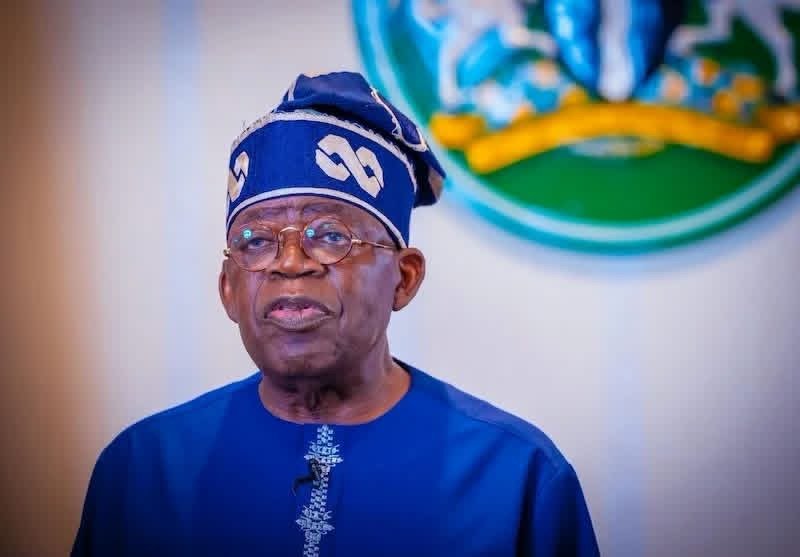
President Bola Ahmed Tinubu has urged Nigerian youths to collect their Permanent Voter Cards (PVCs) and participate actively in the 2027 general elections, describing their electoral decisions as critical to determining the country’s future.
Tinubu made the appeal on Friday, November 6, 2026, during an All Progressives Congress (APC) presidential endorsement rally at the Godswill Akpabio International Stadium in Uyo, Akwa Ibom State.
Addressing supporters, the President encouraged young Nigerians who had registered as voters but were yet to collect their PVCs to visit designated collection centres and obtain their cards ahead of the elections scheduled for January and February 2027.
He emphasised that young people should not remain on the sidelines of the democratic process, arguing that their participation would influence the country’s political direction and the policies that shape their opportunities.
The President made particular reference to the importance of education, vocational training, skills development and employment, promising that his administration would continue pursuing programmes aimed at improving opportunities for Nigerians.
His appeal comes as political activities intensify across the country, with political parties, support groups and potential candidates beginning to mobilise voters ahead of the next general elections.
The President also expressed confidence in his administration’s economic reform programme and called on supporters to use their voting rights to determine the country’s leadership in 2027.
Tinubu Describes PVC as Instrument of Political Participation
During his address in Uyo, Tinubu appealed directly to young Nigerians who had not collected their voter cards.
He said: “If you have not collected it, please go ahead and collect your PVC. I am begging you, for the sake of your future.”
The President’s message was accompanied by assurances that his administration would pursue development initiatives, improved education, vocational training and employment opportunities.
He told the gathering that he remained committed to building a better future for Nigerians, particularly through policies intended to expand economic opportunities and develop human capital.
Tinubu also encouraged young people to support his political ambition in the forthcoming elections, presenting the PVC as the instrument through which eligible citizens can express their political preferences.
His remarks formed part of the APC’s wider mobilisation efforts as the party prepares for the 2027 presidential election.
The President’s appeal also reflects the growing importance of youth participation in Nigerian politics, particularly given the country’s large population of young people and their influence on public discussions, political campaigns and electoral outcomes.
2027 General Elections: INEC Announces Official Dates
The Independent National Electoral Commission (INEC) has scheduled the 2027 general elections to take place in two major phases.
According to the commission’s published election timetable, the presidential and National Assembly elections will hold on Saturday, January 16, 2027.
The governorship and State Houses of Assembly elections are scheduled for Saturday, February 6, 2027.
The timetable establishes the period within which political parties, candidates, electoral officials and voters are expected to complete the necessary preparations.
INEC has also commenced several administrative activities ahead of the elections, including voter register verification, candidate-related processes and preparations for the deployment of electoral technology.
The commission’s preparations are particularly important because the credibility of the elections will depend on effective planning, transparent procedures and public confidence in the electoral process.
For young Nigerians, Tinubu’s appeal highlights the importance of ensuring that their voter registration details are accurate and that they possess the necessary documentation to participate in the elections.
INEC Begins Nationwide PVC Collection
The Independent National Electoral Commission announced October 9, 2026, as the commencement date for nationwide collection of newly produced Permanent Voter Cards ahead of the 2027 general elections.
INEC Chairman, Professor Joash Amupitan, announced the development during an engagement with stakeholders as part of the commission’s preparations for the elections.
The collection exercise followed the conclusion of the three-phase Continuous Voter Registration (CVR) programme.
According to figures released by the commission and reported by Channels Television, the registration exercise recorded more than 10.7 million new applications.
The three phases were designed to provide eligible Nigerians with opportunities to register and participate in the forthcoming elections.
The new registrations were subsequently subjected to biometric verification and other administrative processes intended to improve the accuracy of the national voter register.
INEC also introduced printable PVC technology as part of efforts to improve the production and distribution of voter cards.
The development is intended to reduce delays associated with the production of physical cards and make the process more accessible to registered voters.
The commission has encouraged citizens to verify their registration information and ensure that their voter details are correctly captured.
Registered voters who are yet to collect their cards can use INEC’s official voter services portal to check their PVC status and identify their designated collection centres.
However, the Continuous Voter Registration exercise has ended, meaning citizens who did not register during the exercise cannot assume that they can simply begin a new registration through the portal.
INEC Publishes Preliminary Voters’ Register for Verification
Beyond PVC collection, INEC has also taken steps to strengthen the accuracy of the national voters’ register ahead of the 2027 elections.
In a press statement issued on October 26, 2026, the commission announced an additional measure to make the preliminary register of voters available online.
The development followed the physical display of the preliminary register at registration areas nationwide between October 9 and October 15.
The exercise allowed registered voters to inspect their personal information and submit claims or objections where necessary.
INEC subsequently decided to make the same preliminary register available through its online platform to improve accessibility and encourage wider public participation in the verification process.
According to the commission, the exercise was conducted in accordance with Section 19 of the Electoral Act, 2026.
The commission explained that the verification process would help identify errors, omissions and other irregularities before the final register is certified and published.
INEC scheduled December 15, 2026, for the publication of the final register of voters.
The exercise is important because an accurate voters’ register is fundamental to organising credible elections and ensuring that eligible citizens are properly recognised within the electoral system.
For young voters, checking their registration information ahead of election day could help prevent avoidable complications when they arrive at their polling units.
Why Youth Participation Matters in Nigeria’s 2027 Elections
Nigeria’s youth population represents an important part of the country’s political, economic and social future.
Young Nigerians constitute a significant segment of the population and are increasingly involved in national conversations concerning governance, unemployment, education, security, economic opportunities and accountability.
Their participation in elections can influence the direction of public policy and the emergence of political leadership at different levels of government.
However, the relationship between young people and electoral politics has often been affected by concerns about unemployment, economic hardship, political distrust and dissatisfaction with governance.
Although young Nigerians have become increasingly visible in political discussions and advocacy, translating that engagement into participation at polling units remains an important challenge.
The 2023 general elections demonstrated the growing interest of young Nigerians in electoral politics, particularly through social media campaigns, civic engagement and demands for political accountability.
However, political enthusiasm does not automatically translate into actual votes.
Voter registration, PVC collection, verification of registration information and participation on election day remain important stages of the democratic process.
Tinubu’s latest appeal therefore places renewed attention on the responsibility of eligible young Nigerians to participate in determining the country’s political leadership.
Nevertheless, electoral participation should not be interpreted as an obligation to support any particular political party or candidate.
The right to vote includes the freedom to support the candidate of one’s choice, reject available candidates or make decisions based on personal assessments of political performance and policy proposals.
Tinubu’s Promises on Education, Skills Development and Employment
During the rally, Tinubu linked his appeal for youth participation to promises concerning education, vocational training, skills development and job creation.
He told supporters that his administration would continue pursuing development initiatives aimed at improving opportunities for Nigerians.
The President also highlighted the economic potential of Akwa Ibom State, particularly its agricultural resources and palm produce.
He argued that the state could generate employment opportunities and develop sustainable skills by taking advantage of its agricultural resources.
His remarks formed part of a broader message about economic development and the need to expand opportunities for young people.
Education and employment remain major concerns among Nigerian youths, particularly graduates and individuals seeking vocational and technical training.
The country continues to face challenges involving unemployment, underemployment, rising living costs and unequal access to economic opportunities.
Consequently, the President’s assurances are likely to be assessed against the actual performance of government policies and their effects on households, businesses and young Nigerians.
For voters, the 2027 elections will provide an opportunity to evaluate competing political parties and candidates based on their records, proposals and ability to address the country’s challenges.
Youth Political Mobilisation and the APC’s 2027 Strategy
Tinubu’s appeal also reflects the importance of youth mobilisation within the APC’s preparations for the 2027 general elections.
Political parties increasingly recognise that young voters can influence electoral outcomes through their numbers, organisational networks and ability to mobilise support within communities.
The APC has consequently maintained engagement with youth-oriented political organisations and support groups as part of its efforts to strengthen its grassroots presence.
On October 19, 2026, Tinubu met with members of the City Boy Movement and other youth support groups at the Presidential Villa in Abuja.
According to a statement issued by the State House, the President commended the groups for their involvement in communicating government policies and mobilising grassroots support.
He also encouraged young supporters to engage in lawful and peaceful political activities ahead of the elections.
During the meeting, Tinubu stressed that political mobilisation should be based on ideas, constructive discussions and peaceful engagement rather than violence.
Vice-President Kashim Shettima also addressed the gathering, defending the administration’s economic reform programme and acknowledging the financial difficulties experienced by Nigerians.
The meeting demonstrated the administration’s continued interest in youth engagement as political preparations for 2027 gather momentum.
However, effective democratic participation requires more than mobilisation by political support groups. It also depends on voters having access to reliable information, freedom of choice and confidence in the electoral process.
Economic Reforms and the Questions Facing Young Voters
The President’s appeal comes at a time when Nigeria continues to experience significant economic adjustments following major policy changes introduced by his administration.
The removal of petrol subsidies, foreign exchange reforms and changes to the country’s tax system have remained central to national economic discussions.
The government has defended these policies as necessary measures intended to improve public finances, attract investment and establish a more sustainable economic structure.
However, the reforms have also generated considerable pressure on households and businesses, particularly through higher transportation costs, food prices and the general cost of living.
For young Nigerians, these economic conditions are directly connected to concerns about employment, entrepreneurship, education and the ability to achieve financial independence.
As the 2027 elections approach, political parties will face increasing pressure to explain how their policies can improve living standards and expand opportunities.
Tinubu’s promises of education, skills development and employment will therefore form part of the broader political conversation surrounding his administration’s record and re-election ambition.
Young voters are likely to assess such promises alongside the experiences of their families, communities and businesses.
The Importance of Free and Credible Elections
While political leaders are entitled to encourage citizens to obtain their voter cards and participate in elections, the democratic process must remain free from intimidation, coercion and electoral manipulation.
INEC is constitutionally responsible for organising and conducting federal and state elections in Nigeria.
Its responsibility includes ensuring that eligible voters can participate in accordance with the law and that the electoral process reflects the choices made by citizens.
The commission will also need to address logistical challenges, voter education, election security, misinformation and public confidence ahead of the 2027 polls.
For young voters, participation should involve understanding candidates, examining policy proposals and making independent decisions at the ballot box.
The PVC is an important instrument of electoral participation, but the value of democratic engagement extends beyond obtaining the card.
Citizens also have a responsibility to remain informed, reject electoral violence and respect the rights of other voters.
What Happens Next?
With the presidential and National Assembly elections scheduled for January 16, 2027, and the governorship and State Houses of Assembly elections fixed for February 6, preparations are expected to intensify in the coming weeks.
INEC’s immediate administrative priorities include completing voter register verification, publishing the final register and ensuring that registered voters can access their PVCs.
The commission has scheduled December 15, 2026, for publication of the final voters’ register.
Meanwhile, political parties are expected to continue their campaigns and grassroots mobilisation as they seek to secure support across the country.
Young Nigerians who have registered but have not collected their PVCs are being encouraged to check their registration status and visit their designated collection centres.
The elections will ultimately provide citizens with an opportunity to determine who leads the country and represents them at different levels of government.
Tinubu’s message in Akwa Ibom has placed youth participation at the centre of the emerging political conversation.
However, the final decision will rest with Nigerian voters, whose choices will determine the country’s political direction beyond 2027.
For Weng Global, the central issue remains the importance of informed, peaceful and credible electoral participation, with every eligible Nigerian having the opportunity to exercise their democratic rights.
WENG GLOBAL — Stories beyond borders.
Sources
- The State House, Abuja – Official statement on Tinubu’s engagement with youth support groups, October 19, 2026.
- Independent National Electoral Commission (INEC) – Official 2027 general election timetable.
- INEC – Press statement on the online publication of the preliminary register of voters, October 26, 2026.
- Channels Television – Reporting on the commencement of nationwide PVC collection and voter registration figures, September 29, 2026.
- Daily Post Nigeria – Reporting on Tinubu’s appeal to Nigerians to collect their PVCs, November 6, 2026.
- Premium Times – Reporting on INEC’s PVC collection arrangements ahead of the 2027 general elections.