Reported by Simon Daniel Yusuph l Journalist at Weng Global
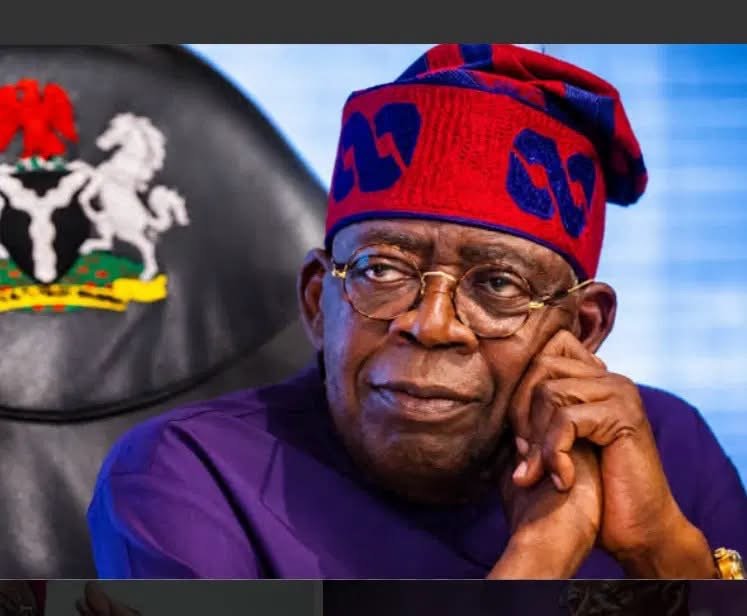
President Bola Ahmed Tinubu has defended his administration’s proposed $21.7 billion external borrowing programme, arguing that the funds will support critical infrastructure, create jobs and expand economic opportunities for future generations of Nigerians.
In an essay titled From Reforms to Delivery: Our Infrastructure Investment and Growth Strategy, published on October 29, 2026, Tinubu responded to criticism from opposition figures and other Nigerians over the Federal Government’s plans to obtain additional loans from international financial institutions and commercial lenders.
The President maintained that the value of government borrowing should be assessed by the economic benefits generated from the projects financed rather than the amount borrowed alone.
His defence comes as Nigeria continues to grapple with infrastructure deficits, pressure on household incomes and concerns about the country’s growing public debt obligations.
The proposed borrowing programme, which requires the necessary legislative approval, is intended to finance infrastructure and other development projects during the 2026–2027 period.
Tinubu identified major road projects, electricity grid improvements and the modernisation of commercial ports among the investments expected to strengthen Nigeria’s productive capacity. He also highlighted spending on healthcare, education and vocational training as important components of the country’s long-term development ambitions.
The administration says the investments will improve connectivity, reduce transportation costs, attract private capital and support its ambition to build a $1 trillion economy by 2030.
However, the programme also raises important questions about debt sustainability, borrowing costs, project delivery and the government’s ability to ensure that the benefits of new investments reach ordinary Nigerians.
Tinubu Says Borrowing Must Deliver Measurable Economic Benefits
Tinubu’s central argument is that borrowing should be judged by what it enables the country to build and the economic value those investments generate.
In the essay circulated by the Presidency, he argued that the critical consideration is not simply the volume of loans obtained but the infrastructure, economic activity and long-term opportunities created with the money.
The President said his administration was shifting public borrowing away from financing immediate fiscal pressures towards investments expected to generate economic returns, stimulate business activity and create employment.
Under this approach, infrastructure spending is expected to strengthen the foundations of economic growth by improving the movement of goods, expanding access to electricity and connecting markets across different regions.
Tinubu also said the government was pursuing longer-term financing arrangements that would better match the lifespan of infrastructure assets.
The proposed approach is intended to reduce refinancing pressures by ensuring that the repayment structure of loans is more closely aligned with the period over which the financed projects are expected to deliver economic benefits.
This consideration is particularly relevant for large infrastructure projects, which can require years of construction before generating their full economic value.
A highway, for example, may continue providing transportation and commercial benefits for decades. However, those benefits depend on the quality of construction, maintenance, traffic demand and the extent to which businesses and communities can take advantage of the improved connectivity.
The administration’s argument is that borrowing for productive investments can support future economic activity rather than merely increasing public liabilities.
Nevertheless, the eventual value of any borrowing programme will depend on whether the funds are properly managed, projects are completed on schedule and the resulting economic benefits justify the cost of financing.
What Is Behind Nigeria’s $21.7 Billion Borrowing Plan?
The proposed external borrowing programme has attracted attention because of its size and the financial obligations it could create for the country.
According to a Reuters report published on October 28, 2026, Tinubu asked the National Assembly to approve a supplementary external borrowing plan worth approximately $21.7 billion.
The proposal comprises $20.52 billion and €1.05 billion, with the euro component equivalent to approximately $1.17 billion.
The proposed funds are intended to support infrastructure and other projects over the 2026–2027 period.
The request is separate from the broader question of Nigeria’s existing public debt, which includes obligations incurred by the Federal Government, state governments and the Federal Capital Territory.
The Presidency has defended the new borrowing by pointing to the country’s substantial infrastructure financing needs and the resources required to expand economic capacity.
The projects identified by Tinubu include the Lagos-Calabar Coastal Highway, the Sokoto-Badagry Superhighway, the proposed Trans-Sahara Superhighway, electricity grid upgrades and the modernisation of key commercial ports in Lagos.
These investments are intended to address infrastructure constraints that can increase the cost of doing business and limit the movement of goods and people.
However, the proposed borrowing should not be interpreted as money already received or fully disbursed. Legislative approval, financing arrangements and project implementation remain important stages in determining how the programme proceeds.
The distinction matters because an announced borrowing plan, an approved loan and money actually spent on completed infrastructure represent different stages of public financial management.
For Nigerians assessing the programme, transparency about those stages will be essential to understanding how much is borrowed, where the funds go and what results they produce.
Lagos-Calabar Coastal Highway Among Key Projects
One of the major projects highlighted by Tinubu is the Lagos-Calabar Coastal Highway, a major road development intended to improve connectivity along Nigeria’s southern coastline.
The route is expected to connect economic centres and improve access between communities, commercial areas and other destinations along the corridor.
According to figures cited in the President’s essay, the highway is projected to reduce logistics costs along its corridor by between 15 and 20 per cent.
The project could also contribute as much as two percentage points to Nigeria’s gross domestic product through expanded trade, tourism and industrial activity, according to the administration’s projections.
The government further estimates that the highway could generate approximately 100,000 direct jobs in construction and engineering, alongside more than 150,000 indirect jobs in logistics, materials and related industries.
These figures represent projected benefits rather than confirmed outcomes. Their achievement will depend on the project’s implementation, the scale of economic activity it stimulates and the extent to which local businesses can participate.
If delivered effectively, improved road connectivity could reduce travel times, facilitate the movement of agricultural produce and manufactured goods, and create opportunities for businesses operating along the route.
However, infrastructure projects of this scale also require careful oversight of construction costs, procurement, environmental considerations, compensation arrangements and maintenance obligations.
For the coastal highway to produce lasting economic benefits, the government will need to demonstrate that the project delivers value beyond the construction phase.
Tinubu described the broader infrastructure strategy as an effort to connect markets, unlock industries and reshape Nigeria’s economic geography.
The administration’s challenge will be to translate that ambition into completed infrastructure that supports measurable improvements in productivity and living standards.
Sokoto-Badagry and Trans-Sahara Superhighways
Tinubu also identified the Sokoto-Badagry Superhighway and Trans-Sahara Superhighway among the projects expected to support the country’s economic ambitions.
The proposed Sokoto-Badagry route is intended to improve connectivity across parts of northern and western Nigeria, linking communities and commercial areas along its corridor.
Better transport links could help farmers move produce to markets, improve access to distribution networks and reduce some of the costs associated with transporting goods over long distances.
For agricultural producers, dependable roads can be particularly important because delays and high transportation costs may reduce profitability and contribute to losses of perishable goods.
Improved connectivity could also encourage investment in storage facilities, processing plants and other businesses that depend on reliable transportation.
The Trans-Sahara Superhighway was also listed among the infrastructure priorities, although the President’s essay did not provide a detailed implementation timetable or a complete breakdown of the financing allocated to each project.
Consequently, the precise contribution of each proposed road to the wider borrowing programme will need to be assessed through official project documentation and subsequent budget and implementation disclosures.
The potential economic value of major highways extends beyond the roads themselves. Their benefits often depend on complementary investments in electricity, logistics facilities, industrial development and access to finance.
A road may improve transportation, but businesses will still require dependable power, functioning supply chains and a predictable regulatory environment to expand production.
The administration’s wider infrastructure strategy recognises the need to combine transportation investment with improvements in other sectors.
Electricity and Ports Central to Economic Expansion
Beyond road construction, Tinubu identified electricity grid upgrades and the modernisation of commercial ports in Lagos as priorities for strengthening Nigeria’s productive capacity.
Electricity remains essential to manufacturing, retail, telecommunications, healthcare and numerous other economic activities.
Where electricity supply is unreliable or expensive, businesses may face higher operating costs because they must rely on alternative sources of power.
Improving the electricity grid could support more dependable supply, although the benefits would depend on generation capacity, transmission infrastructure, distribution networks and the effectiveness of the wider power market.
The government would also need to demonstrate how proposed investments will improve service delivery and reduce the burden of energy costs on businesses and households.
Port modernisation is another important element of the plan.
Efficient ports can reduce delays in the movement of imports and exports, improve cargo handling and support trade by making it easier for businesses to move goods through the country.
For Nigeria, which depends on maritime infrastructure for a substantial portion of its international merchandise trade, improvements in port operations could help reduce logistics bottlenecks.
However, the benefits would depend on more than physical construction. Customs procedures, cargo clearance, road access, security and coordination among government agencies also influence how efficiently goods move through ports.
Tinubu’s strategy therefore links infrastructure development with the broader goal of improving Nigeria’s competitiveness and attracting investment.
Tinubu Links Borrowing to a $1 Trillion Economy by 2030
The President has tied the infrastructure programme to his administration’s ambition to expand Nigeria’s economy to $1 trillion by 2030.
Achieving that target would require sustained growth in productive activity, investment, industrialisation and trade.
Tinubu argued that the country would need infrastructure capable of supporting a substantially larger economy.
The administration’s approach rests on the expectation that better roads, improved electricity supply and more efficient commercial facilities can lower business costs and encourage investment.
Infrastructure can contribute to economic growth by reducing the time and expense involved in producing and distributing goods and services.
However, the relationship is not automatic. The economic returns from public investment depend on project selection, financing terms, implementation quality, maintenance and the wider business environment.
The government will also need to ensure that infrastructure spending complements other policies designed to support employment, education, skills development and private-sector expansion.
The $1 trillion target is an economic ambition rather than a guaranteed outcome.
Its achievement will depend on sustained economic performance and the ability to translate investment into productive activity across different sectors.
For ordinary Nigerians, the more immediate questions concern employment opportunities, purchasing power, business conditions and access to essential services.
The success of the infrastructure strategy will therefore need to be judged not only by the amount of money committed but also by its contribution to economic opportunities and improvements in daily life.
Tinubu Cites Economic Indicators to Defend His Reforms
In defending his administration’s economic direction, Tinubu pointed to improvements in selected economic indicators.
According to the figures cited in his essay, Nigeria’s real gross domestic product grew by 4.43 per cent in the second quarter of 2026.
He also said headline inflation declined to 14.63 per cent in September 2026, compared with 20.98 per cent a year earlier.
The President reported that gross external reserves reached $55.1 billion as of October 9, 2026, including approximately $46 billion in net reserves.
He further said the tax-to-GDP ratio had increased to 12.5 per cent from seven per cent.
Tinubu attributed the reported improvements to measures introduced by his administration since May 2023, including the removal of petrol subsidies, exchange-rate unification, tax reforms and efforts to control inflation.
These figures provide part of the administration’s case for pursuing additional investment and longer-term financing.
However, macroeconomic indicators do not necessarily reflect the financial circumstances of every household.
Even when inflation declines, prices may remain high compared with previous years. Likewise, economic growth does not automatically guarantee that employment and income gains will be distributed evenly across the population.
The effect of economic reforms must therefore be assessed through a combination of national indicators and evidence of changes in household welfare, employment, productivity and business activity.
Tinubu said improved international confidence could help Nigeria attract institutional investors and secure financing on more favourable terms.
He also cited positive assessments by international credit rating agencies as evidence of improved economic credibility.
Whether these developments translate into lower borrowing costs will depend on the terms available to Nigeria, the currency and maturity of the loans, and investors’ assessment of the country’s repayment capacity.
Public Debt Raises Questions About Fiscal Sustainability
Despite the administration’s emphasis on productive investment, the proposed borrowing programme comes amid continued debate about Nigeria’s debt burden.
Data published by the Debt Management Office show that Nigeria’s total public debt stood at approximately ₦166.79 trillion as of June 30, 2026.
The figure covers the public debt of the Federal Government, the 36 states and the Federal Capital Territory.
According to the debt figures reported by TheCable from the Debt Management Office’s release, the total comprised approximately ₦91.59 trillion in domestic debt and ₦75.20 trillion in external debt.
The total represented an increase of approximately ₦7.44 trillion compared with the ₦159.35 trillion recorded at the end of March 2026.
The figures underline why additional borrowing attracts scrutiny from opposition politicians, economists and members of the public.
Public borrowing can finance infrastructure and other investments that a government might struggle to fund through current revenue alone. However, loans also create repayment obligations that must be met through future government revenue or refinancing.
The cost of servicing debt can reduce the resources available for healthcare, education, security, social protection and other public services if interest and repayment obligations consume a growing share of government income.
External borrowing also introduces currency risks where obligations are denominated in foreign currencies but government revenue is collected mainly in naira.
If the naira weakens against the currencies in which loans must be repaid, the domestic-currency cost of servicing those obligations may rise.
The overall effect depends on the loan terms, repayment schedule, currency composition and the government’s capacity to generate revenue.
For this reason, the sustainability of the proposed programme cannot be determined by its headline dollar value alone. It requires an assessment of the financing terms, the projects involved and the expected economic returns.
The administration’s position is that productive investment can strengthen the economy and expand future revenue opportunities.
The central question for public accountability is whether the benefits will be sufficient to justify the financial commitments.
Transparency and Project Delivery Will Determine Success
The proposed borrowing programme places considerable importance on how funds are allocated, disbursed and monitored.
For public investment to deliver value, Nigerians need clear information about the amount borrowed, the lenders involved, the interest rates, repayment schedules and the projects financed.
Disclosure of project costs and implementation milestones would also help citizens assess whether spending is progressing as planned.
Independent audits and effective procurement oversight can help identify irregularities, reduce waste and strengthen confidence in the use of public funds.
The government would also need to distinguish between projects that have been announced, those that have received financing, those under construction and those that have been completed.
This distinction is essential because the economic benefits described by the President are largely linked to what the projects are expected to achieve after implementation.
A financing agreement does not by itself reduce transportation costs, improve electricity supply or create permanent employment.
Those benefits emerge when projects are completed, become operational and are used effectively by businesses and communities.
Tinubu acknowledged this distinction in his essay, arguing that the administration’s success should be measured by completed projects, increased investment, job creation and improved living standards.
That position provides a basis for assessing the borrowing programme against measurable outcomes rather than financial announcements alone.
For Nigerians, the practical test will be whether infrastructure investments improve access to markets, lower business costs, expand employment and strengthen public services without placing unsustainable pressure on future budgets.
Five Priorities for the Next Phase of Economic Policy
Tinubu outlined five priorities for the next phase of the Federal Executive Council’s economic strategy.
The first is improving food affordability and maintaining energy price stability.
Food and energy costs have direct effects on household budgets and business operating expenses. Measures that improve affordability could help reduce pressure on families and support economic activity.
The second priority is budget harmonisation and fiscal discipline.
Coordinating government spending and strengthening budget management could help reduce waste and ensure that available resources are directed towards agreed priorities.
The third is completing high-impact projects and investing in critical infrastructure.
This priority places emphasis on delivery rather than the announcement of new projects, with the objective of ensuring that public investment produces practical benefits.
The fourth is improving the economic policy framework and regulatory efficiency.
A predictable regulatory environment can help businesses make investment decisions, while excessive delays and uncertainty may discourage investment.
The fifth is providing targeted household support alongside investment in human development.
This includes attention to areas such as education, healthcare, vocational training and support for vulnerable households.
Together, the priorities indicate that the administration intends to combine infrastructure investment with measures designed to support economic stability and human development.
Their effectiveness will depend on how the policies are implemented, how resources are allocated and whether progress can be demonstrated through credible data.
What Happens Next?
The immediate issue is the legislative and financing process surrounding the proposed $21.7 billion external borrowing programme.
The National Assembly’s consideration of the request will be important in determining the next stage of the plan. The specific conditions attached to any approvals, as well as the terms of the eventual financing agreements, will influence the programme’s financial implications.
The government will also need to provide greater detail about the allocation of funds among projects and the expected timetable for implementation.
As the programme progresses, the public will have to assess whether the financing translates into completed infrastructure and measurable economic improvements.
The Debt Management Office’s published debt statistics, budget documents and subsequent implementation reports will remain important sources for tracking Nigeria’s borrowing position.
For the administration, the challenge is to demonstrate that new loans can support economic development without creating excessive repayment pressures.
For the National Assembly, scrutiny of the borrowing terms, intended uses and implementation arrangements will be important to ensuring accountability.
For citizens, the ultimate concern is whether the investment programme creates meaningful opportunities, improves essential services and supports better living standards.
Tinubu has defended borrowing as a tool for building infrastructure and expanding economic opportunities for future generations. Whether that argument is borne out will depend on responsible financing, transparent spending and the successful delivery of the projects involved.
Nigeria’s economic ambition will ultimately be measured not by the size of its borrowing programme, but by the lasting value the country obtains from the money it commits.
Weng Global – stories beyond borders
Sources
- Presidency of the Federal Republic of Nigeria — Essay titled From Reforms to Delivery: Our Infrastructure Investment and Growth Strategy, circulated by the President’s Special Adviser on Information and Strategy, Bayo Onanuga, on October 29, 2026.
- Reuters — Report on Tinubu’s request for National Assembly approval of approximately $21.7 billion in external borrowing, published October 28, 2026.
- Debt Management Office of Nigeria — Public debt statistics as of June 30, 2026.
- TheCable — Report on Nigeria’s public debt reaching approximately ₦166.79 trillion, published September 26, 2026.
- The PUNCH — Reporting on Tinubu’s defence of the proposed borrowing programme and planned infrastructure investments, published October 29–30, 2026.
- The Guardian Nigeria — Reporting on Tinubu’s defence of external borrowing for infrastructure development, published October 29, 2026.