Reported by Simon Daniel Yusuph l Journalist at Weng Global
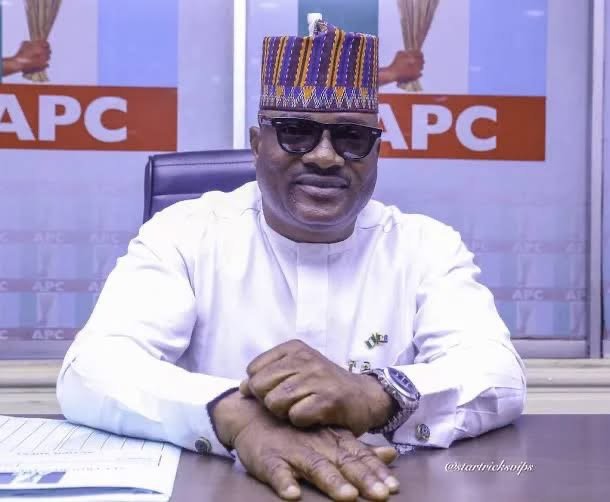
Nigerian politician Adewole Adebayo has warned against any attempt to cancel political campaigns or postpone the 2027 general elections because of the Ebola outbreak, arguing that public health concerns should be addressed without unnecessarily disrupting the country’s democratic process.
Adebayo made the position known at a dinner organised by his presidential campaign council leadership in Abuja on Sunday, October 25, 2026, where he also discussed his campaign preparations and the translation of his policy manifesto into several Nigerian languages.
According to a report published by Punch on Monday, October 26, Adebayo maintained that the confirmation of a single Ebola case should not automatically be treated as sufficient grounds to suspend political activities or alter the election timetable.
His comments come as Nigerian health authorities respond to a reported Ebola case amid concerns about the spread of the disease across parts of Africa.
The debate raises important questions about how Nigeria can protect public health while preserving constitutional processes, political participation and the right of citizens to choose their leaders through elections.
Although Adebayo has opposed any disruption to the electoral process, his position also acknowledges the need for precautions against the disease. He said his campaign would observe relevant public health guidelines while continuing its political mobilisation.
The central issue is whether Nigeria can manage the health emergency through evidence-based measures without resorting to broad restrictions that could interfere with preparations for the 2027 elections.
Adebayo Says Ebola Should Not Disrupt the Electoral Process
During his remarks in Abuja, Adebayo argued that Nigeria should not abandon political campaigns, rallies or the scheduled electoral process solely because an Ebola case had been reported.
He referred to Nigeria’s experience during the 2014 Ebola outbreak, when health authorities successfully contained the disease following the arrival of an infected traveller from Liberia.
Adebayo cited the response under former President Goodluck Jonathan as an example of how public health authorities could respond to Ebola without suspending the country’s wider political and social activities.
He also raised concerns about the transparency of the government’s handling of the current situation, arguing that clear communication was necessary to maintain public confidence.
His criticism was directed at the administration of President Bola Ahmed Tinubu, which he accused of failing to provide sufficient clarity surrounding the outbreak.
These accusations represent Adebayo’s political assessment of the government’s response and should not be treated as independently established findings.
The effectiveness of Nigeria’s Ebola response will ultimately depend on evidence from public health authorities, including the speed of case identification, contact tracing, infection prevention, treatment and communication with the public.
Adebayo’s position is that the government should concentrate on controlling the disease while allowing democratic activities to continue under appropriate health precautions.
He also urged Nigerians to observe preventive measures and report suspected symptoms to health authorities.
The position places him among political actors calling for the protection of electoral activities while the government manages a public health challenge.
However, whether any particular gathering can safely proceed must depend on the prevailing public health assessment rather than political arguments alone.
Nigeria’s Ebola Situation Raises Public Health Concerns
Nigeria’s reported Ebola case has heightened concerns because the disease can cause severe illness and spread through direct contact with the bodily fluids of an infected person or with contaminated materials.
According to Reuters reporting published on October 21, 2026, Nigeria confirmed an Ebola case involving a Ugandan woman who arrived in Abuja through Addis Ababa on October 5.
The report said the patient developed symptoms on October 7, but testing did not confirm Ebola until October 20.
Health authorities had identified 44 contacts, most of them healthcare workers, and were tracing other people who might have been exposed to the infection.
The patient was isolated and receiving treatment, according to the report.
The case emerged amid a wider outbreak affecting several African countries, raising concerns about cross-border transmission and the ability of health systems to identify infections quickly.
The reported delay between the patient’s initial symptoms and confirmation of the infection also highlights the importance of surveillance, timely testing and clear communication between healthcare providers and public health authorities.
Contact tracing is particularly important because it enables health officials to identify people who may have been exposed, monitor their health and intervene quickly if symptoms develop.
These measures can help contain transmission and reduce the likelihood of wider community spread.
However, the existence of a confirmed case does not, by itself, establish the scale of transmission across a country. Public health authorities must assess the circumstances surrounding each infection, identify potential contacts and determine whether additional cases have emerged.
The distinction is important in a country as populous as Nigeria, where inaccurate information or exaggerated claims about an outbreak can generate unnecessary fear.
At the same time, avoiding panic must not become a reason to minimise a genuine health threat.
Authorities must communicate what is known, identify what remains uncertain and explain the measures being taken to protect the public.
Ebola and the 2027 Elections: Balancing Health and Democracy
Adebayo’s warning has brought the relationship between public health management and electoral participation into focus as Nigeria approaches the 2027 general elections.
Election campaigns typically involve public rallies, meetings, political tours, consultations and gatherings of supporters. Depending on their size and location, such activities can present challenges during an infectious disease outbreak.
However, the appropriate response depends on the nature of the disease, the level of transmission, the circumstances of the gatherings and the advice of public health experts.
A blanket cancellation of political activities would be a significant intervention, particularly if the outbreak could be managed through targeted precautions.
Conversely, allowing large gatherings to proceed without adequate safeguards could create avoidable risks if health authorities identify circumstances in which transmission is likely.
The challenge for the Nigerian government is therefore to adopt measures proportionate to the evidence available.
Such measures could include public health guidance for gatherings, improved access to reliable information, stronger disease surveillance and targeted restrictions where health authorities consider them necessary.
Any restrictions should be clearly explained, supported by public health evidence and reviewed as the situation develops.
Political parties also have a responsibility to protect their supporters, campaign workers and the wider public.
Campaign organisations can help communicate accurate health information, follow official guidance and consider practical adjustments to events when necessary.
The electoral authorities, meanwhile, would need to communicate clearly if a public health emergency affected any part of the election timetable or the preparations required to conduct credible polls.
Nigeria’s democratic institutions and public health agencies have distinct responsibilities, but their work may need to be coordinated when an emergency threatens public gatherings.
The objective should be to protect lives while maintaining confidence in the electoral process.
Lessons From Nigeria’s 2014 Ebola Response
Adebayo referred to Nigeria’s 2014 Ebola experience to support his argument that an outbreak does not automatically require the suspension of normal national activities.
Nigeria recorded Ebola cases in 2014 after Patrick Sawyer, a Liberian-American diplomat infected with the virus, arrived in Lagos.
The response involved health authorities and medical personnel who worked to identify exposed individuals, monitor contacts and prevent further transmission.
Among the medical professionals involved was Dr Ameyo Adadevoh, whose role in recognising the danger and helping to prevent further spread became an important part of Nigeria’s public health history.
Nigeria was subsequently declared free of Ebola transmission in September 2014 after the outbreak was contained.
The experience demonstrated the importance of early identification, contact tracing, coordination between institutions and public cooperation.
It also showed that a country can face a serious infectious disease threat and still mobilise its health system to contain it.
However, the circumstances surrounding the 2014 outbreak cannot automatically determine the appropriate response to the current situation.
Different Ebola outbreaks may involve different viral species, transmission patterns, geographical conditions and levels of preparedness.
The effectiveness of the response depends on the characteristics of the outbreak and the speed with which health authorities can identify and isolate cases.
Consequently, lessons from 2014 should inform current decisions without replacing fresh scientific assessments.
The present situation requires authorities to explain what is known about the infection, whether additional cases have been identified, what contact tracing has revealed and what measures are necessary to prevent further transmission.
Political leaders can contribute to public understanding by encouraging cooperation with health authorities rather than spreading unverified information.
Government Says Restrictions Will Depend on Scientific Evidence
The question of whether the Ebola outbreak should affect political activities has also featured in the federal government’s public health response.
According to the Punch report, the Minister of Health and Social Welfare, Professor Muhammad Pate, said there was no immediate need to cancel political campaigns, conferences or other large gatherings.
Pate reportedly stated that any decision to introduce restrictions would depend on the development of the outbreak, scientific evidence and consultations with public health experts.
His reported position indicates that the government was not proposing an immediate, blanket suspension of public gatherings at the time of his remarks.
It also suggests that officials intended to retain the option of introducing additional measures if the public health situation deteriorated.
This approach places the emphasis on monitoring the outbreak rather than making a final decision about all gatherings before the situation is fully assessed.
Nevertheless, the government will need to provide regular updates so that citizens, political parties and event organisers understand the applicable guidance.
Clear communication is particularly important during outbreaks because uncertainty can encourage misinformation and undermine public confidence.
Authorities should distinguish between confirmed infections, suspected cases, identified contacts and individuals who have completed monitoring without developing symptoms.
They should also explain any changes to public health guidance and the evidence supporting those decisions.
Political parties should be able to plan their activities based on reliable information rather than conflicting public statements or speculation about possible restrictions.
As the outbreak develops, the balance between public health protection and normal civic activity may need to be reassessed.
Any significant changes should be communicated transparently and applied according to established public health principles.
Adebayo Announces Manifesto Translation Into Nigerian Languages
Beyond the Ebola debate, Adebayo used the Abuja gathering to discuss his preparations for the 2027 election and efforts to make his policy proposals accessible to a wider audience.
He said his manifesto had been translated into several Nigerian languages to enable voters to understand the proposals and question the campaign about its policy commitments.
According to the Punch report, the languages mentioned included English, Hausa, Igbo and Yoruba, with additional translations intended to reach other linguistic communities.
Adebayo said the campaign wanted Nigerians to examine its policy document and seek clarification on areas that required further explanation.
He identified security and public welfare as fundamental responsibilities of government and presented the manifesto as a framework for addressing national challenges.
The emphasis on language accessibility highlights an important issue in Nigerian elections: voters need more than campaign slogans to make informed choices.
Nigeria’s linguistic diversity means that political communication conducted exclusively in English may not reach every eligible voter equally.
Providing policy information in widely spoken local languages can help citizens assess campaign proposals and participate more meaningfully in political discussions.
However, translating a manifesto is only one part of effective public engagement.
Political parties must also explain how their proposed policies would be implemented, how they would be funded and how their performance could be measured.
Voters need opportunities to compare proposals, question candidates and assess whether campaign promises are realistic.
The value of a manifesto therefore depends not only on its accessibility but also on the clarity, feasibility and accountability of the policies it contains.
SDP Leadership Dispute Complicates the Political Context
There is also an important political qualification concerning Adebayo’s description as the Social Democratic Party’s presidential candidate.
On its official website, the Social Democratic Party published a statement claiming that Adebayo had been expelled from the party following resolutions adopted at its National Executive Committee meeting and national convention on May 20, 2026.
The party stated that he was therefore not eligible to participate in its presidential nomination process and had never been validly nominated as its candidate for the 2027 general election.
The statement called on the Independent National Electoral Commission to review its records against the party’s resolutions and submitted nomination documents.
This position conflicts with reporting earlier in 2026 that Adebayo had emerged as the SDP’s presidential candidate and that his nomination had been submitted to INEC.
The dispute is significant because a politician’s formal status as a party candidate depends on the applicable nomination process and the relevant electoral records, not simply on how the politician is described in media reports.
The party’s statement establishes its position in the dispute, but it does not, by itself, settle every question concerning the legal or administrative status of Adebayo’s candidacy.
The relevant party records, INEC documentation and any applicable legal decisions would need to be examined to establish the current position conclusively.
Weng Global therefore distinguishes between Adebayo’s reported comments on Ebola and the separate dispute over his political status within the SDP.
His remarks about the election and the public health situation can be reported without presenting his party nomination as undisputed.
The development also illustrates why political reporting requires careful attribution, especially when disputes within parties affect candidate recognition ahead of a general election.
Why the Debate Matters to Nigerians
The discussion surrounding Ebola and the 2027 elections has implications beyond the political interests of individual candidates.
First, Nigeria must protect public health. An infectious disease outbreak requires timely action, accurate information and cooperation between citizens and health authorities.
Second, the country must preserve public confidence in its democratic institutions. Election preparations should be conducted transparently, and any changes affecting political participation or the electoral timetable should be supported by clear legal and practical reasons.
Third, citizens need reliable information to make decisions during a public health emergency. Conflicting political claims and unverified reports can make it more difficult for the public to understand the actual level of risk.
Fourth, political parties have a responsibility to ensure that their activities do not undermine public safety. Campaigning is an important democratic activity, but it does not remove the obligation to follow legitimate public health guidance.
Finally, the government must demonstrate that decisions affecting public gatherings are based on evidence rather than political convenience.
These responsibilities are not necessarily incompatible. Effective disease control and democratic participation can support each other when public authorities communicate clearly and apply proportionate measures.
The appropriate response should neither dismiss the seriousness of Ebola nor assume that every confirmed case requires a nationwide suspension of political activities.
Instead, decisions should reflect the available epidemiological evidence, the capacity of the health system and the advice of qualified experts.
What Happens Next?
The immediate priority remains the public health response to the reported Ebola case.
Health authorities will need to continue monitoring identified contacts, investigate possible exposures and communicate verified information about the outbreak.
The identification of additional cases, if any, would be an important factor in determining whether further precautions or restrictions are necessary.
Political parties will also need to follow official health guidance as they prepare for the 2027 elections.
Adebayo has stated that his campaign intends to continue its mobilisation while observing relevant precautions. The federal government, according to the reported comments by the health minister, has indicated that restrictions would depend on scientific evidence and the development of the situation.
No blanket cancellation of political campaigns or postponement of the 2027 general elections was established in the material reviewed for this report.
Any future decision affecting the electoral timetable would need to be assessed against the applicable legal framework and official announcements.
For now, the central question is how Nigeria can maintain effective disease surveillance and public protection while allowing democratic preparations to proceed safely.
Adebayo’s warning has added a political dimension to that question, but the final assessment of public health risks must rest on credible evidence rather than partisan claims.
Nigeria’s challenge is to contain Ebola, communicate transparently and protect democratic participation without compromising public safety.
Weng Global – stories beyond borders
Sources
- Punch — Report on Adewole Adebayo’s warning against shifting the 2027 general elections over Ebola concerns, published October 26, 2026.
- Reuters — Report on Nigeria’s confirmed Ebola case and the wider regional outbreak, published October 21, 2026.
- Social Democratic Party — Official statement disputing Adewole Adebayo’s status as the party’s 2027 presidential candidate.