Reported by Simon Daniel Yusuph l Journalist at Weng Global
President Bola Ahmed Tinubu has called on African countries to strengthen continental cooperation and end the long-standing pattern of exporting raw mineral resources without sufficient local processing and value addition.
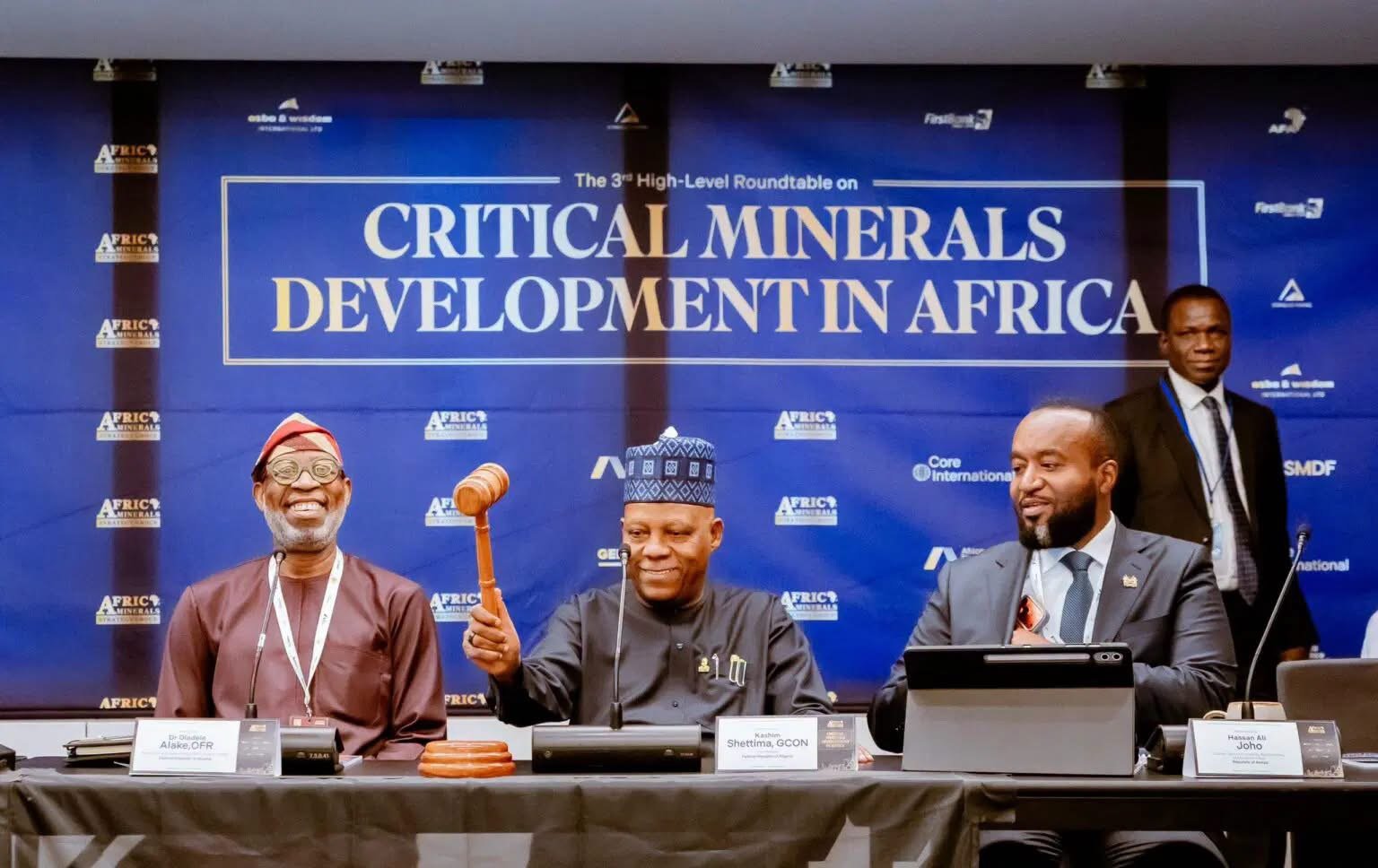
Tinubu made the call on Monday, September 21, 2026, during the third Africa Minerals Strategy Group (AMSG) High-Level Roundtable on Critical Minerals Development in Africa, held in New York on the sidelines of the 81st Session of the United Nations General Assembly.
The President was represented at the meeting by Vice President Kashim Shettima, while the roundtable was convened and chaired by Tinubu alongside Nigeria’s Minister of Solid Minerals Development and AMSG Chairman, Dele Alake.
The meeting focused on how African countries can turn the continent’s mineral wealth into industrial development, jobs, technology and greater economic value within Africa.
Tinubu urges Africa to move beyond raw mineral exports
Tinubu argued that Africa should no longer remain primarily a supplier of raw materials to international markets while importing finished products manufactured from those same resources.
He called for African countries to work together to develop local processing, refining, manufacturing and technology capabilities around the continent’s critical minerals.
According to the President, the objective should be to ensure that mineral extraction produces measurable benefits for communities through employment, infrastructure, technology transfer, local businesses and broader industrial development.
He also warned that African countries acting individually could weaken their negotiating position when dealing with international investors and buyers.
Tinubu said competition between African states through lower royalties, weaker local-content requirements and excessive concessions could reduce the continent’s collective bargaining power.
He instead advocated cooperation that would create larger markets, integrated industries, stronger financing arrangements and greater negotiating strength for African countries.
Critical minerals are becoming strategically important
The push comes as demand for minerals used in clean-energy technologies, batteries, advanced manufacturing and artificial intelligence continues to increase.
Africa possesses significant deposits of minerals that are increasingly important to global industrial and energy supply chains. However, the economic benefits available to producing countries depend not only on extraction but also on their ability to process minerals and develop industries around them.
Tinubu therefore argued that Africa’s mineral strategy should include processing, refining, battery production, component manufacturing, technology development and skills training.
The broader objective is to retain a greater share of the economic value generated from African resources within the continent rather than exporting predominantly unprocessed materials.
The United Nations Development Programme has also identified the question of who captures value from Africa’s resources as an important issue surrounding the continent’s participation in the changing global economy.
Nigeria highlights mining-sector reforms
Tinubu used the meeting to outline aspects of Nigeria’s approach to developing its solid-minerals sector.
He said Nigeria should require local value addition as part of new mining licences, strengthen geological information and investor access, organise artisanal miners into cooperatives, combat illegal mining and improve regulatory accountability.
The President also cited an increase in government revenue from the mining sector, saying revenue rose from approximately ₦6 billion in 2023 to more than ₦38 billion in 2024 and between ₦68.1 billion and ₦70 billion in 2025.
He further pointed to foreign investment commitments and large-scale lithium processing capacity developed and commissioned in Nasarawa State as examples of the potential for greater value addition.
Those figures and the assessment of the reforms were presented by Tinubu as part of his administration’s account of progress in Nigeria’s mining sector.
The Nigerian Presidency has previously said its minerals strategy is intended to increase local beneficiation and prevent the country from remaining merely an exporter of raw materials.
In June, Tinubu urged AMSG member countries to speak with one voice and strengthen Africa’s bargaining power in the global mineral market. The Presidency said the goal was to ensure that Africa derives greater value from its natural resources through local industries, technology transfer and stronger mineral value chains.
African cooperation at the centre of the proposal
The roundtable was held under the theme, “From Resources to Wealth: Continental Cooperation for Mineral Value Addition, Data Sovereignty, Innovative Financing and Critical Minerals Security.”
The discussions centred on the need for African countries to coordinate policies and investment strategies rather than developing isolated approaches to critical-mineral development.
Tinubu urged members of the African Minerals Strategy Group to speak with one voice in advancing the continent’s collective interests.
He said partnerships with international investors should be based on mutual benefit, shared responsibility, sovereign equality and respect for African priorities.
The President also argued that stronger partnerships should provide African countries with access to markets, industrial investment and technology that builds local capabilities rather than creating new forms of dependency.
Continental mineral framework proposed
AMSG Chairman Dele Alake said the group was proposing a Continental Integration and Economic Assurance Declaration as a framework for establishing a unified architecture for Africa’s critical and solid-mineral value chains.
According to Alake, the framework is intended to strengthen cooperation across the continent and support a more coordinated approach to mineral development.
Tinubu said the declaration should not remain a symbolic agreement.
He called for it to be backed by a binding programme containing clear timelines, financing arrangements, implementation mechanisms and public accountability.
He also urged African countries to identify their national and regional contributions while encouraging development finance institutions and sovereign investors to establish financing platforms for the sector.
Financing and infrastructure remain key challenges
Turning Africa’s mineral reserves into industrial wealth requires more than changes to mining regulations.
Countries also need reliable electricity, transport infrastructure, geological data, skilled workers, financing and processing facilities.
Kenya’s Minister of Blue Economy and Maritime Affairs, Hassan Ali Joho, highlighted domestic resource mobilisation as an important part of developing Africa’s solid-minerals sector.
Joho also called for greater transparency and competitiveness among AMSG members and closer alignment of licensing procedures while respecting the sovereignty of individual countries.
These issues are important because mineral processing facilities require substantial capital and long-term investment. Without adequate infrastructure and financing, African countries may continue exporting minerals in less-processed forms even when governments introduce policies aimed at increasing local value addition.
Illegal mining also remains a concern
The push for greater control over mineral resources comes alongside concerns about illegal mining in several African countries, including Nigeria.
Tinubu specifically called for stronger action against illegal mining and better organisation of artisanal miners.
Nigeria has large numbers of informal and artisanal miners operating across different mineral-producing areas. Bringing such miners into formal structures is intended to improve regulation, increase government oversight and potentially give miners greater access to finance, training and safer working conditions.
However, enforcement remains an important part of the challenge.
The deaths of suspected illegal miners detained by the Nigeria Security and Civil Defence Corps in Niger State have recently prompted a government investigation. Tinubu ordered a full investigation into the deaths and said enforcement operations against illegal mining must be carried out within the law and with respect for the dignity and fundamental rights of people in custody.
The development illustrates the wider governance challenges surrounding efforts to formalise and regulate mining activities.
Why Africa’s mineral strategy matters
Africa’s mineral resources are increasingly important to the global economy, particularly as industries expand their demand for materials needed for energy technologies, electronics, batteries and advanced manufacturing.
The central economic question is whether African countries can capture more of that value themselves.
Exporting unprocessed minerals generally provides less industrial activity than developing domestic industries that process those minerals into intermediate or finished products.
Greater local processing could potentially create additional employment, develop technical skills, strengthen manufacturing capacity and generate new opportunities for African businesses.
The African Union has also placed greater emphasis on moving beyond raw-material exports and developing stronger African value chains. During UNGA81, AU Commission Chairperson Mahmoud Ali Youssouf and UN Secretary-General António Guterres discussed the need for Africa to derive greater value from its critical mineral resources as part of broader cooperation between the African Union and the United Nations.
What happens next
The immediate challenge is translating the commitments made at the AMSG roundtable into coordinated national and regional action.
That includes establishing financing mechanisms, improving geological data, developing processing infrastructure, aligning selected policies and licensing procedures, strengthening local participation and setting measurable implementation timelines.
For Nigeria, the emphasis will also be on whether its mining reforms can attract responsible investment while increasing domestic processing and ensuring that host communities and Nigerian industries benefit from mineral extraction.
The Continental Integration and Economic Assurance Declaration will require further implementation if it is to move beyond a political commitment and become a functioning framework for Africa’s mineral economy.
The outcome could influence how African countries position themselves in global critical-mineral supply chains at a time when demand for these resources is increasing.
For the continent, the broader issue is not simply how much mineral wealth is extracted, but how much economic value, industrial capacity, technology and employment remain in Africa after extraction.
Weng Global – stories beyond borders
Sources
- The State House, Abuja
- Punch
- TVC News
- United Nations Development Programme
- African Union