Reported by Simon Daniel Yusuph l Journalist at Weng Global
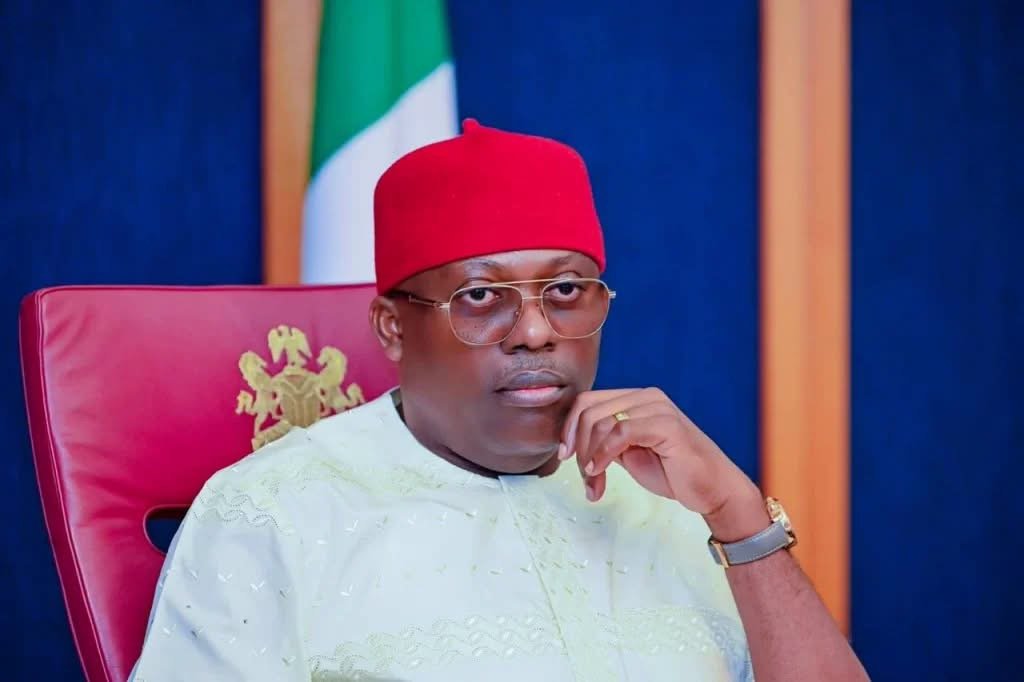
Rivers State Governor Siminalayi Fubara has commended the Inspector-General of Police, Olatunji Rilwan Disu, for what he described as neutrality in handling the political crisis in the oil-rich state, highlighting the importance of impartial policing in maintaining public confidence, protecting democratic institutions and sustaining peace.
Fubara’s commendation comes against the backdrop of prolonged political disagreements in Rivers State, where tensions between competing political interests have raised concerns about governance, security, the independence of public institutions and the ability of elected officials to discharge their responsibilities without unnecessary confrontation.
The governor’s remarks also draw attention to the responsibilities of the Nigeria Police Force in politically sensitive situations, particularly when disagreements among political actors threaten public order or generate competing demands on security agencies.
However, a commendation from a political officeholder does not, by itself, establish whether police conduct has been impartial in every disputed incident. Assessing neutrality requires examining the actions of security personnel, the legal framework governing their operations and the treatment of competing political interests.
Note: The supplied report contains only a headline and an incomplete introductory sentence. The specific occasion, date and full remarks surrounding Fubara’s commendation could not be independently established from the available information. The report below therefore provides relevant background without inventing details about the occasion or attributing unverified statements to the governor.
Rivers State’s Political Crisis and the Importance of Police Neutrality
Rivers State has experienced a prolonged political crisis involving disagreements among influential political figures, disputes over the control of political structures and tensions surrounding the relationship between the executive and legislative arms of government.
The crisis has attracted national attention because Rivers occupies an important position in Nigeria’s oil and gas industry and contributes significantly to the country’s economic activity.
Beyond its economic importance, the state’s political developments have broader implications for democratic governance, particularly the relationship between elected officials, political parties, security agencies and public institutions.
During periods of political tension, the police are expected to enforce the law without favouring any political party, candidate or public officeholder.
This responsibility becomes particularly important when rival political groups organise demonstrations, compete for control of public facilities or challenge decisions made by government institutions.
The Nigeria Police Force operates under constitutional and statutory obligations that require officers to maintain public order, protect lives and property, prevent crime and enforce the law.
These responsibilities must be discharged within the law, regardless of the political identity of the individuals or organisations involved.
For residents of Rivers State, impartial policing is essential to ensuring that political disagreements do not escalate into violence, intimidation or disruptions to ordinary economic and social activities.
The police must also maintain public confidence by explaining their actions when controversial security operations attract scrutiny.
Where allegations of misconduct or political interference arise, credible investigations and transparent explanations are important for determining what happened and establishing accountability.
Fubara’s reported commendation of Disu therefore places the relationship between political leadership and law enforcement within a wider discussion about institutional independence and the preservation of democratic order.
Disu’s Responsibilities as Inspector-General of Police
Olatunji Rilwan Disu became a prominent figure in Nigeria’s policing system through his career in law enforcement, including previous service as Commissioner of Police in Rivers State.
His experience in the state provides relevant background to discussions about the police and the political challenges confronting Rivers.
However, his responsibilities as Inspector-General of Police extend beyond the state to the overall leadership and administration of the Nigeria Police Force.
The office carries responsibility for police operations, professional standards, discipline, crime prevention and the implementation of policies intended to strengthen public safety.
In politically sensitive environments, the Inspector-General must ensure that operational decisions are guided by the law, credible security assessments and the professional responsibilities of officers.
This includes ensuring that police deployments are based on legitimate security requirements rather than political instructions intended to advantage one group over another.
It also requires officers to respect lawful court orders and avoid actions that could unnecessarily interfere with the exercise of constitutional rights.
Police neutrality does not mean refusing to act when violence occurs or treating lawful conduct and criminal behaviour as equivalent.
Instead, neutrality requires the police to apply the law fairly and consistently, investigating credible allegations and responding to threats according to the evidence and applicable legal procedures.
The distinction is important in Rivers State, where political disagreements have previously involved allegations about the conduct of security personnel and their role in election-related disputes.
The police must therefore balance the need to prevent violence with the obligation to respect democratic processes and the rights of citizens.
For Disu, maintaining public confidence in the force requires not only assurances of neutrality but also conduct that can withstand independent scrutiny.
Previous Disputes Over Police Conduct in Rivers State
The history of Rivers State’s political tensions provides important context for the significance of any commendation relating to police neutrality.
One prominent dispute occurred in October 2024, when disagreements surrounding local government elections brought Fubara and the Nigeria Police Force into a public confrontation.
The controversy centred on police activities around the Rivers State Independent Electoral Commission, the body responsible for organising local government elections.
At the time, the police and the governor offered competing accounts of the events surrounding the security arrangements.
Fubara questioned the presence and actions of police personnel around the electoral commission’s facilities.
The police, under the leadership of then Inspector-General Kayode Egbetokun, responded that their actions were guided by a subsisting Federal High Court order restricting police participation in the local government election process.
In a statement reported by TheCable on October 7, 2024, the police said the force would not engage in a media confrontation with the governor and reaffirmed its position that it was acting in accordance with the law.
The disagreement illustrated the challenges that can arise when political leaders and security agencies interpret their respective responsibilities differently during a contested electoral process.
It also demonstrated why clarity about court orders, operational responsibilities and the limits of police involvement is essential.
These events took place under a previous Inspector-General of Police and should not automatically be attributed to Disu or treated as evidence of his conduct in the current situation.
Nevertheless, they remain part of the broader background against which public discussions about police neutrality in Rivers State take place.
The central lesson is that politically sensitive security operations require clear legal authority, professional decision-making and transparent communication.
When those elements are missing or contested, public confidence can deteriorate, making it more difficult for security agencies to perform their duties effectively.
Why Police Neutrality Matters to Residents
For residents of Rivers State, the importance of police neutrality extends beyond disagreements among political leaders.
Political instability can affect access to public services, commercial activities, transportation, investment decisions and the daily lives of ordinary citizens.
When political disputes lead to confrontations or heightened security deployments, businesses may experience interruptions, residents may become concerned about their safety, and public institutions may find it more difficult to perform their duties.
Impartial policing can help reduce these risks by ensuring that security decisions are based on lawful responsibilities rather than political loyalties.
Residents also need confidence that they can report crimes, participate in lawful political activities and seek police assistance without being disadvantaged because of their political affiliations.
That confidence depends on how officers behave in practice.
A police force may publicly declare itself neutral, but citizens ultimately assess neutrality through the consistency of its actions, its willingness to investigate complaints and its treatment of people across political divides.
Independent scrutiny is therefore important whenever police conduct becomes a subject of public controversy.
Where credible complaints arise, appropriate investigation and accountability can help establish the facts and prevent unresolved disputes from deepening mistrust.
Similarly, public officials should distinguish between legitimate criticism of police conduct and unsupported accusations that could undermine confidence in law enforcement.
Both political leaders and security agencies have responsibilities to communicate carefully and avoid escalating tensions unnecessarily.
Fubara’s reported commendation of Disu can be understood within this broader context: the relationship between state authorities and federal security institutions is important to maintaining order, but public confidence ultimately depends on lawful and demonstrably impartial conduct.
The Relationship Between Political Leadership and Law Enforcement
Relations between state governments and federal security agencies can become complicated when political disputes affect security operations.
Governors have responsibilities for the welfare and security of residents in their states, while the Nigeria Police Force operates within a national command structure.
Effective cooperation between these institutions is important for responding to crime, managing public gatherings and preventing violence.
However, cooperation must not compromise the operational independence required for impartial law enforcement.
Police decisions should be guided by the law and legitimate security needs, rather than the personal interests of political leaders.
Similarly, political officeholders should respect the professional responsibilities of security agencies while using lawful mechanisms to raise concerns about their conduct.
Where disagreements arise, clear communication and established legal procedures provide a more sustainable means of resolving disputes than public confrontation.
The experience of Rivers State demonstrates how quickly disagreements involving political institutions and security agencies can become part of a wider political struggle.
It also reinforces the importance of maintaining clear boundaries between political competition and the enforcement of the law.
The state’s residents have a direct interest in ensuring that public institutions continue to function regardless of disagreements among political actors.
For that reason, any improvement in relations between the state government and the police should be assessed by whether it contributes to public safety, accountability and respect for the law.
What Happens Next?
The significance of Fubara’s commendation will depend partly on how cooperation between the Rivers State Government and the Nigeria Police Force develops.
The immediate priorities remain the maintenance of public order, prevention of politically motivated violence and protection of residents’ rights.
The police must continue to apply the law impartially, while political leaders and their supporters should avoid actions that could provoke confrontation or undermine peaceful political participation.
Where disputes arise over police operations, transparent explanations and lawful review mechanisms can help resolve disagreements and preserve public confidence.
The Rivers State Government also has a responsibility to support lawful security operations while ensuring that residents’ concerns about safety and accountability receive appropriate attention.
At the national level, the police leadership faces the broader challenge of maintaining public trust in an institution expected to operate across Nigeria’s diverse political and social environment.
The available information does not establish whether Fubara’s commendation was accompanied by a new security agreement, a formal policy announcement or a specific operational decision involving Disu.
Those details would need confirmation before any such development could be reported as fact.
For now, the central issue remains the importance of impartial law enforcement in a state whose political disagreements have repeatedly drawn national attention.
For Weng Global, the broader public-interest question is whether the conduct of security agencies consistently reflects the neutrality expected of them under the law. Commendations and official assurances are relevant, but lasting confidence depends on transparent decisions, professional policing and accountability when allegations arise.
Weng Global – stories beyond borders
Sources
- TheCable — Reporting on the Nigeria Police Force’s response to the Rivers State political crisis in October 2024.
- Rivers State Ministry of Information and Communications — Official statements on the state government’s position regarding peace and political stability.
- Nigeria Police Force — Official institutional information on police responsibilities and public safety.