Reported by Simon Daniel Yusuph l Journalist at Weng Global
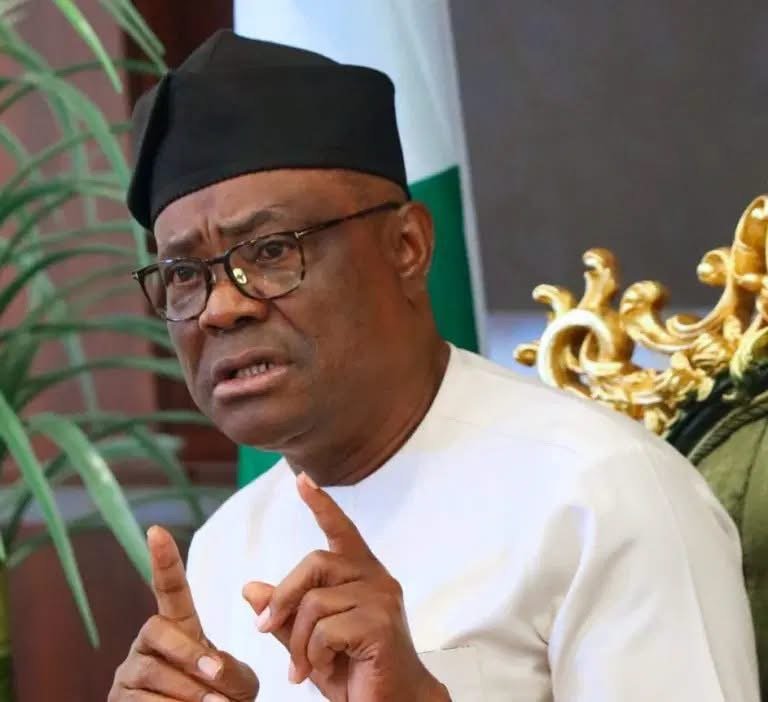
Minister of the Federal Capital Territory (FCT), Nyesom Wike, has expressed confidence that President Bola Ahmed Tinubu will win Nigeria’s 2027 presidential election on the first ballot, ruling out the possibility of a run-off.
Wike made the prediction during his monthly media chat in Abuja on Tuesday, October 13, 2026, where he discussed Tinubu’s re-election prospects, his relationship with governors of the All Progressives Congress (APC) and the political activities of the Peoples Democratic Party (PDP), to which he belongs.
According to a report by Vanguard, the minister said he did not see any likelihood of a second round of voting in the presidential contest and maintained that Nigerians would return Tinubu for another term.
His comments come as political parties and their supporters intensify preparations for the 2027 general election, with alliances, campaign structures and disagreements over political influence increasingly shaping public debate.
Wike’s prediction reflects his confidence in Tinubu’s electoral prospects. However, it remains a political assessment rather than an established outcome, as the election has yet to take place and voters will ultimately determine the result through the electoral process.
Wike Says Tinubu Will Win on the First Ballot
During the media interaction, Wike rejected the suggestion that Tinubu could lose his re-election bid and face a second round of voting.
Vanguard reported that the minister said he had not seen any likelihood of a run-off and maintained that the president would be returned to office by Nigerian voters.
Under Nigeria’s presidential electoral system, a candidate must satisfy the constitutional requirements for election as president. These include securing the highest number of votes cast and meeting the required geographical spread of support across the federation.
A run-off becomes relevant only under the circumstances prescribed by the Constitution where no candidate satisfies the applicable requirements in the initial ballot.
Wike’s prediction therefore concerns more than the number of votes Tinubu might receive. It also assumes that the president’s support would meet the constitutional conditions necessary to secure victory in the first round.
The minister did not establish through the reported remarks that the election result was already determined. His statement was an expression of confidence about a future contest.
The strength of that confidence will ultimately be tested against the choices made by voters, the performance and organisation of the competing parties, campaign developments and the conduct of the election.
For now, the statement places Wike among the political figures publicly projecting a first-ballot victory for Tinubu ahead of the next presidential election.
Wike Reaffirms His Support for Tinubu’s Re-Election
Wike’s latest declaration follows several public statements in which he has made clear his intention to support Tinubu’s bid for a second term in office.
The former Rivers State governor has maintained that his backing for the president does not mean he has abandoned his political affiliation with the PDP or agreed that the party should withdraw from other contests.
In September 2026, Channels Television reported that Wike had reiterated his support for Tinubu while insisting that the PDP remained entitled to field candidates in governorship, National Assembly and State House of Assembly elections.
The minister’s position presents a distinctive political arrangement: he remains associated with the PDP while serving in the federal cabinet of a president elected on the platform of the APC.
His support for Tinubu has also been linked to the Rainbow Coalition, a cross-party political platform through which supporters from different political backgrounds seek to mobilise for the president’s re-election.
The coalition has been presented by Wike and his associates as a vehicle for bringing together people who support Tinubu, rather than as a declaration that all participating politicians have joined the APC.
This distinction matters because Nigeria’s electoral contests involve multiple levels of government. Support for a presidential candidate does not automatically mean that the same politician or group will support every candidate from that president’s party in state and legislative elections.
Wike has argued that political actors can cooperate on the presidency while maintaining separate interests in other contests.
That approach could allow politicians from different parties to coordinate their support for Tinubu while continuing to compete for governorships and legislative seats.
However, the practical effect of such an arrangement will depend on the decisions made by individual candidates, party structures and political stakeholders as the election approaches.
Disagreement With APC Governors Over State-Level Politics
During the October 13 media chat, Wike also denied working against three APC governors: Hope Uzodimma of Imo State, AbdulRahman AbdulRazaq of Kwara State and Inuwa Yahaya of Gombe State.
Vanguard reported that the minister rejected allegations that he was sponsoring candidates to challenge the governors in their respective states.
Wike argued that his support for Tinubu did not prevent the PDP from fielding candidates in other elections. He also maintained that he had not entered into agreements with the governors that would prevent him or his political associates from pursuing separate electoral interests.
The disagreement highlights a recurring feature of Nigerian politics: alliances at the national level do not always eliminate competition between politicians at the state level.
Governors and other political officeholders often have their own political organisations, preferred candidates and local interests. These interests can differ even when the politicians involved support the same presidential candidate.
Wike’s position is that backing Tinubu should not be interpreted as a commitment to support every APC candidate in every state.
That distinction could become important as parties select candidates and negotiate alliances ahead of the 2027 elections.
The minister’s remarks also indicate that his political cooperation with Tinubu does not necessarily extend to a blanket endorsement of the APC’s wider electoral ambitions.
Nevertheless, the available reporting does not establish that Wike has sponsored candidates against the three governors. His denial and the allegations he addressed should be treated as part of an ongoing political disagreement, rather than as proof of the claims made against him.
The positions of the governors and any other individuals directly concerned would be relevant to a fuller account of the dispute.
What Wike’s Prediction Means for the PDP
Wike’s support for Tinubu has implications for discussions about the PDP’s role in the next general election.
The minister remains associated with the opposition party but has publicly committed himself to supporting a president from the APC. This position has contributed to debate about political loyalties, internal party divisions and the relationship between presidential alliances and other electoral contests.
In September, Channels Television reported that Wike maintained that the PDP would still participate in the 2027 elections, even though he intended to support Tinubu’s re-election.
The position suggests that Wike does not consider his presidential preference incompatible with the PDP fielding candidates for other offices.
However, the extent to which that approach will influence the party’s campaign strategy remains uncertain.
The PDP’s ability to compete effectively will depend on factors including candidate selection, organisational unity, funding, mobilisation and its capacity to present credible alternatives to voters.
The party’s internal decisions will also matter. Individual members may hold different views about whether to cooperate with Tinubu’s supporters, contest the presidency independently or prioritise other electoral races.
Wike’s declaration should therefore not be interpreted as an official statement of the PDP’s position on the presidential election. It represents his own publicly expressed support for Tinubu.
The party’s formal decisions and the actions of its candidates will provide a clearer picture of how it intends to approach the election.
For voters, the distinction is important because a politician’s personal endorsement does not automatically determine the position of an entire party or its membership.
The Role of Political Coalitions Ahead of 2027
The Rainbow Coalition and similar cross-party arrangements are part of the political activity developing ahead of the next general election.
Such coalitions can bring together politicians, party members and other supporters who share a particular electoral objective without requiring all participants to belong to the same party.
In Wike’s case, the stated objective is to mobilise support for Tinubu’s re-election.
The effectiveness of such an arrangement, however, cannot be determined solely by the public declarations of its leaders. It will depend on whether supporters remain organised, translate their commitments into campaign activity and persuade voters to support the candidate.
Nigeria’s elections are also influenced by issues that extend beyond political endorsements. Voters may assess candidates based on economic conditions, security, employment, public services, infrastructure, education and their own experiences of government.
The political environment can change between a declaration of support and election day. Campaign messages, candidate selection, alliances and developments in government may affect how voters view the competing parties.
Consequently, Wike’s confidence in a first-ballot victory is one position in a wider political contest. It does not remove the need for Tinubu and his supporters to persuade voters or for competing parties to organise their campaigns.
The strength of the opposition will also be determined by its actions and electoral support, rather than solely by the assessments of political figures on either side.
Nigeria’s Presidential Election and the Importance of Voter Choice
The 2027 presidential election will be an important test of political support for the incumbent administration and the parties seeking to replace it.
Tinubu won the 2023 presidential election and subsequently assumed office as president. His bid for another term will require voters to assess his record and compare his candidacy with the alternatives presented by other political parties.
Wike’s prediction that Tinubu will win without a run-off is a confident forecast, but the eventual result will depend on the votes cast and the constitutional requirements governing the election.
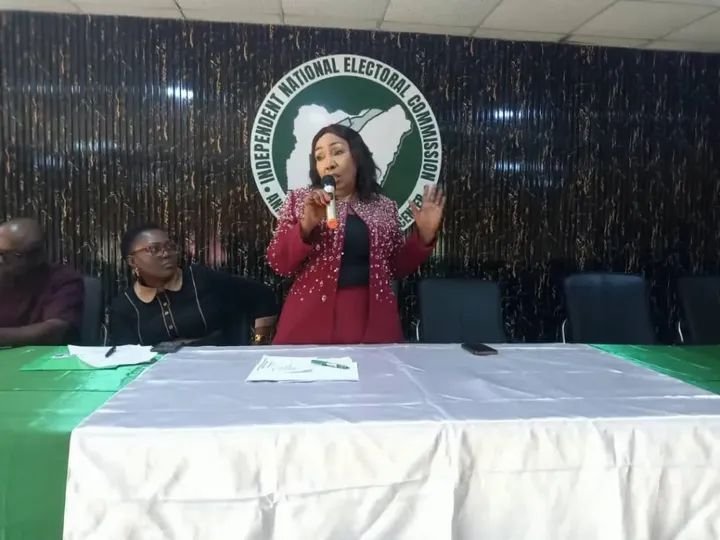
The Independent National Electoral Commission (INEC) is the body responsible for administering federal elections in Nigeria. Its preparations, the conduct of voting and the collation of results will be central to determining the outcome.
Political declarations made before election day cannot substitute for the official electoral process.
For the public, the central issues include the candidates’ policies, their records in public office, the credibility of campaign promises and the ability of political parties to explain how they intend to address the country’s challenges.
The election will also provide an opportunity for voters to express their views on the performance of the federal government and the alternatives offered by opposition parties.
Wike’s remarks have drawn attention to the confidence of Tinubu’s supporters, but they do not establish how Nigerians as a whole intend to vote.
Without reliable, properly conducted polling or the eventual official results, claims about the likely outcome should be understood as political opinions rather than evidence of a settled electoral result.
What Happens Next?
As the 2027 general election approaches, political parties and coalitions are expected to continue organising supporters, negotiating alliances and preparing their campaign strategies.
For Wike, the immediate political task will be to translate his stated support for Tinubu into the mobilisation activities he has promised.
The minister has also maintained that the PDP should remain free to field candidates in other elections, leaving open the question of how his presidential support will interact with contests involving the party at state and legislative levels.
The APC, the PDP and other political parties will have to make their own decisions about candidates, alliances and campaign priorities in accordance with the applicable electoral rules.
INEC’s official timetable and guidelines will determine the relevant deadlines and procedures for the election.
The next stages of political activity will provide further evidence of how the competing groups intend to organise and whether their alliances translate into formal campaign structures.
Until voters cast their ballots and the result is determined through the constitutional process, Wike’s prediction remains his assessment of Tinubu’s prospects.
His latest comments nevertheless reinforce his public commitment to the president’s re-election and highlight the continuing negotiations and political alignments taking shape ahead of 2027.
Weng Global – stories beyond borders
Sources
- Vanguard — report on Wike’s October 13, 2026, media chat and comments on Tinubu’s re-election prospects.
- Channels Television — report on Wike’s September 15, 2026, clarification regarding his support for Tinubu and the PDP’s participation in other elections.
- Independent National Electoral Commission (INEC) — institutional information on Nigeria’s electoral process.
- Constitution of the Federal Republic of Nigeria — constitutional requirements for election as president.