Reported by Simon Daniel Yusuph l Journalist at Weng Global
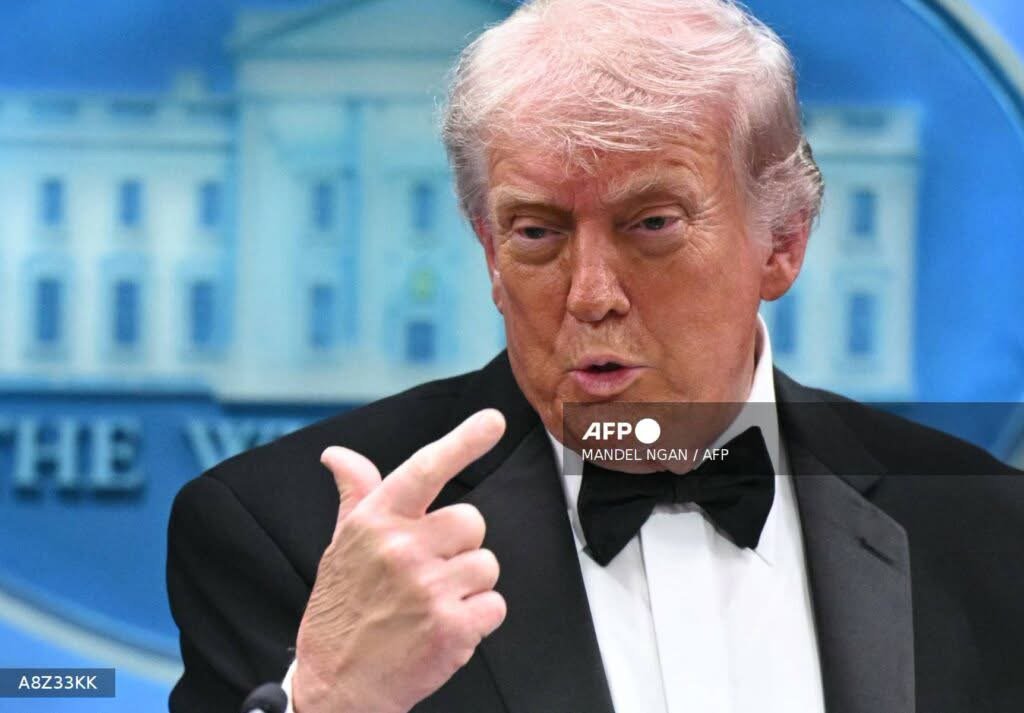
United States President Donald Trump has ruled out launching new attacks against Iran before the November 3, 2026, midterm elections, saying Washington is holding what he described as productive discussions with Tehran despite continuing tensions over the conflict, economic pressure and restrictions affecting regional oil shipments.
Trump announced the position on Thursday, October 8, through a statement on his Truth Social platform, indicating that the United States would not initiate further attacks against Iran before Americans vote in elections that will determine control of Congress for the remainder of his presidency.
The announcement comes amid uncertainty over the future of the US-Israeli conflict with Iran, which began in February 2026, and growing concerns about the consequences for international energy markets, regional security and the global economy.
Trump said discussions with the Iranian government were progressing, although he maintained that economic and military pressure on Tehran would continue.
In his statement, the US president wrote that Washington and Tehran were having “productive discussions” and declared that the United States would not attack Iran before the midterm elections.
He also insisted that the blockade affecting Iran would remain in force, signalling that the decision to suspend new attacks before the election does not represent a complete withdrawal of American pressure on the Iranian government.
The announcement offers a temporary indication of Washington’s military intentions during the final weeks of the US election campaign. However, it does not establish that a comprehensive peace agreement has been reached or that the conflict will end after the elections.
Diplomatic Discussions Continue Amid Military Uncertainty
Trump’s announcement followed reports that the US administration had been considering options for renewed military operations against Iranian targets before the November elections.
According to reporting by Reuters and Axios, preparations for possible military action had remained under consideration within the US national security establishment, even as diplomatic contacts continued.
The reports highlighted the uncertainty surrounding Washington’s next steps, particularly because military preparations and diplomatic engagement were proceeding at the same time.
Trump’s latest statement therefore provides an important clarification of his publicly declared position for the period before the elections. Nevertheless, it does not necessarily resolve the broader strategic disagreements between Washington and Tehran.
The US president did not announce a signed peace agreement, a detailed timetable for ending hostilities or a final settlement addressing the issues that have sustained the conflict.
His comments instead suggest that the administration intends to maintain diplomatic engagement while keeping economic pressure on Iran in place.
The distinction is important because a decision not to launch new attacks before a particular date is not equivalent to a permanent ceasefire.
For the diplomatic process to produce a lasting outcome, the two governments would still need to address the central disagreements surrounding military security, nuclear activities, sanctions and navigation through strategically important regional waterways.
As of October 9, the publicly reported information does not establish that these issues have been comprehensively resolved.
Strait of Hormuz Remains Central to the Crisis
The Strait of Hormuz remains one of the most important strategic factors in the confrontation between the United States and Iran.
The narrow waterway connects the Persian Gulf with the Gulf of Oman and the wider Arabian Sea. Under normal conditions, it carries a substantial proportion of the world’s oil and liquefied natural gas shipments.
Disruptions to shipping through the strait can affect energy supplies, transportation costs, insurance premiums and the prices consumers pay for fuel and other goods.
The conflict has placed the waterway at the centre of disagreements over maritime security, access to international shipping routes and economic pressure against Iran.
Trump maintained in his October 8 statement that the blockade would remain in effect while also making claims about the volume of oil passing through the strait.
Those claims should be distinguished from independently verified shipping data. A presidential statement about oil movements does not, by itself, establish the origin, destination or commercial status of every shipment.
The continuing uncertainty surrounding maritime access has broader consequences because oil markets respond not only to actual supply disruptions but also to the possibility of further military escalation.
When traders anticipate that shipping routes could become more dangerous or that supplies might be interrupted, prices can rise before the full economic effects of a disruption become apparent.
Reuters reported that oil prices had risen amid renewed concerns about possible US strikes on Iran before Trump’s announcement.
The development illustrates how military statements and diplomatic signals can influence market expectations even when they do not immediately change the underlying supply situation.
For countries that depend heavily on imported petroleum products, prolonged instability in the Gulf can create additional pressure on national budgets, businesses and household spending.
US Midterm Elections Add Political Pressure
The November 3 elections are an important political test for Trump and his Republican Party.
American voters will elect members of Congress, with control of the House of Representatives and Senate at stake. The outcome will influence the administration’s ability to advance legislation, oversee government spending and pursue its domestic and foreign policy priorities.
The Iran conflict has become part of the wider political debate because of its security implications and its potential effects on fuel prices and the cost of living.
Reuters reported that public dissatisfaction with the administration’s handling of the Iran situation has become a concern for Republicans ahead of the vote.
Higher energy costs can affect households directly through petrol prices, transportation expenses and the cost of producing and distributing goods. Businesses can also face higher operating expenses, which may eventually be passed on to consumers.
These pressures can become politically significant when voters are already concerned about inflation and household finances.
Trump’s decision to rule out new attacks before the election may therefore reduce immediate uncertainty about the timing of a possible military escalation.
However, the announcement does not establish that domestic electoral considerations are the sole reason for the decision. The president has publicly cited ongoing discussions with Iran, while the wider diplomatic, military and economic calculations behind the policy remain subject to further developments.
The distinction matters for responsible reporting. The timing of the announcement and the approaching elections are established facts, but claims about the administration’s private motives would require additional evidence.
The election outcome could also shape the political environment in which future decisions about Iran are made. A change in congressional control could affect oversight, political debate and the administration’s room for manoeuvre, although it would not automatically determine whether military action takes place.
Iran’s Nuclear Programme Remains a Major Disagreement
The nuclear issue remains one of the central sources of tension between Washington and Tehran.
Trump has repeatedly maintained that Iran must not obtain a nuclear weapon. His administration’s position reflects longstanding US concerns about Iran’s nuclear activities and the wider security implications for the Middle East.
Iran has denied seeking to develop nuclear weapons and has maintained that its nuclear programme serves peaceful purposes. The competing positions have complicated efforts to establish a durable agreement.
A lasting settlement would require more than a temporary reduction in military activity. It would also need to address the nuclear dispute, the level of verification required to establish compliance and the conditions under which economic restrictions might be eased.
Other disagreements, including regional security and control over maritime movements, have further complicated negotiations.
The diplomatic challenge is that both governments must determine whether they can reach an arrangement that addresses their principal security concerns without creating unacceptable political costs at home.
For Washington, any agreement would need to satisfy its stated objectives concerning Iran’s nuclear capabilities and regional security.
For Tehran, the terms would have to address its own security concerns and the economic consequences of restrictions imposed against the country.
Neither side’s public statements alone establish that the differences have narrowed sufficiently to produce a final agreement.
Trump’s reference to productive discussions indicates that he considers the diplomatic channel active, but the substance of the negotiations and the prospects of an agreement remain matters requiring further confirmation.
Economic Pressure Continues Despite the Pause in New Attacks
Trump’s announcement does not mean that economic pressure against Iran will end.
By stating that the blockade would remain in force, the president signalled that Washington intends to preserve an important element of its strategy while ruling out new attacks before November 3.
Economic restrictions can affect a country’s access to international trade, energy revenues, financial transactions and commercial relationships. Their effects can also extend beyond the government targeted by them, depending on how the measures operate and how businesses respond.
For Iran, restrictions affecting oil exports and maritime trade can create additional pressure on public finances and commercial activity.
For international markets, uncertainty over the enforcement of restrictions and the movement of oil can complicate decisions by energy companies, shipping operators and traders.
The continuation of economic pressure alongside diplomatic discussions suggests that Washington is attempting to preserve leverage during negotiations.
However, the effectiveness of such a strategy depends on several factors, including Iran’s willingness to negotiate, the ability of both governments to agree on reciprocal steps and the extent to which each side considers the costs of continued confrontation sustainable.
Economic pressure can encourage negotiations, but it does not guarantee that the parties will reach an agreement.
The humanitarian and wider economic consequences of prolonged confrontation also remain important considerations for regional populations and countries connected to Gulf trade.
Implications for Africa and the Global Economy
The US-Iran confrontation is not limited to the Middle East. Its consequences can extend to African economies through international energy prices, trade costs, exchange-rate pressures and the broader economic effects of geopolitical uncertainty.
For Nigeria, developments affecting international oil markets are particularly important because petroleum remains a major component of the country’s export earnings and public finances.
Higher international crude prices can potentially increase government revenue, depending on production levels, domestic fiscal arrangements and other market conditions. However, the benefits are not automatic, and higher global prices can also increase domestic fuel costs and put pressure on households and businesses.
The effects on Nigeria’s economy therefore depend on several variables, including crude oil production, foreign-exchange conditions, fuel supply arrangements and the relationship between international prices and domestic costs.
Other African countries that import substantial quantities of petroleum products may face additional pressure when global energy prices rise.
Higher fuel costs can increase the expense of transporting food, moving goods and operating businesses. These increases may contribute to inflation, particularly in economies where households already spend a significant proportion of their income on essential goods.
A prolonged disruption to Gulf shipping could also affect freight costs and international supply chains, creating challenges for businesses that depend on imported materials or overseas markets.
The implications extend beyond Africa. Asian economies with substantial energy-import requirements, European industries and international shipping companies can all be affected by instability around the Strait of Hormuz.
For this reason, a sustained reduction in military tensions would have significance beyond the immediate relationship between Washington and Tehran.
Nevertheless, Trump’s announcement should not be interpreted as evidence that energy prices will immediately fall or that shipping conditions have returned to normal. Those outcomes would depend on actual developments in the conflict, maritime security and the broader supply of oil.
Military Restraint Does Not Yet Guarantee a Lasting Peace
Trump’s statement provides a clear public commitment not to launch new attacks against Iran before the November 3 elections. However, several important questions remain unanswered.
The first concerns the substance of the ongoing discussions. Neither the statement nor the publicly available reporting establishes a comprehensive agreement that resolves the principal disagreements between the two countries.
The second concerns the future of the conflict after the election period. Trump’s announcement addresses the period before November 3 but does not provide a definitive long-term commitment against renewed military operations.
The third concerns the continued enforcement of economic pressure and the conditions under which restrictions might be adjusted.
The fourth involves the security of maritime routes and whether the parties can establish arrangements that reduce the risk of further incidents affecting commercial shipping.
These questions will be central to assessing whether the current diplomatic engagement represents meaningful progress towards ending the conflict or a temporary pause in the possibility of escalation.
There is also a difference between the absence of new attacks initiated by the United States and the complete cessation of hostilities across the region. The former does not automatically establish the latter.
Any assessment of the situation must therefore distinguish Trump’s stated policy from developments on the ground and from the actions of other parties involved in the conflict.
What Happens Next?
The immediate focus will be on whether Washington and Tehran can translate their reported discussions into specific, verifiable steps towards reducing hostilities.
Further official statements, diplomatic exchanges and any publicly announced agreements will be important indicators of the negotiations’ progress.
Developments concerning the Strait of Hormuz will also require close attention because the waterway’s security remains closely connected to international energy supplies and commercial shipping.
The continued implementation of the US blockade and any response from Iran could influence the atmosphere surrounding the discussions.
The November 3 midterm elections will provide another significant point in the timeline, although the result will not, by itself, determine the future of the conflict.
For now, Trump’s announcement establishes a stated limit on new US attacks before the election, while leaving the longer-term outcome uncertain.
The central question is whether the diplomatic engagement can produce an arrangement that addresses the nuclear dispute, reduces the danger of renewed fighting and restores greater predictability to regional trade.
Until further agreements or independently verifiable developments emerge, the situation should be understood as an ongoing diplomatic and security crisis rather than a settled peace.
For African governments, businesses and consumers, developments in the Gulf will remain relevant because the security of major energy routes can influence prices, trade costs and economic planning far beyond the region.
Weng Global – stories beyond borders
Sources
- Reuters — Reporting on Trump’s October 8 announcement, US-Iran discussions, the midterm elections and energy-market concerns.
- Associated Press — Reporting on the US administration’s position on renewed military strikes and the diplomatic background.
- Axios — Reporting on US military preparations and the administration’s consideration of possible operations against Iran.
- The National — Reporting on the Strait of Hormuz, the blockade and the political and economic context surrounding Trump’s announcement.
- Anadolu Agency — Reporting on Trump’s public statement, the continuation of the blockade and the nuclear dispute.