Reported by Simon Daniel Yusuph l Journalist at Weng Global
Taiwan has taken delivery of the first two US-made F-16V Block 70 fighter jets, marking a major milestone in its long-delayed programme to acquire 66 advanced aircraft from the United States.
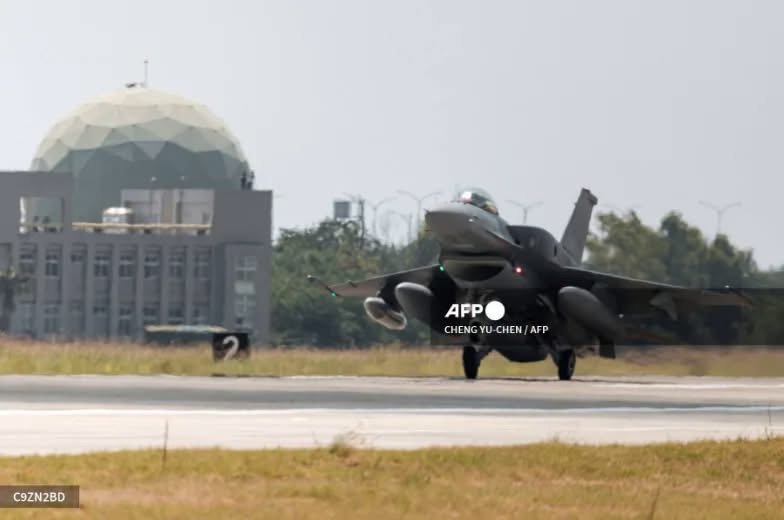
The two aircraft landed at Chihhang Air Base in Taitung County on Friday, October 2, 2026, as Taiwan continues efforts to strengthen its air force amid persistent military pressure from China. The jets are part of a procurement programme valued at about $8 billion and approved by Washington in 2019.
The arrival is significant because the first deliveries had been expected earlier, while delays affected the schedule for the wider fleet. Taiwan is now expecting additional F-16Vs to arrive before the end of the year.
The delivery also comes at a sensitive point in US-Taiwan relations, with Taipei continuing to await Washington’s decision on a separate proposed $14 billion arms package.
First Two Aircraft Arrive in Taitung
The two F-16V Block 70 aircraft touched down at Chihhang Air Base in Taitung, on Taiwan’s southeastern coast, around midday local time, according to Taiwan’s Central News Agency and AFP reporting.
The aircraft are the first of 66 new F-16V fighters Taiwan purchased from the United States under its “Peace Phoenix Soaring” programme.
Taiwan’s Central News Agency reported that the government is spending approximately NT$247.2 billion, equivalent to about $8 billion, on the acquisition of the 66 aircraft between 2020 and 2026.
The programme was originally expected to deliver the aircraft in batches, but the timetable was affected by several factors, including production-line changes, supply-chain disruptions and technical issues.
Reuters reported that the first two aircraft had faced months of delays before finally arriving in Taiwan.
The aircraft had previously been expected to reach Taiwan earlier in the year. Taiwan’s Defence Ministry had indicated in late September that the F-16Vs had reached a stage at which they were ready for delivery, while arrangements with the US side were continuing.
Upgrade to Taiwan’s Fighter Fleet
The F-16V Block 70 is an advanced version of the F-16 family, incorporating modern avionics and radar systems compared with earlier F-16A/B aircraft operated by Taiwan.
The new aircraft are designed to improve capabilities including detection, tracking and engagement. Taiwan has described the programme as part of its wider effort to modernise its military equipment.
The 66 new aircraft will eventually expand Taiwan’s F-16 fleet to more than 200 aircraft, according to Reuters.
The F-16V programme is particularly important to Taiwan because much of its existing fighter fleet has been in service for decades.
Taiwan has already undertaken an extensive upgrade programme for its older F-16A/B aircraft. The new Block 70 aircraft, however, are being built as new airframes rather than simply being modernised versions of older fighters.
The aircraft are manufactured by US defence company Lockheed Martin.
Taiwanese military expert Su Tzu-yun of the Institute for National Defense and Security Research said the new aircraft would provide an important addition to Taiwan’s air force as it responds to China’s military capabilities.
The arrival therefore represents not only the delivery of two aircraft but also the beginning of a larger transition involving Taiwan’s combat aviation capabilities.
Delivery Delays Raised Concerns
The F-16V programme has faced a series of delays.
Taiwan originally expected deliveries to begin earlier, but technical issues and changes affecting production contributed to the revised schedule. Taiwan’s Central News Agency reported that the programme had also been affected by the relocation and restart of the production line and disruptions in the supply chain.
The first two aircraft were also delayed during their journey from the United States.
Reports indicated that the aircraft had made refuelling stops, including in Hawaii, before their planned journey to Taiwan. Local media reported that the aircraft had returned to Hawaii after departing for Guam, although no official explanation was given for the turnback.
The delay attracted attention in Taiwan because the aircraft had been highly anticipated.
Taiwanese Defence Minister Wellington Koo said more F-16Vs would be delivered before the end of the year, although he did not specify the number expected.
Koo said aircraft were continuing to move through the production process, with some having completed testing, while Taiwan would continue coordinating delivery arrangements with the United States.
Local Interest in the Arrival
The delivery also attracted significant public interest in Taitung.
Local residents gathered around the perimeter of the air base to watch the aircraft arrive, with some carrying binoculars and long-lens cameras.
AFP reported that Kimi Chi, a salesman from Taichung, travelled overnight to photograph the aircraft.
Chi said the arrival represented an improvement in Taiwan’s military hardware, while also raising concerns about the availability of pilots needed to operate the aircraft effectively.
Former Taiwanese Air Force serviceman Eric Chan also told AFP that the aircraft would have an important defensive role.
Such reactions reflect the broader public attention surrounding Taiwan’s efforts to modernise its armed forces as tensions across the Taiwan Strait remain a major regional security issue.
China Opposes US Arms Sales to Taiwan
The F-16V delivery is taking place against the backdrop of longstanding tensions between Beijing, Taipei and Washington.
China claims Taiwan as part of its territory and has opposed US arms sales to the island.
Beijing has repeatedly criticised American military support for Taiwan, while Taiwan maintains that its defence capabilities are necessary to protect the island and its people.
The United States does not maintain formal diplomatic relations with Taiwan but remains the island’s principal source of foreign military equipment.
Washington’s longstanding policy towards Taiwan includes providing defensive equipment, while maintaining its broader policy framework concerning relations with Beijing and Taipei.
Reuters reported that the latest F-16 delivery comes amid questions in Taiwan about the pace of US weapons deliveries, although Washington has said there has been no change in its policy towards the island.
Separate $14 Billion Arms Package Remains on Hold
The arrival of the first F-16Vs is separate from another major arms package Taiwan is seeking from the United States.
Taipei is awaiting approval for a proposed package worth about $14 billion that includes additional military equipment, including Patriot air defence systems.
The package has become part of a wider discussion over Washington’s approach to Taiwan and its relations with China.
Associated Press reported on September 30 that Taiwan’s Defence Minister Wellington Koo said existing US arms sales agreements remained in place and that discussions with Washington were continuing. However, the proposed $14 billion package remained stalled.
The issue has attracted additional attention because of the broader US-China relationship and recent high-level contacts between US President Donald Trump and Chinese President Xi Jinping.
Reuters reported in September that Taiwan and the United States remained in discussions over arms sales and that Taipei had received assurances that US policy towards Taiwan had not changed.
The status of that separate package remains distinct from the F-16V programme, which is based on the earlier agreement for 66 aircraft.
Why the F-16V Delivery Matters
The arrival of the first two aircraft gives Taiwan an additional modern fighter capability while the remaining aircraft are delivered.
For Taiwan, the issue is broader than simply adding new aircraft to its inventory. The F-16Vs are part of a wider military modernisation effort involving air defence, surveillance, combat aviation and other systems.
The delivery also demonstrates that previously approved US-Taiwan defence agreements are continuing to move forward despite delays and political sensitivity surrounding future arms sales.
For the United States, the programme remains part of its long-standing security relationship with Taiwan and its broader strategic engagement in the Indo-Pacific.
For China, US military support for Taiwan remains a highly sensitive issue because Beijing regards the island as part of its territory.
The competing positions make military equipment deliveries such as the F-16Vs an important element in the security dynamics of East Asia.
At the same time, the delivery of two aircraft should not be interpreted as a complete resolution of Taiwan’s wider defence procurement challenges. Taiwan continues to face delays affecting other weapons systems and remains dependent on timely deliveries and maintenance support for equipment sourced from abroad.
What Happens Next
The immediate focus will be on the delivery of additional F-16V aircraft.
Taiwanese officials have indicated that more aircraft are expected before the end of 2026, although the exact number and delivery schedule remain subject to coordination between Taipei and Washington.
The remaining aircraft will eventually form part of Taiwan’s operational fighter fleet, increasing the number of modern F-16s available to the island’s air force.
Taiwan will also continue discussions with the United States over the separate $14 billion arms package.
The timing and structure of any future US weapons approval will depend on decisions in Washington and the wider US-China relationship. Reports have suggested that the package could potentially be divided into smaller components, but the final outcome has not been confirmed.
For now, the arrival of the first two F-16V Block 70 aircraft provides Taiwan with the first tangible delivery from a programme that has been in development for several years.
The remaining deliveries will determine how quickly the new fleet becomes fully integrated into Taiwan’s air defence structure.
Weng Global – stories beyond borders
Sources
Reuters
Agence France-Presse (AFP)
Taiwan’s Central News Agency (CNA)
Taiwan Ministry of National Defense
Associated Press (AP)
Institute for National Defense and Security Research