Reported by Simon Daniel Yusuph l Journalist at Weng Global
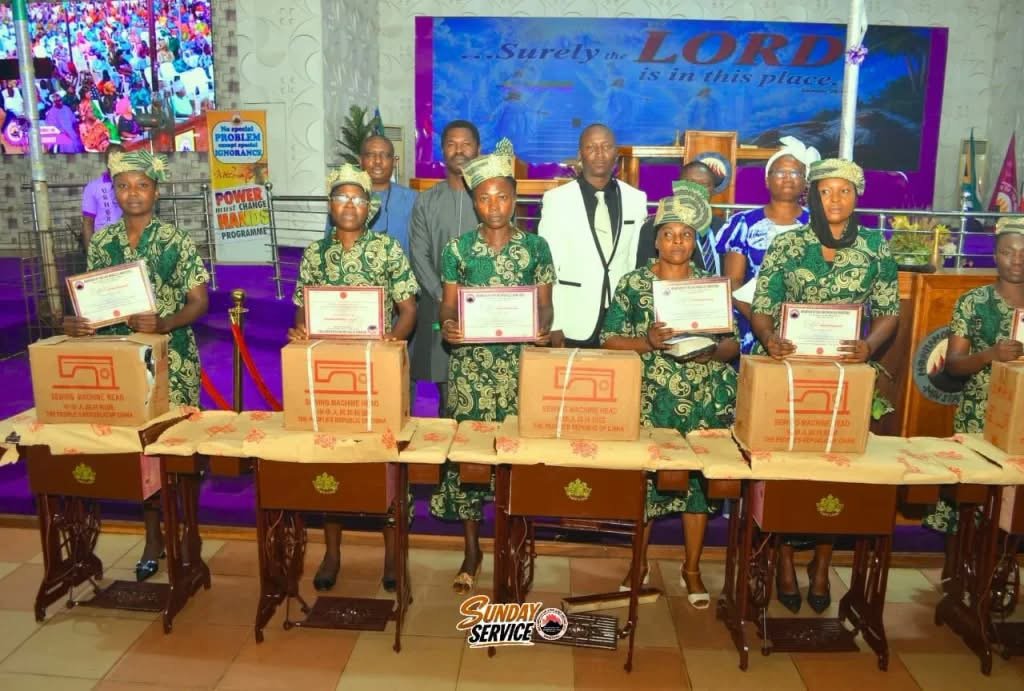
The Mountain of Fire and Miracles Ministries (MFM) in Ondo State has empowered 10 women with sewing machines and awarded scholarships to 20 indigent pupils in Akure, combining support for small-scale enterprise with assistance for children facing financial barriers to education.
The initiative reflects the role religious organisations can play in addressing economic and social challenges within their host communities through vocational support and educational assistance. By providing sewing machines to women and scholarships to pupils, the programme seeks to support livelihoods while helping families meet some of the costs associated with schooling.
The intervention comes amid continuing concerns about the cost of living in Nigeria, where households face pressure from food prices, transportation expenses and other essential costs. For families with limited incomes, purchasing vocational equipment or paying school-related expenses can be difficult, potentially restricting opportunities for economic advancement and educational continuity.
Although the reported intervention involves a relatively small number of direct beneficiaries, its two areas of focus address different but connected needs: helping women pursue income-generating activities and supporting children whose families may struggle to meet educational expenses.
Details available about the latest initiative are limited. The precise date of the presentation, the value of the sewing machines, the duration and coverage of the scholarships, and the criteria used to select beneficiaries have not been independently established from the available reporting.
Sewing Machines Aim to Support Women’s Economic Empowerment
Providing sewing machines can give beneficiaries practical equipment to begin or expand tailoring businesses, provided they have the necessary skills, materials and access to customers.
For women who already possess sewing skills but lack the funds to purchase equipment, receiving a machine can remove one of the barriers to establishing an independent business. It may also help trained participants move from apprenticeship or informal work towards operating their own enterprises.
Tailoring can offer several potential sources of income, including making clothes, carrying out alterations, producing uniforms and fulfilling orders for special occasions. The opportunities available to each beneficiary will depend on local demand, production costs, competition and the ability to obtain materials.
However, receiving equipment does not automatically guarantee a sustainable business. Beneficiaries may also need access to working capital, training in pricing and record-keeping, reliable electricity where required, and connections to customers.
The long-term impact of an empowerment initiative therefore depends partly on whether beneficiaries can turn the equipment into regular income-generating activity.
For the 10 women identified in the reported MFM programme, the sewing machines represent practical assets that could support self-employment. Their eventual economic benefits would depend on how effectively the machines are used and whether the women can establish or strengthen viable tailoring businesses.
The initiative also highlights the importance of designing empowerment programmes around tools that beneficiaries can use directly. Rather than providing only temporary financial assistance, equipment-based support can give recipients an asset that remains useful beyond the day of distribution.
To maximise such benefits, programmes of this nature can be strengthened through follow-up training, mentoring and opportunities for beneficiaries to exchange experiences and develop business relationships.
These are potential ways to improve the effectiveness of vocational support, rather than additional activities confirmed as part of the latest MFM initiative.
Scholarships to Help 20 Pupils Continue Their Education
The second component of the programme is the award of scholarships to 20 indigent pupils in Akure.
Educational assistance can reduce some of the financial pressure faced by families who want their children to remain in school but struggle to cover the associated costs.
Depending on the terms of a scholarship, support may cover tuition or other approved educational expenses. However, the specific benefits included in the scholarships awarded under the latest MFM programme have not been independently confirmed.
The distinction matters because a scholarship’s practical value depends on its coverage, duration and the needs of the recipient.
Some families may require help with school fees, while others may struggle to purchase books, uniforms and other essential learning materials. The extent to which the programme addresses these needs will depend on the arrangements established by the organisers.
For pupils from financially disadvantaged households, educational support can help reduce the risk that financial difficulties will interrupt their schooling. It can also provide parents and guardians with additional resources to direct towards other household needs.
Nevertheless, scholarships alone cannot resolve every barrier to education. School attendance and learning outcomes may also depend on access to transport, adequate teaching facilities, learning materials, nutrition and a supportive home environment.
The award to 20 pupils is therefore best understood as a targeted intervention that may ease some of the financial challenges affecting selected families.
Further details about the beneficiaries, the schools involved and the duration of the scholarship support would help establish the programme’s scope and allow its longer-term impact to be assessed.
MFM’s Previous Community Support Initiatives in Ondo
The latest reported intervention follows other community-focused programmes associated with Mountain of Fire and Miracles Ministries in Akure.
In November 2025, Punch reported that MFM’s Ondo State Mega Region 1, based in Akure, had provided free bakery and confectionery training to 127 young women and adult females. The church also supplied starter packs intended to help participants begin businesses after completing the training.
That report described the programme as part of the church’s efforts to promote women’s economic self-reliance. It also noted an earlier fashion-design initiative in which more than 50 women received training and sewing machines.
In September 2025, The Guardian reported that the church’s Ondo State Mega Region 1 had distributed food to more than 2,000 families in Akure, provided cash gifts to persons with disabilities and awarded scholarships to 50 indigent pupils of Mountain Top Nursery and Primary School.
The church also distributed exercise books to pupils as part of the outreach.
These earlier reports provide context for understanding the latest programme as part of a broader pattern of community support associated with the church’s activities in Akure.
However, the previous programmes should not be confused with the latest intervention. Their beneficiary numbers and forms of assistance relate to separate reported activities and should not be added to the latest figures as though they were part of a single event.
The earlier initiatives also illustrate the different ways community organisations can provide assistance, including vocational training, business equipment, food distribution and educational support.
The Role of Religious Organisations in Community Development
Religious institutions are often important parts of community life in Nigeria. In addition to their spiritual activities, some churches and other faith-based organisations operate welfare programmes, provide educational assistance and organise vocational initiatives.
Such interventions can help reach people who need support, particularly where community networks make it easier to identify households facing financial difficulties.
The reported MFM initiative brings together two forms of assistance that address different stages of economic and social development.
For adult beneficiaries, sewing machines may provide a route towards self-employment and improved household income. For pupils, scholarships may reduce some of the financial obstacles to continuing their education.
The connection between the two is important. A household’s financial position can influence whether children have access to educational resources, while improved earning opportunities for adults may strengthen a family’s ability to meet recurring expenses.
Community assistance can therefore make a contribution beyond the immediate value of the items or scholarships provided.
At the same time, faith-based initiatives operate alongside the responsibilities of government, schools, businesses and other civil society organisations. They cannot replace the need for accessible public education, effective social protection, employment opportunities and broader policies that address poverty.
Their contribution is most effective when support is delivered transparently, beneficiaries are selected fairly and programmes respond to clearly identified needs.
For initiatives involving education, it is also important to establish clear scholarship conditions and communicate what beneficiaries can expect. For vocational programmes, follow-up support can help determine whether recipients are able to use the equipment productively.
The latest MFM programme provides an example of community-level support, although the available information is not sufficient to establish its overall economic or educational impact.
Why the Initiative Matters Amid Economic Pressure
The rising cost of essential goods and services can affect households’ ability to invest in education and income-generating activities.
When a family has to prioritise food, transportation, housing and other basic expenses, purchasing a sewing machine or meeting school-related costs may become more difficult.
For aspiring tailors, the initial cost of equipment can delay entry into the trade even after training has been completed. For parents and guardians, school expenses can place additional pressure on already limited household budgets.
By providing equipment and scholarships, initiatives such as the one reported in Akure can help selected beneficiaries address some of these immediate barriers.
The potential benefits, however, should be assessed realistically. Ten sewing machines will directly benefit the women who receive them, while the scholarships will support the 20 pupils covered by the programme. The broader effect will depend on whether the assistance leads to sustainable business activity and continued access to education.
For the women, useful indicators of progress would include whether they establish or expand tailoring businesses, attract customers and generate enough income to meet operating costs.
For the pupils, relevant indicators would include whether the scholarships help them remain in school and meet the educational expenses covered by the programme.
Such follow-up information would provide a stronger basis for evaluating the results than the distribution figures alone.
The intervention also underlines the value of linking short-term assistance with longer-term opportunities. Equipment can help a person start a business, but skills, customers and financial management are important for keeping that business operating. Scholarship assistance can reduce immediate educational costs, while continued support from families, schools and relevant institutions remains important to pupils’ progress.
Transparency and Follow-Up Will Help Establish Impact
Public information about community empowerment programmes is important because it allows beneficiaries, community members and other stakeholders to understand what has been delivered and what results may follow.
For the latest MFM initiative, additional details could clarify the selection process for the 10 women and 20 pupils, the type of scholarship assistance provided and whether the women had completed vocational training before receiving the sewing machines.
Information about follow-up arrangements would also help show whether the programme includes support beyond the initial distribution.
These details have not been established from the reports available for this article and should not be assumed.
Clear reporting would help distinguish between the immediate outputs of the programme, such as the number of machines distributed and scholarships awarded, and longer-term outcomes, such as business sustainability or improved school attendance.
Both are important, but they measure different things.
The distribution of equipment demonstrates that material support was provided. Evidence that beneficiaries subsequently generated income or continued their education would offer a more complete picture of the programme’s impact.
For organisers, such follow-up can also help identify what worked, what difficulties beneficiaries encountered and how future interventions could be improved.
What Happens Next?
The reported programme has provided sewing machines to 10 women and scholarships to 20 indigent pupils in Akure. The next important question is how the assistance will support the beneficiaries over time.
For the women, the value of the intervention will depend on their ability to use the sewing machines productively, secure customers and manage the costs associated with tailoring.
For the pupils, the significance of the scholarships will depend on the expenses covered and whether the support helps them continue their education.
Further information from MFM’s Ondo leadership would help clarify the programme’s date, selection criteria, scholarship terms and any plans for monitoring the beneficiaries’ progress.
No additional commitments or follow-up activities have been confirmed in the material available for this report.
The initiative nevertheless highlights how community-based assistance can address immediate needs in both livelihoods and education. Its lasting significance will be clearer as more information becomes available about the beneficiaries and the results achieved.
Weng Global – stories beyond borders
Sources
- Punch Newspapers — report on MFM’s training and empowerment of 127 women in bakery and confectionery skills in Akure, published in November 2025.
- The Guardian — report on MFM’s food distribution, scholarships and other community support activities in Akure, published in September 2025.
- Mountain of Fire and Miracles Ministries — official information about the church and its community and ministry activities.