Reported by Simon Daniel Yusuph l Journalist at Weng Global
The death toll from a passenger boat accident in Southern Ijaw Local Government Area of Bayelsa State has risen to 29, according to Governor Douye Diri, as search-and-rescue operations continue and authorities intensify warnings against overloading, reckless navigation and failure to provide life jackets.
The tragedy occurred on Friday, November 20, 2026, when a passenger boat conveying mourners from Ayama community to Ukubie community for a burial ceremony capsized near the river junction between Oweikorogha and Otuan communities.
The incident has raised fresh concerns about passenger safety, the enforcement of maritime regulations and the risks faced by residents who depend heavily on waterways for transportation across Bayelsa and other riverine parts of Nigeria.
Although the governor announced that 29 people had been confirmed dead, the final casualty figure remains uncertain. Recovery efforts are continuing, and authorities have indicated that additional victims could still be found.
How the Bayelsa Boat Accident Happened
The accident involved a wooden passenger vessel popularly known as a ‘Love Boat’, which was transporting people from Ayama to Ukubie for a burial ceremony.
According to the Bayelsa State Police Command, the boat capsized at approximately 11 a.m. after developing a mechanical problem while navigating the waterway.
The police said preliminary information indicated that some passengers had urged the operator to steer towards the riverbank after the mechanical fault developed. However, the operator allegedly continued sailing before the vessel eventually overturned.
The command initially confirmed that four bodies had been recovered and 24 passengers rescued. Nineteen of the rescued passengers were taken to Ayama Clinic, while five others who sustained varying degrees of injuries were transferred to Family Care Hospital in Yenagoa for treatment.
The police also disclosed that the boat operator, identified only as Omovie, reportedly fled the scene, while the vessel’s manager, identified as MV Bina, was taken into custody for investigation.
The police said the investigation would establish the circumstances surrounding the accident and determine whether anyone should be held responsible.
As the search continued, casualty figures increased. Governor Diri subsequently announced that 29 people had died, while more than 50 survivors had been recorded.
Conflicting Casualty Figures and Continuing Rescue Operations
The changing figures have made it important to distinguish between confirmed deaths, reported recoveries and people who remain unaccounted for.
On November 22, Channels Television reported that Governor Diri put the death toll at 29 during a condolence visit by Vice-President Kashim Shettima. The governor also said that more than 50 survivors were receiving medical attention.
However, the governor explained that the final number of casualties had not been established because the affected boat had not yet been fully recovered. Some passengers were believed to remain trapped inside the vessel.
A report by The Guardian on November 23 also highlighted discrepancies between official figures and accounts from local sources. While local accounts suggested that more than 30 bodies had been recovered and some residents feared a significantly higher number of missing people, the figures could not be independently established.
Consequently, the figure of 32 deaths in some circulating reports should not be treated as officially confirmed without a verifiable statement from the relevant authorities.
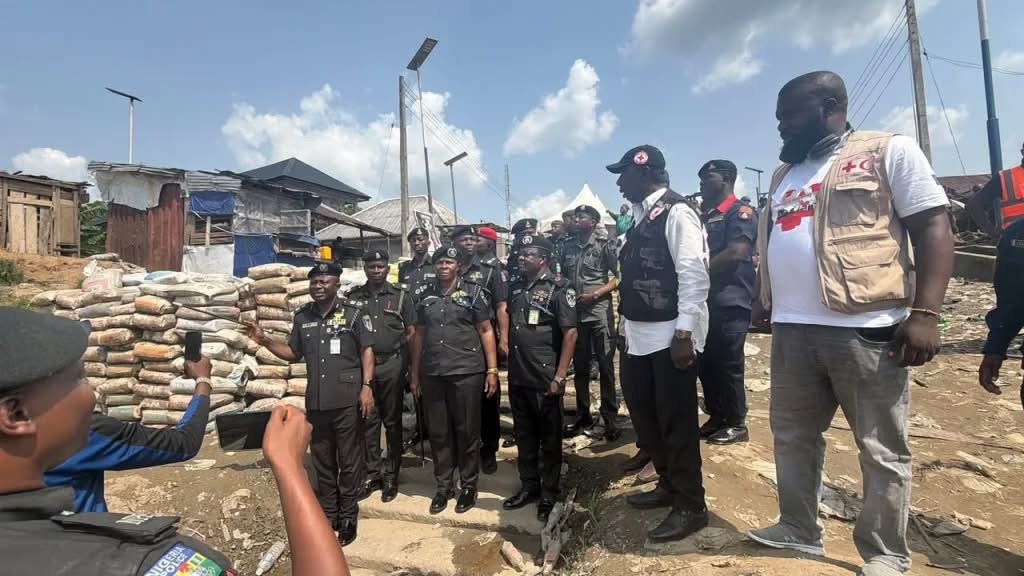
The continuing recovery operation involves government emergency teams, security agencies, community divers and other responders.
The National Emergency Management Agency has also been involved in supporting the response, working with state emergency authorities and other organisations.
The uncertainty surrounding the final casualty figure underscores the importance of transparent and regular communication from the agencies coordinating the operation.
Governor Diri Orders Investigation
Governor Diri has directed an investigation into the circumstances surrounding the tragedy and described the incident as avoidable.
According to reports by Channels Television and Premium Times, the governor raised concerns about the condition of the vessel and the location from which passengers boarded.
He alleged that the boat was not suitable for river transportation and had operated from an unauthorised loading point.
The governor’s comments have placed renewed attention on the responsibilities of boat operators, transport authorities and government agencies responsible for enforcing safety standards.
Diri also said the Bayelsa State Government was taking responsibility for the medical bills and feeding of survivors receiving treatment.
The investigation is expected to establish the circumstances that led to the accident, including the vessel’s mechanical condition, passenger capacity, loading arrangements and compliance with applicable water transportation requirements.
Any findings on negligence or regulatory breaches will need to be established through the investigation rather than assumed before its conclusion.
Police Warn Against Overloading and Failure to Use Life Jackets
Following the tragedy, the Bayelsa State Police Command renewed its warning to commercial boat operators and passengers to comply with maritime safety regulations.
The command specifically cautioned against overloading and operating passenger boats without ensuring the availability and proper use of life jackets.
It also advised passengers to take responsibility for their safety by insisting on life jackets before beginning water journeys.
The warning comes amid concerns that overcrowding and inadequate safety arrangements may have contributed to the scale of the disaster.
The Bayelsa State Government has also urged operators to ensure that vessels are mechanically sound, respect approved passenger capacities and avoid reckless navigation.
Commissioner for Information, Orientation and Strategy, Ebiuwou Koku-Obiyai, said operators must stop overloading, speeding and travelling without life jackets.
The government further advised against night journeys and travelling during unfavourable weather conditions.
These precautions are particularly important in riverine communities, where changing weather, strong currents, poor visibility and mechanical failures can quickly turn routine journeys into emergencies.
Federal Government Orders Investigation and Approves Support for Victims’ Families
The Federal Government has also responded to the tragedy.
President Bola Tinubu expressed condolences to the families of those who died and directed relevant federal disaster response agencies to support rescue and recovery efforts.
Vice-President Shettima visited Bayelsa on the President’s directive and met with survivors and affected families.
During the visit, Shettima announced that Tinubu had approved ₦250 million in support for families affected by the accident.
The intervention is intended to provide assistance to those who have lost relatives in the tragedy, although the long-term needs of affected households may extend beyond immediate financial support.
The Federal Government has also directed agencies to work with the Bayelsa State Government in responding to the incident.
Meanwhile, Minister of Marine and Blue Economy Adegboyega Oyetola ordered the National Inland Waterways Authority to investigate the direct and underlying causes of the accident.
According to BusinessDay, the minister expressed concern over reports that passengers were not wearing life jackets and that a passenger manifest might not have been available.
A passenger manifest is a record of people travelling on a vessel. Such documentation can help authorities establish how many people were on board and identify missing passengers after an accident.
Oyetola directed the authority to work with relevant government agencies and the state government to ensure a comprehensive investigation.
He also renewed calls for the gradual replacement of wooden passenger boats with safer and better-equipped vessels.
Bayelsa Plans Marine Safety Taskforce
Beyond the immediate rescue operation, the state government has announced plans to strengthen waterway safety enforcement.
Channels Television reported on November 23 that Commissioner for Marine and Blue Economy, Dr Faith Zibs Godwin, disclosed that the government planned to commission a Safety Marine Taskforce during the week.
The proposed taskforce is expected to support compliance with water transportation safety rules across 30 jetties in the state.
Godwin said the effort would involve cooperation among relevant state ministries, emergency responders, security agencies and community rescue teams.
She also indicated that recovery operations were continuing.
The proposed taskforce could provide an opportunity to improve monitoring of passenger vessels, loading points and safety equipment. However, its effectiveness will depend on the authority given to it, the resources available and consistent enforcement of regulations.
The announcement comes at a time when the tragedy has exposed concerns about the safety arrangements governing passenger movement across the state’s waterways.
Why the Tragedy Matters Beyond Bayelsa
The accident has renewed national attention on the dangers associated with inland water transportation in Nigeria.
For many communities in Bayelsa, rivers and creeks are not simply alternative travel routes. They are essential transport links connecting residents to schools, hospitals, markets, workplaces and neighbouring settlements.
The state’s geography means that some communities have limited road access, making boats a regular part of everyday life.
This dependence makes waterway safety a public responsibility that extends beyond individual passengers and boat operators.
When vessels are overloaded, poorly maintained or operated without essential safety equipment, the consequences can be devastating.
The tragedy also highlights the importance of ensuring that passengers have access to life jackets and that operators understand and respect the limits of their vessels.
Life jackets are particularly important because passengers who fall into the water may be unable to swim or remain afloat long enough to reach safety. Their availability alone is not sufficient; passengers and crew members must wear them properly throughout the journey.
The absence of reliable passenger records can also complicate rescue operations, making it difficult to establish how many people were travelling and how many remain missing.
For regulators, the incident presents an opportunity to examine whether existing safety rules are being enforced consistently, particularly in smaller communities and at informal loading points.
What Happens Next?
The immediate priority remains the recovery of victims, medical care for survivors and support for bereaved families.
Authorities are also expected to establish the full circumstances surrounding the accident through investigations by state and federal agencies.
The police investigation will examine the reported mechanical failure, the conduct of the boat operator and the circumstances surrounding the vessel’s operation.
The National Inland Waterways Authority is expected to investigate the direct and underlying causes of the accident and submit its findings to the Minister of Marine and Blue Economy.
The proposed Safety Marine Taskforce is another development to watch, particularly its planned activities across the state’s jetties and its capacity to enforce safety requirements.
For families still waiting for information about missing relatives, the completion of the recovery operation and the publication of an accurate casualty record remain urgent concerns.
The Bayelsa tragedy is a reminder that water transportation safety cannot depend solely on warnings issued after lives have been lost. It requires functioning vessels, responsible operators, properly equipped passengers, accurate passenger records and effective government supervision.
As recovery efforts continue, the central challenge for authorities will be to establish accountability where wrongdoing is proven and introduce practical measures capable of preventing another disaster on Nigeria’s waterways.
Weng Global – stories beyond borders
Sources
- Bayelsa State Police Command
- Bayelsa State Government
- National Emergency Management Agency
- Channels Television
- Premium Times
- The Guardian
- BusinessDay
- Associated Press