Reported by Weng Patrick Atokor l Journalist at Weng Global
The Presidency and the Edo State chapter of the All Progressives Congress (APC) have criticised former Rivers State governor Rotimi Amaechi following his remarks that Nigerians who vote for President Bola Tinubu in the 2027 presidential election would be “mad”.
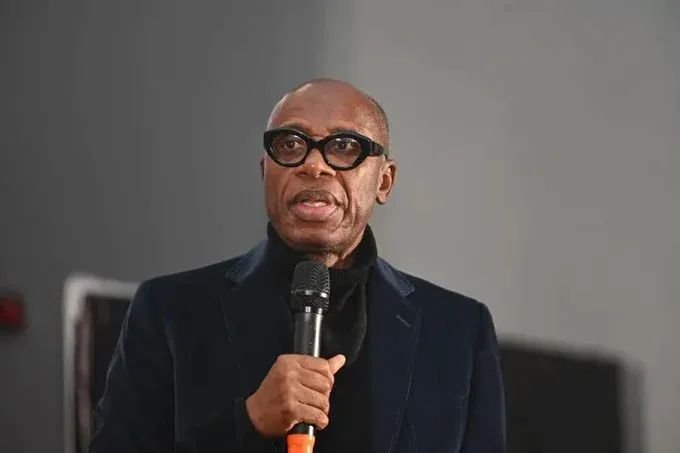
Amaechi, a former Minister of Transportation and a chieftain of the African Democratic Congress (ADC), made the comments on Thursday, October 8, 2026, during an ADC town hall meeting in Benin City, Edo State. He urged residents to reject Tinubu’s re-election bid, citing dissatisfaction with the administration’s economic policies and decisions.
The remarks prompted sharp responses from the Presidency and the Edo APC, turning the political gathering into another flashpoint in the emerging contest ahead of the 2027 general election.
Amaechi Attacks Tinubu’s Re-election Bid
Speaking at the town hall meeting, Amaechi urged Edo residents not to support Tinubu in the next presidential election, arguing that the administration’s policies had placed significant pressure on Nigerians.
He said supporters campaigning for the President’s re-election were making the wrong choice and used strong language to challenge voters considering another term for Tinubu.
According to reports by Punch and TheCable, Amaechi also criticised the removal of the petrol subsidy, describing the policy as reckless rather than courageous.
The former governor argued that Nigerians were facing economic difficulties and questioned whether the Federal Government’s decisions were adequately addressing the needs of ordinary citizens.
He also questioned the rationale behind plans for another seaport in Ogun State, alleging that the project raised questions about the government’s priorities and the interests driving infrastructure development.
Amaechi’s remarks formed part of the ADC’s broader effort to persuade voters to support the opposition ahead of the 2027 election.
Presidency Accuses Amaechi of Irresponsible Statements
Responding to the controversy, Temitope Ajayi, Senior Special Assistant to the President on Media and Publicity, criticised Amaechi’s comments in an interview with Punch.
Ajayi described the former minister as careless and irresponsible in his public statements, arguing that his language undermined the seriousness expected of political figures.
The presidential aide also challenged Amaechi’s credibility, making personal criticisms that went beyond the substance of the opposition figure’s argument against Tinubu’s re-election.
Ajayi maintained that Edo residents were capable of making informed electoral decisions and rejected the suggestion that voting for Tinubu would make them mentally unstable.
He pointed to the APC’s political standing in the state and defended the Federal Government’s reforms, alongside infrastructure development in Edo, as reasons supporters could consider backing the President.
The Presidency’s response reflects the political sensitivity surrounding criticism of Tinubu’s economic policies as political parties prepare for the next general election.
However, the exchange has also highlighted the increasingly combative language being used by political actors to persuade voters and discredit their opponents.
Edo APC Defends Tinubu and Challenges Amaechi
The Edo State APC also dismissed Amaechi’s comments, insisting that voters in the state were capable of deciding which candidate best represented their interests.
Peter Uwadiae-Igbinigie, the party’s publicity secretary, said Amaechi was entitled to his opinion but argued that the electorate would make its own judgement at the ballot box.
In comments reported by Punch, the party spokesman described the controversy as unworthy of an extensive response and defended Edo voters against Amaechi’s characterisation.
He praised the state’s electorate for its political awareness and pointed to the election of Governor Monday Okpebholo as evidence of the APC’s standing in Edo.
Uwadiae-Igbinigie also defended Tinubu’s administration, citing federal reforms and infrastructure development in the state as reasons residents could support the ruling party.
He said the APC expected substantial support for Tinubu in Edo and claimed that the party had pledged to deliver 2.5 million votes from the state.
That figure represents the party spokesman’s stated expectation, rather than an independently established forecast of the election result.
The APC’s response underscores the importance of Edo State to the parties’ political messaging ahead of 2027, as both the ruling party and opposition seek to build support among voters.
Economic Hardship Remains Central to the Political Dispute
At the centre of the disagreement is the performance of Tinubu’s administration and the impact of its economic policies on households and businesses.
Since taking office in May 2023, Tinubu has pursued major economic changes, including the removal of the petrol subsidy. His administration has defended such measures as necessary to reduce pressure on public finances and redirect resources towards development.
Critics, including opposition politicians, have argued that the changes have contributed to rising living costs and placed additional pressure on families and businesses.
Amaechi’s comments draw on that criticism, presenting the economic situation as a reason voters should reject the President in 2027.
The Presidency and Edo APC, meanwhile, have defended the administration’s direction and argued that its reforms and infrastructure projects provide reasons for continued political support.
The competing positions reflect a wider debate over how Nigerians should assess economic reform: whether the government’s long-term policy objectives justify the immediate costs experienced by citizens, and how those costs should influence electoral choices.
The dispute also illustrates how economic conditions can become a central issue in political campaigns, particularly when voters are weighing the cost of living, employment opportunities, public services and the performance of elected officials.
Political Rhetoric Raises Questions About Campaign Conduct
The exchange between Amaechi, the Presidency and the Edo APC has drawn attention to the language political leaders use when addressing voters.
Amaechi’s description of potential Tinubu supporters as “mad” was a political insult, not an evidence-based assessment of voters. The Presidency’s response, in turn, included personal attacks against the opposition figure.
Such exchanges can generate attention during an election cycle, but they may also shift public discussion away from policy choices and towards personal confrontation.
For voters, the more consequential questions concern the parties’ economic plans, their proposals for addressing hardship, and the evidence they present to support their claims about governance.
The 2027 election will provide Nigerians with an opportunity to assess the records and proposals of competing political parties. Political criticism is part of that process, but claims about policy performance are best evaluated against verifiable evidence and measurable outcomes.
Why Edo State Matters Ahead of 2027
Edo State is an important political battleground in southern Nigeria, and the exchange highlights the efforts of both the APC and ADC to shape the state’s political conversation before the next presidential election.
The APC is seeking to defend Tinubu’s record and build on its position in the state under Governor Monday Okpebholo. The ADC, meanwhile, is attempting to persuade voters that the opposition offers a better alternative.
Amaechi’s appearance at the town hall meeting provided the opposition with an opportunity to criticise the administration directly and present its arguments to party supporters and residents.
The ruling party’s response suggests it intends to challenge such criticism publicly and defend its record on economic policy and infrastructure.
Nevertheless, statements made by party officials and political figures do not establish how voters will ultimately behave. Electoral outcomes depend on a range of factors, including candidates, party organisation, campaign promises, public opinion and voters’ experiences of government.
What Happens Next?
The immediate dispute has centred on the competing responses to Amaechi’s remarks. The broader political contest is expected to focus on the economy, public infrastructure, governance and the parties’ plans for Nigeria.
Further developments will depend on campaign activities, official party announcements and the positions taken by political leaders as the 2027 election approaches.
The comments and responses reported so far do not establish the eventual level of support either party will receive in Edo State.
For now, the exchange offers an early indication of the confrontational tone that may characterise political debate as parties seek to persuade Nigerians to support their preferred candidates.
Ultimately, voters will have to assess the competing claims and decide which candidate and policy programme best addresses their concerns.
Weng Global – Stories beyond borders
Sources
- Punch Newspapers — Presidency, Edo APC knock Amaechi over ‘mad’ voters comment.
- Punch Newspapers — 2027: Amaechi, Edo APC trade words over Tinubu’s re-election bid.
- TheCable — Only a madman will vote for Tinubu in 2027, says Amaechi.
- Vanguard — Only a madman will vote for Tinubu in 2027 — Amaechi.