Reported by Simon Daniel Yusuph l Journalist at Weng Global
Former Chief Justice of Nigeria (CJN), Justice Olukayode Ariwoola, has warned political leaders, security agencies and other stakeholders against allowing Nigeria to experience a repeat of the deadly violence that followed the 2011 general elections, urging early intervention to prevent political tensions from escalating into bloodshed ahead of the 2027 polls.
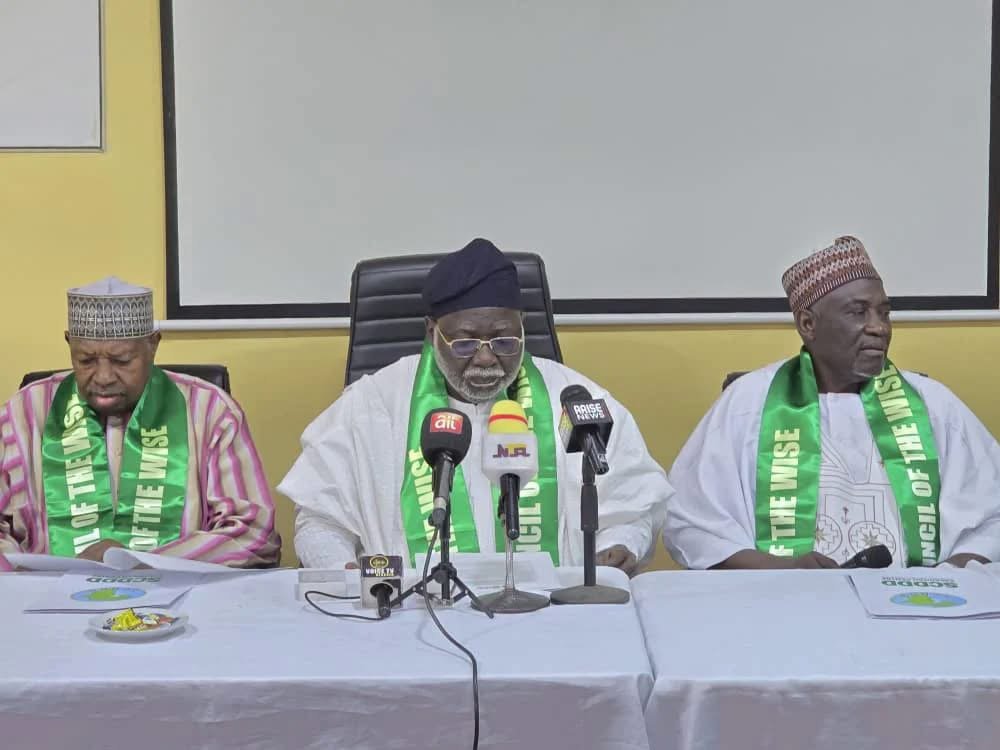
Ariwoola, who chairs the Council of the Wise under the Savannah Centre for Diplomacy, Democracy and Development, called for stronger security measures, effective early-warning mechanisms and prompt responses to threats capable of undermining peaceful elections.
He made the call during an engagement between members of the Council of the Wise and the leadership of the Nigeria Police Force in Abuja, where discussions focused on strengthening security arrangements and preventing electoral violence before, during and after the 2027 general elections.
The former CJN expressed concern over Nigeria’s history of election-related violence, particularly the widespread killings and destruction of property that followed the 2011 general elections, which he described as one of the country’s most disturbing electoral experiences.
He stressed that Nigeria must learn from previous elections and take practical steps to ensure that political competition does not become a justification for violence, intimidation or the loss of innocent lives.
Ariwoola Recalls Deadly 2011 Post-Election Violence
Reflecting on Nigeria’s democratic experience, Ariwoola recalled the violence that erupted after the 2011 general elections, particularly in several northern states.
He noted that the aftermath of the elections resulted in extensive loss of lives and destruction of property, leaving communities and families with lasting consequences.
According to remarks previously reported by The PUNCH, Ariwoola cited more than 1,000 deaths during the violence, particularly in northern Nigeria.
He linked the recurring problem of electoral violence to unresolved weaknesses in Nigeria’s electoral and political systems, including the failure to implement important recommendations from previous electoral reform efforts.
The former Chief Justice specifically referenced the Electoral Reform Committee established by the late President Umaru Musa Yar’Adua following the controversial 2007 general elections.
The committee was chaired by former Chief Justice of Nigeria, Justice Mohammed Lawal Uwais, and was established to examine weaknesses in the country’s electoral process and recommend reforms.
Ariwoola recalled that Yar’Adua died in 2010 before the recommendations could be fully implemented.
He argued that the failure to address some of the underlying problems identified by the committee allowed factors contributing to electoral violence to persist.
The former CJN warned that Nigeria must not repeat the mistakes of previous election cycles, particularly when political competition becomes increasingly intense.
Council Calls for Early Warning and Rapid Security Response
Beyond recalling the 2011 violence, Ariwoola emphasised the importance of preventing potential conflicts before they develop into major security challenges.
He urged the Nigeria Police Force to strengthen its early-warning and response mechanisms to identify individuals, groups and political activities capable of triggering violence.
According to the report published by The Guardian on October 15, 2026, Ariwoola called on the police to monitor statements made by political candidates during campaigns and promptly caution individuals whose remarks could incite violence.
He also stressed the importance of adequate deployment of security personnel to polling centres and other locations requiring protection.
The Council of the Wise maintained that election security should cover voters, electoral officials, election materials and other participants in the democratic process.
Ariwoola further emphasised that police officers assigned to election duties must remain neutral, professional and committed to protecting the rights of all political participants.
The position reflects the importance of maintaining public confidence in security institutions, particularly during periods when political tensions and competing interests may increase the risk of confrontation.
Police Begin Security Assessments Ahead of 2027 Elections
Responding to the concerns raised by the Council, the Nigeria Police Force disclosed that it had commenced security assessments and threat analysis to identify potential electoral flashpoints ahead of the 2027 general elections.
The Deputy Inspector-General of Police in charge of Operations, Shehu Nadada, disclosed the development during the engagement with the Council of the Wise.
He was represented at the meeting by the Assistant Inspector-General of Police in charge of Counter-Terrorism Operations at Force Headquarters, Ako Gabriel.
According to The Guardian, the police said the ongoing assessments would help identify areas requiring additional personnel, operational resources and security attention.
The exercise is intended to strengthen the Force’s preparedness before, during and after the elections.
The police also disclosed that training was underway for officers and personnel from other security agencies expected to participate in election security operations.
The training is designed to ensure that deployed personnel understand their responsibilities, maintain professional conduct and respect the rights and safety of citizens.
The police said their objective was to create an environment where Nigerians could exercise their voting rights without fear, intimidation or unnecessary interference.
Security arrangements are also expected to cover officials of the Independent National Electoral Commission (INEC), electoral materials, observers and other participants.
Police Seek Cooperation From Political Parties and Stakeholders
The police leadership acknowledged that securing elections cannot be achieved through security operations alone.
It called for cooperation among political parties, INEC, civil society organisations, voters, security agencies and international partners.
The Force also disclosed that commissioners of police and heads of formations had been directed to implement recommendations from a conference and retreat organised for senior officers in September 2026.
The meeting examined lessons from previous elections, identified operational weaknesses and discussed strategies for improving security during the forthcoming polls.
Police authorities also highlighted the importance of sustained engagement with political actors and communities.
According to the police, such engagements have contributed to peace initiatives in some states, where political stakeholders signed agreements committing themselves to peaceful elections and rejecting violence.
The police leadership further maintained that violations of the Electoral Act and other relevant laws must be addressed appropriately.
This position places responsibility on political parties and their supporters to conduct themselves within the boundaries of the law.
It also reinforces the need for security agencies to respond consistently to threats, irrespective of the political affiliation of those involved.
Council of the Wise Intensifies Intervention Ahead of 2027
The Council of the Wise was established under the Savannah Centre for Diplomacy, Democracy and Development to promote peaceful, transparent and credible elections in Nigeria.
The initiative emerged from concerns about recurring electoral violence, political intolerance and weaknesses affecting democratic participation.
The council was initially established ahead of the 2015 general elections to engage political leaders and other stakeholders in efforts to prevent violence and encourage responsible political conduct.
It was reconstituted in June 2026 as an 11-member body ahead of the 2027 general elections.
Under Ariwoola’s leadership, the council has continued its engagement with political parties, security agencies and other relevant institutions.
Its intervention efforts include encouraging peaceful campaigns, promoting dialogue among political stakeholders and discouraging inflammatory statements capable of escalating political tensions.
The council has also emphasised the importance of ensuring that electoral competition remains focused on policies, governance and the issues affecting Nigerians.
In September 2026, the council urged presidential candidates to reject hate speech, inflammatory campaign statements and violence.
During an engagement with Peoples Redemption Party presidential candidate and former Cross River State Governor, Donald Duke, Ariwoola stressed that candidates and their supporters must respect electoral laws and promote peaceful political participation.
Duke, in response, assured the council that he and his party would conduct themselves lawfully and would not resort to violence or confrontation.
The engagement formed part of broader efforts to encourage political responsibility ahead of the 2027 elections.
Public Confidence in 2027 Elections Remains a Concern
Ariwoola’s warning comes amid growing concerns about electoral credibility and political violence in Nigeria.
An Afrobarometer survey released on November 11, 2026, revealed that many Nigerians remain uncertain about the fairness and credibility of the forthcoming general elections.
According to the survey, only 37 per cent of respondents expected the 2027 elections to be largely free and fair, while 48 per cent believed they would not be free and fair.
The findings also identified significant public concerns about electoral malpractice.
Approximately 89 per cent of respondents considered vote-buying likely during the elections.
About 79 per cent anticipated that valid votes might not be properly counted, while the same proportion considered political violence likely.
The survey further found that 78 per cent expected political parties and candidates to disregard electoral laws, while an equal proportion expressed concern about incorrect election results being announced.
Despite these concerns, 64 per cent of respondents said they were likely to participate in the 2027 elections.
The findings suggest that although many Nigerians remain interested in exercising their democratic rights, confidence in the electoral process remains a significant challenge.
The concerns identified by the survey reinforce the importance of the preventive measures advocated by Ariwoola and other electoral stakeholders.
However, the findings represent public expectations and perceptions rather than proof that the anticipated electoral abuses will occur.
Why Preventing Electoral Violence Matters
The warning against a repeat of the 2011 violence carries important implications for Nigeria’s democratic development.
Elections are fundamental to democratic governance because they provide citizens with an opportunity to choose their representatives and influence the direction of public policy.
However, when political competition is accompanied by violence, intimidation and destruction, the credibility of the democratic process becomes threatened.
Electoral violence can also produce consequences that extend beyond election periods.
Families may lose loved ones, businesses may be destroyed, communities may experience displacement and relationships between different political or social groups may deteriorate.
The economic consequences can also be significant.
Political instability may discourage investment, disrupt commercial activities and increase uncertainty for businesses operating in affected areas.
For a country already facing economic and security challenges, another widespread episode of election-related violence could create additional pressure on national stability.
Preventing such developments therefore requires more than deploying security personnel on election day.
Political parties must discourage their supporters from engaging in violence, candidates must communicate responsibly, and security agencies must respond impartially to threats.
INEC also has an important responsibility to ensure that electoral procedures are transparent and that citizens have confidence in the administration of elections.
Equally important is the need for effective mechanisms to address electoral disputes through lawful channels rather than confrontation.
What Happens Next?
With preparations for the 2027 general elections continuing, attention will increasingly focus on the ability of security agencies and electoral institutions to translate their commitments into practical measures.
The Nigeria Police Force is expected to continue its security assessments, personnel training and engagement with political stakeholders.
The Council of the Wise is also expected to sustain its mediation and advocacy activities before, during and after the elections.
Political parties and candidates will face increasing expectations to comply with electoral laws, discourage inflammatory rhetoric and ensure that their supporters respect democratic principles.
For voters, the priority remains the ability to participate freely without intimidation or fear.
Ariwoola’s warning ultimately places responsibility on every stakeholder to protect the country’s democratic process from violence and instability.
Nigeria’s experience in 2011 remains a reminder of the human cost of political violence. As the country approaches another general election, preventing a repeat will require early intervention, institutional accountability and a collective commitment to peaceful democratic participation.
No political ambition or electoral victory should come at the expense of human lives.
Weng Global – stories beyond borders
Sources
- The Guardian Nigeria – October 15, 2026, report on Ariwoola’s warning and police security preparations ahead of the 2027 elections.
- The PUNCH – September 1, 2026, report on Ariwoola’s warning against hate speech and the history of electoral violence.
- Afrobarometer – November 11, 2026, survey on Nigerians’ expectations and concerns about the 2027 elections.
- Savannah Centre for Diplomacy, Democracy and Development – Council of the Wise, election peace and mediation initiatives.
:::