Reported by Simon Daniel Yusuph l Journalist at Weng Global
Nigeria’s challenge in attracting and deploying investment capital is increasingly being linked to a shortage of well-structured, bankable projects rather than an absolute absence of money, according to discussions at the 2026 CEO Forum of the United Nations Global Compact Network Nigeria.
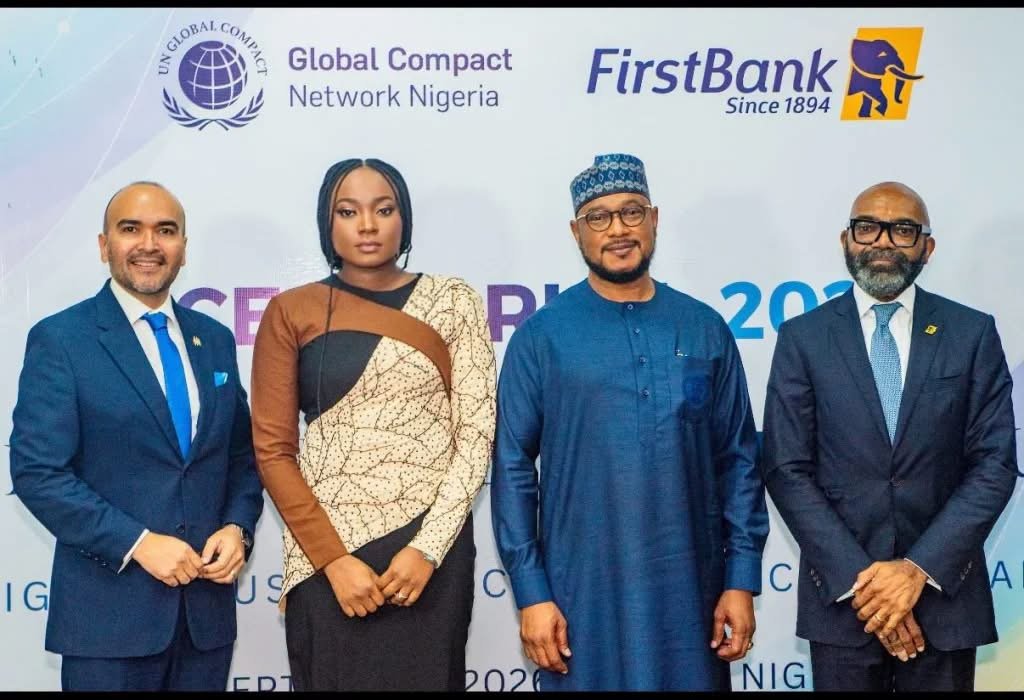
The closed-door forum, held in Lagos on September 1, 2026, brought together business leaders, policymakers, financial institutions, investors and development partners under the theme “Financing a Dignified Future.” The central discussion focused on how Nigeria can better connect available capital with projects capable of generating sustainable economic and social returns. The UN Global Compact Network Nigeria confirmed the forum’s date, format and focus on aligning capital, policy and business action.
The argument emerging from the forum is that Nigeria has significant pools of domestic and international capital, but too few investment opportunities have been sufficiently prepared, structured and de-risked to meet the requirements of institutional investors and other providers of finance.
That distinction is important because having money available does not automatically translate into roads, power infrastructure, factories, farms, housing, healthcare facilities or technology businesses receiving the financing required to expand.
Bankable Projects Become Central Investment Issue
Speakers at the forum pointed to the preparation of projects as one of the major gaps standing between Nigeria’s investment ambitions and actual capital deployment.
A project may have economic potential but still fail to attract financing if investors cannot establish its commercial viability, revenue model, legal structure, risk profile, expected returns or the responsibilities of the parties involved.
The challenge therefore extends beyond identifying opportunities.
Projects must be developed to a stage where investors can assess them with sufficient confidence.
Reporting on the forum, BusinessDay highlighted the conclusion that Nigeria does not simply need more capital but requires a stronger pipeline of investable opportunities capable of attracting and absorbing available funds.
The UN Global Compact Network Nigeria’s own forum material similarly places emphasis on capital mobilisation, sustainable finance, policy conditions and stronger engagement between businesses, investors and policymakers.
Pension Funds Highlight Untapped Domestic Capital
One of the issues discussed at the forum was the potential role of domestic institutional capital.
Adeniyi Falade, Group Chief Operating Officer of Custodian Investment, reportedly pointed to the growth of Nigeria’s pension industry, which has accumulated about N32 trillion in assets.
However, less than three per cent of those assets was reported to be allocated to infrastructure, while close to 70 per cent was associated with Federal Government bonds, according to reporting from the forum.
The figures illustrate the difference between the amount of money within the financial system and the amount being deployed into long-term productive infrastructure.
Infrastructure investment carries different risks from government securities. Projects must often demonstrate predictable revenue, appropriate regulation, adequate risk allocation and a credible pathway to repayment or returns.
For investors managing pension savings, those requirements are particularly important because the underlying funds represent long-term retirement savings.
The discussion therefore points to a broader policy question: how can Nigeria create investment structures that allow more institutional capital to participate in infrastructure without exposing savers to inappropriate levels of risk?
Small Businesses Face a Different Financing Problem
The bankability issue is not limited to major infrastructure projects.
Ini Ebong, Deputy Managing Director of FirstBank, highlighted challenges affecting smaller businesses and financially underserved Nigerians.
According to figures cited during the forum from financial inclusion research, about 63 per cent of Nigerian adults have accounts, while only a much smaller proportion access formal borrowing.
The problem is partly connected to the ability of businesses to demonstrate financial capacity.
Small and medium-sized enterprises frequently struggle with documentation, formal bookkeeping, separation of personal and business finances and other requirements that financial institutions use when assessing creditworthiness.
This creates a gap between entrepreneurship and finance.
A business may have customers and a viable product but still find it difficult to obtain formal financing if it cannot demonstrate its financial position in a way lenders can evaluate.
The implication is that improving access to capital requires more than simply increasing the amount of money available through banks.
It also requires businesses to become more investment-ready and financial institutions to develop appropriate products for different categories of borrowers.
Zamfara Uses Project Preparation to Attract Investment
The experience presented by Zamfara State at the forum provided a subnational example of how governments can attempt to improve investment readiness.
Governor Dauda Lawal highlighted the state’s 10-year development plan, covering 2025 to 2034, as part of efforts to provide greater policy direction and predictability for investors.
He identified agriculture, mining, livestock, energy and agro-processing among areas with investment potential in the state.
Lawal also referred to projects involving lithium processing and renewable energy, while stressing the importance of security, infrastructure, clear regulations and a predictable business environment.
He said better geological information had helped attract investors interested in Zamfara’s mineral resources.
The governor also cited an increase in the state’s internally generated revenue, from roughly N90 million monthly at the beginning of his administration to about N45 billion monthly, as reported from his presentation at the forum.
Such claims remain statements from the state government and should be assessed against independently verifiable fiscal records when making broader conclusions about the state’s economic performance.
Nevertheless, the investment lesson highlighted at the forum was that governments need to provide investors with information, policies and structures that make opportunities easier to evaluate.
Energy Projects Need More Than Generation Capacity
Energy was another area where the bankability question becomes particularly important.
Anthony Youdeowei of Sahara Power Group reportedly argued that electricity generation alone cannot solve Nigeria’s power problems if distribution infrastructure remains inadequate.
For investors, the commercial viability of energy projects depends on several interconnected factors, including tariffs, regulation, payment systems, infrastructure, policy certainty and the ability to recover investment.
This means that a project can have a strong development rationale while still being difficult to finance commercially.
Nigeria’s electricity sector demonstrates why project preparation must include the entire value chain rather than focusing on individual components in isolation.
Investment in generation without adequate transmission and distribution can leave capacity underutilised, while infrastructure without sustainable revenue arrangements can become difficult to maintain.
The same principle applies across transport, water, healthcare and other sectors.
Foreign Investors Also Want Confidence
The discussion at the forum also focused on the conditions required to attract international investment.
Canada’s Deputy High Commissioner to Nigeria, Carlos Rojas-Arbulú, reportedly emphasised the importance of transparent governance, reliable information, predictable regulations and commercially viable projects.
The message is significant for Nigeria because international capital is typically assessed against risks extending beyond the quality of an individual project.
Investors also consider political and regulatory stability, foreign-exchange exposure, contract enforcement, taxation, infrastructure, security and the ability to repatriate returns.
A strong project can therefore struggle to secure financing if the wider environment creates uncertainty that investors cannot adequately price.
This helps explain why the debate around bankable projects cannot be separated from broader economic reforms.
Capital Is Available, But It Is Not Costless
The forum’s bankability diagnosis should not be interpreted as meaning that financing is easy to obtain in Nigeria.
High borrowing costs remain an important constraint for businesses.
The forum itself reportedly included a counterpoint from Aditya Chellaram of Chellarams Plc, who discussed reducing debt because commercial borrowing costs could not be justified against shrinking margins.
This illustrates an important distinction.
Nigeria may have pools of capital, but the availability of capital and the affordability of capital are different issues.
A project may be technically bankable but still become difficult to finance if interest rates, currency risks or other financing costs make the expected returns unattractive.
Consequently, addressing Nigeria’s investment gap is likely to require action on both sides: improving the quality and preparation of projects while creating economic and financial conditions that make productive investment more viable.
Climate and Sustainable Investment Add Another Dimension
The focus on bankable projects also comes as Nigeria works to attract financing for climate and sustainable-development priorities.
United Nations development programmes have increasingly emphasised the need to build investment pipelines rather than simply announce policy ambitions.
The UN Development Programme has said its work with the United Nations Capital Development Fund includes helping governments create investment pipelines and structure financing instruments capable of attracting private capital.
The UNDP has also reported that its SDG Investor Maps have identified investment opportunities in several countries and that, in Nigeria, the initiative has helped unlock $15 million in SDG-aligned investments for women-owned small and medium-sized enterprises.
Nigeria’s climate-finance efforts similarly recognise the need for stronger project preparation.
A 2026 UNEP-supported programme for Nigeria’s NDC 3.0 implementation is focused partly on advancing projects towards investability and bankability through feasibility studies, business-model development, financial structuring and investor engagement, particularly in agriculture and transport.
These initiatives demonstrate that project preparation is increasingly being treated as a financing tool in its own right.
Infrastructure Remains a Major Opportunity
Nigeria’s infrastructure deficit means the country continues to have substantial potential demand for investment.
Transport networks, electricity, water and sanitation, housing, healthcare, digital infrastructure and industrial facilities all require significant long-term financing.
But turning that demand into investment opportunities requires detailed preparation.
Investors need to know what is being built, how much it will cost, who will use it, how revenue will be generated, what risks exist, who carries those risks and what happens if assumptions change.
That is why project-development capacity matters.
An idea for a road, power plant or industrial facility is not the same thing as an investment-ready project.
The gap between the two can require feasibility studies, environmental assessments, legal agreements, financial models, guarantees, government approvals and clearly defined commercial arrangements.
Government, Banks and Businesses Have Different Roles
The discussions at the forum point towards a shared responsibility among government, financial institutions and the private sector.
Government has a role in creating predictable regulations, providing infrastructure, strengthening institutions and developing credible project frameworks.
Banks and institutional investors have a role in developing financing products that match the characteristics of viable projects.
Businesses must also improve corporate governance, financial reporting, documentation and project preparation.
Development finance institutions can contribute through technical assistance, guarantees, blended finance and early-stage project preparation, particularly where commercially promising projects face risks that private investors may initially be unwilling to absorb.
The objective is not for government to finance every project.
Rather, the goal is to create conditions in which public resources can help reduce specific risks and enable private capital to participate in projects with sustainable commercial foundations.
Why the Bankability Debate Matters
The issue matters because Nigeria’s economic development depends not only on attracting capital but also on ensuring that capital reaches productive activities.
If available funds remain concentrated in relatively low-risk instruments while infrastructure and businesses struggle to obtain financing, the country can continue to experience a mismatch between financial resources and development needs.
Creating a larger pipeline of credible projects could help narrow that gap.
But project preparation alone will not resolve every investment challenge.
Nigeria must also address issues such as financing costs, foreign-exchange risk, infrastructure deficiencies, regulatory uncertainty, security concerns and weaknesses in institutional capacity.
The forum’s central message is therefore best understood as part of a wider investment equation: capital needs credible projects, while credible projects need an economic environment in which investors can reasonably assess and manage risk.
What Happens Next?
The immediate challenge for Nigeria is to convert the bankability discussion into actual projects.
That means moving opportunities from broad policy announcements into feasibility studies, financial models, legal structures, risk assessments and investment proposals that can be examined by financiers.
The UN Global Compact Network Nigeria has positioned its CEO Forum as a platform for direct engagement among business leaders, policymakers, regulators, investors and development partners. The organisation said the 2026 forum was designed around the alignment of capital, policy and business action.
The success of that approach will ultimately depend on whether discussions lead to concrete investment pipelines, financing agreements and projects that reach implementation.
For Nigeria, the central task is not simply to ask where more money can be found.
It is also to ensure that the country has enough well-prepared opportunities capable of giving that money a productive destination.
Weng Global – Stories beyond borders
Sources
- UN Global Compact Network Nigeria — Official information on the 2026 CEO Forum, including its September 1, 2026 date, Lagos location, closed-door format, theme and investment-focused objectives.
- BusinessDay — Reporting on the CEO Forum and the argument that Nigeria’s investment challenge includes a shortage of bankable opportunities rather than simply a shortage of capital.
- United Nations Development Programme (UNDP) — Information on developing investment pipelines, bankable projects and SDG-aligned investment opportunities in Nigeria.
- United Nations Environment Programme (UNEP) — Information on Nigeria’s efforts to advance agriculture and transport projects towards investability and bankability through project preparation and financial structuring.
- Prime Post/NAN — Reporting on presentations by Zamfara Governor Dauda Lawal and other participants at the September 2026 CEO Forum.