Reported by Simon Daniel Yusuph l Journalist at Weng Global
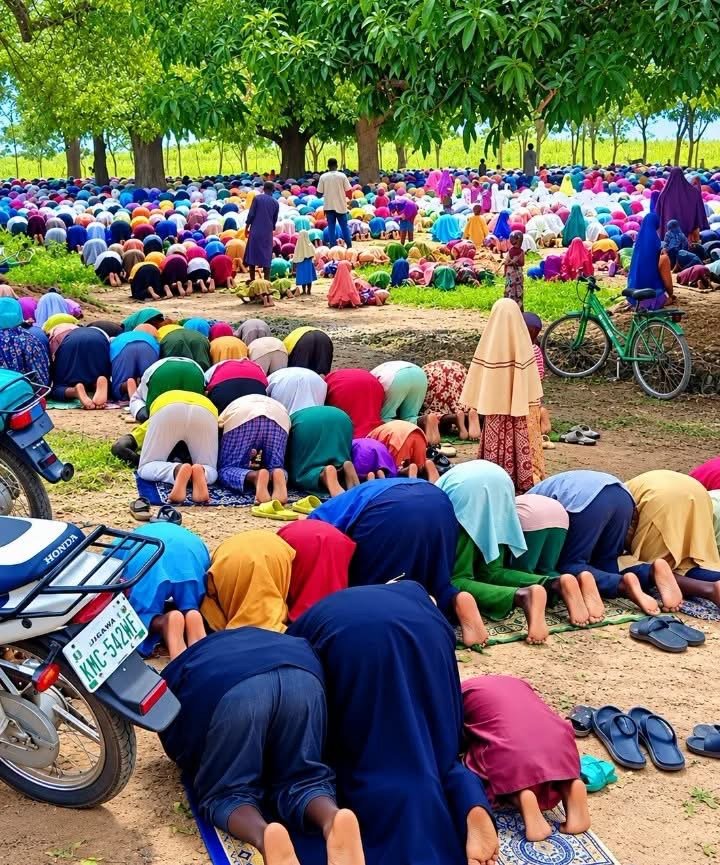
Residents of Basirka town in Jigawa State have held a three-day special prayer for rainfall as a prolonged dry spell leaves farmlands struggling for moisture and raises concerns among farming communities.
The prayer session, which began on Saturday and continued through Sunday and Monday, brought residents together to seek rainfall after the lack of adequate precipitation affected agricultural activities in the community.
On Monday, residents also observed a voluntary fast as part of the religious observance, according to a report by Punch.
For a community where agriculture plays an important role in household livelihoods, the prolonged absence of rain has become more than a weather concern. It has created anxiety over crops, farm investments, food supplies and the economic wellbeing of families dependent on the farming season.
Basirka Residents Seek Relief From Dry Spell
The special prayer reflects the seriousness with which residents are viewing the current dry conditions.
Farmers depend heavily on the timing and distribution of rainfall, particularly where irrigation infrastructure is limited. When rainfall stops unexpectedly or dry spells become prolonged, crops can experience moisture stress, potentially affecting growth and yields.
The residents of Basirka therefore turned to a familiar religious response, gathering collectively to pray for the return of rainfall.
The three-day observance also included fasting on Monday, demonstrating the community’s concern about the implications of the dry conditions.
The report did not establish that the prayer itself would influence weather conditions, but it illustrates how communities facing climate and agricultural uncertainty can respond through religious and communal practices.
Agriculture Remains Highly Sensitive to Rainfall
The situation in Basirka is significant because of Jigawa’s dependence on agriculture and the state’s climatic conditions.
The Jigawa State Government’s development framework says rainfall in the state generally occurs between May and September, although rain has also been recorded in October in some recent years. It places average annual rainfall at roughly 650 millimetres in recent years, while noting the state’s significant agricultural potential.
The relatively short rainy season makes the timing of rainfall particularly important to farmers.
A prolonged dry spell during a critical stage of crop development can reduce soil moisture and place additional pressure on farmers who may have limited access to supplementary irrigation.
Jigawa’s geography also makes water management important. The state has major rivers and tributaries associated with the Hadejia-Jama’are and Komadugu-Yobe systems, creating opportunities for irrigation but also requiring investment in water infrastructure and effective management.
2026 Climate Guidance Warned of Dry Spells
The concerns being expressed by farmers come against the background of climate guidance issued for Jigawa for the 2026 farming season.
The 2026 Climate Guide for Farmers in Nigeria projects that Jigawa could experience a normal overall rainfall season but warns that dry spells could occur during the season.
The guidance projected the possibility of a severe dry spell lasting up to 21 days and a moderate dry spell lasting up to 15 days between June and August.
It also projected the cessation of the rainy season in Jigawa between October 6 and October 29, 2026, while warning that temperatures were likely to be warmer than normal.
The guidance recommends that farmers prepare for periods of inadequate rainfall by considering drought-tolerant and early-maturing crops, supplementary irrigation, soil-moisture conservation and rainwater harvesting.
It also advises farmers to make use of short-term weather forecasts when deciding when to plant or apply agricultural inputs.
Dry Conditions Can Affect Farmers Beyond Crops
The consequences of a prolonged dry spell can extend beyond crop production.
Farmers may face increased costs when they have to provide water for crops or livestock, while declining soil moisture can increase pressure on available water sources.
Livestock producers can also experience heat stress among animals during periods of elevated temperatures.
The 2026 climate guidance for Jigawa specifically recommends measures such as providing livestock with clean drinking water, improving ventilation and reducing heat stress during warmer periods.
For rural households that combine crop cultivation with livestock production, difficult weather conditions can therefore affect several sources of income simultaneously.
Jigawa’s Food Production Role
Jigawa is one of Nigeria’s important agricultural states, with farming supporting a substantial part of the rural economy.
The state’s development framework identifies agriculture as a major livelihood activity and highlights irrigation potential through its rivers and tributaries.
This makes rainfall variability an issue not only for individual farmers but also for wider food security.
When harvests are affected, households may experience lower farm income and higher food expenses. At a larger level, significant reductions in agricultural production can contribute to pressure on food prices and rural employment.
The impact, however, depends on the duration and geographical spread of the dry conditions, the crops involved, their stage of development and the availability of irrigation or other water sources.
Climate Pressure Requires More Than Emergency Responses
The Basirka prayer gathering also highlights a broader challenge facing communities whose livelihoods depend heavily on weather.
Religious observances remain an important part of community life, particularly during periods of hardship. At the same time, long-term resilience to rainfall variability requires practical measures such as irrigation, water storage, improved agricultural extension services, climate information and access to drought-resistant crop varieties.
The 2026 agricultural climate guidance specifically encourages farmers to prepare for dry spells and use supplementary irrigation and soil-moisture conservation measures where possible.
For government and development agencies, such measures can help communities reduce their vulnerability when rainfall becomes unreliable.
Jigawa’s own development framework also identifies significant irrigation potential, suggesting that better utilisation of available water resources could strengthen agriculture.
Community Concern Reflects Wider Agricultural Anxiety
The residents’ decision to organise special prayers shows the human dimension of weather-related agricultural challenges.
For farmers who have already invested money, labour and time in their fields, prolonged dryness can create uncertainty about whether their crops will reach harvest successfully.
In rural communities, the effects can spread beyond farmers themselves. Traders, transporters, agricultural labourers and other businesses that depend on farming activity can also be affected when agricultural production declines.
The current situation therefore deserves attention not only as a local weather story but also as part of the broader discussion around food security, climate resilience and sustainable agriculture in northern Nigeria.
What Happens Next
The immediate concern for Basirka residents is whether sufficient rainfall will return to support crops before the end of the agricultural season.
Weather conditions will ultimately determine the availability and distribution of rainfall, while farmers can reduce their exposure to dry conditions through measures such as irrigation, water conservation and the use of suitable crop varieties.
Authorities and agricultural agencies will also have an important role to play in providing timely weather information and practical assistance to farmers facing prolonged dry conditions.
For now, the three-day prayer in Basirka stands as a reflection of the community’s anxiety and hope for rainfall.
It also underscores a wider reality facing agricultural communities across climate-sensitive regions of Nigeria: when rainfall becomes uncertain, the consequences can reach far beyond the farm, affecting household incomes, food production and local economies.
Weng Global – Stories beyond borders
Sources
- Punch – Drought: Jigawa community holds three-day special prayer for rain.
- Jigawa State Government – Comprehensive Development Framework.
- 2026 Climate Guide for Farmers in Nigeria – Jigawa agricultural climate guidance.