Reported by Simon Daniel Yusuph l Journalist at Weng Global
Nigerian industrialist and Dangote Group President, Aliko Dangote, has said his ambition extends beyond becoming Africa’s richest man, stressing that he would rather be remembered for building businesses that create wealth, jobs and opportunities for other Africans.
Dangote made the remarks in Lagos as his Dangote Petroleum Refinery and Petrochemicals opened its landmark initial public offering (IPO) to investors on September 14, 2026.
The IPO represents a major transition for the refinery, allowing members of the public to acquire an ownership stake in one of Africa’s largest industrial projects.
Dangote has repeatedly framed the share offering as an opportunity to widen participation in the wealth generated by the refinery rather than keeping ownership concentrated among its promoters.
‘I am wealthy, not rich’
At a recent gathering in Lagos ahead of the IPO, Dangote drew a distinction between being rich and being wealthy.
“I am wealthy, not rich. A wealthy man creates wealth, while a rich man makes money and keeps it for himself,” he said, according to reports from Vanguard and other Nigerian media outlets.
The statement captures the philosophy Dangote has presented around the refinery’s public offering.
Rather than measuring his success solely by his personal fortune, the businessman said he wanted the industrial enterprises he builds to generate wider economic opportunities.
He has specifically spoken about ordinary Africans becoming shareholders in the refinery.
At a September 10 leadership gathering in Lagos, Dangote said he wanted people including drivers, cooks and small-scale food sellers in countries such as Ghana, Rwanda and South Africa to have the opportunity to invest and participate in the prosperity generated by the project.
The comments came as the refinery prepared for what is being described as Africa’s largest-ever IPO.
Dangote Refinery opens its IPO
The Dangote Petroleum Refinery and Petrochemicals IPO formally opened on September 14.
According to Reuters, the company is offering 4.1 billion shares at ₦525 per share, with the offering capable of raising approximately ₦2.15 trillion, or about $1.6 billion, if fully subscribed.
The offer is designed to make participation possible for retail investors, with digital platforms and financial institutions providing channels through which investors can subscribe.
The offer is scheduled to close on October 13, while trading of the shares is expected to begin later in the year.
The public offering also marks a significant change in the ownership structure of the refinery.
Reuters reported that Dangote is selling a 3.3 per cent stake in the refinery through the IPO, while retaining a dominant interest in the business.
A refinery built on industrial ambition
The Dangote Refinery, located in the Lekki area of Lagos State, was developed at a cost of roughly $20 billion and began operations in 2024.
With a current processing capacity of about 700,000 barrels per day, the facility has become one of the most significant developments in Nigeria’s energy industry in decades.
The refinery was conceived as an effort to reduce Nigeria’s dependence on imported refined petroleum products while establishing the country as a major exporter of refined fuels.
Reuters reported that the facility is now operating at full capacity and that its owners plan to expand production to 1.4 million barrels per day.
If completed as planned, the expansion would put the facility among the world’s largest refining operations.
The project is also part of Dangote’s broader industrial strategy, which includes cement, fertiliser, petrochemicals, logistics, power and other businesses.
From private empire to public ownership
The IPO introduces a new dimension to Dangote’s industrial model.
For years, the refinery was primarily identified with its founder and the Dangote Group. The public offering now creates a mechanism through which institutional and retail investors can acquire an interest in the business.
The development has attracted significant attention because of the refinery’s scale and its strategic importance to Nigeria’s economy.
The Financial Times reported that the offering is targeting millions of retail investors across Africa and that the funds raised will support further expansion, including additional infrastructure and international projects.
The Guardian has similarly reported that Dangote sees the IPO as part of a wider effort to expand African participation in the wealth generated by major industrial assets.
For Dangote, the central message is that industrialisation should not merely produce individual billionaires. It should create companies, jobs, investment opportunities and broader prosperity.
Why wealth creation is central to Dangote’s message
Dangote’s distinction between wealth and riches reflects a wider argument about African economic development.
Africa possesses enormous natural resources and a large consumer market, but many of its economies remain dependent on the importation of finished products.
Dangote has long argued that African countries need to move further towards domestic manufacturing and processing.
The refinery is one of his clearest examples of that approach.
Nigeria produces crude oil but historically relied heavily on imported refined petroleum products because of inadequate domestic refining capacity.
The emergence of the Dangote Refinery has changed that equation.
The facility has begun supplying the Nigerian market while also positioning itself to export refined petroleum products.
That transformation has wider implications for Nigeria’s balance of trade, energy security and industrial development.
However, the refinery’s success does not eliminate the need for effective regulation, competition and transparent corporate governance.
The IPO’s wider economic significance
The public offering arrives at a significant time for Nigeria’s capital market.
By opening part of the refinery’s ownership to the public, the transaction could deepen participation in Nigeria’s equity market and give more investors exposure to a major domestic industrial company.
Reuters reported that the refinery’s IPO is expected to raise up to about $1.6 billion, while the company is seeking additional capital to support its expansion plans.
The transaction also comes after the refinery recorded a sharp improvement in financial performance.
Reuters reported that the refinery generated a net profit of $1.82 billion in the first half of 2026, compared with a loss in the corresponding period of the previous year.
That financial performance is one of the factors drawing investor attention to the offering.
Nevertheless, investors will ultimately assess the company based on its financial results, valuation, future expansion requirements, market conditions and the risks associated with operating a large-scale petroleum business.
Dangote’s African industrialisation argument
Dangote has repeatedly linked his business ambitions to the wider question of African industrialisation.
At the Lagos gathering where he discussed the IPO, he said his motivation was to build enterprises capable of creating opportunities and prosperity across the continent.
He also argued that Africans must take greater responsibility for developing their economies rather than relying excessively on external actors.
That position has become a recurring theme in Dangote’s public statements about the refinery.
The project itself reflects that ambition: a large-scale African-owned industrial facility built to process African crude and supply energy products to African and international markets.
The refinery is therefore more than a commercial project.
It has become part of a broader debate about whether African economies can move from exporting raw materials to developing industries that capture greater value within the continent.
Investors will still have to assess the risks
While Dangote’s vision has attracted considerable support, the IPO also presents investors with the responsibility of independently assessing the investment.
The offering’s valuation, the refinery’s future earnings, expansion costs, crude supply, petroleum prices, foreign-exchange conditions and regulatory environment are among the factors that could affect its future performance.
Reuters has reported that the IPO has attracted both strong interest and concerns from some investors regarding its pricing and expansion plans.
That means the public offering should not be viewed solely through the lens of Dangote’s reputation or the refinery’s symbolic importance.
Potential investors must consider the company’s financial disclosures and the risks outlined in its official offering documents before making investment decisions.
What happens next
The immediate focus will be on the response from Nigerian and African investors as the IPO progresses.
The offer opened on September 14 and is expected to remain available until October 13.
If successfully completed, the transaction will broaden ownership of one of Africa’s most important privately developed industrial assets and provide additional capital for the refinery’s expansion.
The company plans to increase refining capacity substantially, while Dangote has also outlined broader ambitions for industrial expansion across Africa.
For Dangote personally, however, the significance of the IPO appears to extend beyond the amount of money raised.
His message is that the ultimate measure of an industrialist should not simply be how much wealth he accumulates, but how much wealth his enterprises help create for others.
That distinction could become one of the defining themes of the Dangote Refinery’s transition from a privately controlled industrial project into a company with a wider base of public shareholders.
The central question will now be whether that vision can translate into sustained value for investors, jobs for workers, stronger industrial capacity for Nigeria and broader economic opportunities for Africans.
If it does, Dangote’s stated ambition—to be remembered not simply as Africa’s richest man but as a builder of wealth for others—will have a tangible economic measure beyond his personal fortune.
Sources
- Reuters — Reporting on the Dangote Refinery IPO, share offering, valuation, expansion plans and financial performance.
- Associated Press (AP) — Reporting on the opening of the refinery to public ownership and its wider economic significance.
- The Guardian — Reporting on Dangote’s IPO and his wealth-creation and African industrialisation ambitions.
- Financial Times — Reporting on the size, structure and objectives of the refinery IPO.
- Vanguard Nigeria — Reporting on Dangote’s comments about wealth creation and the purpose of the IPO.
- Channels Television — Background on the IPO and Dangote’s argument for broader African ownership.
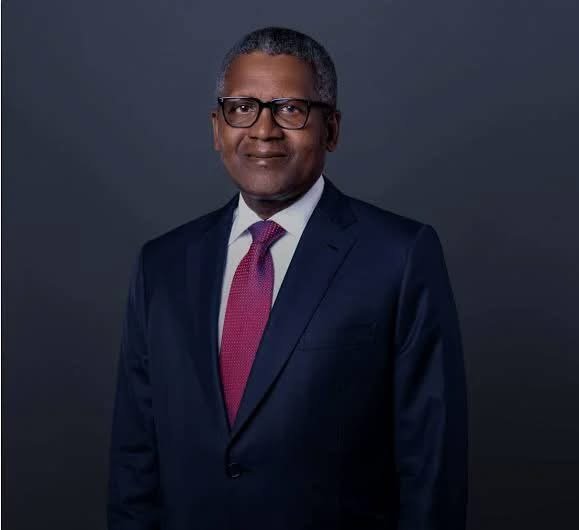
Image Caption: Aliko Dangote speaks during an event in Lagos ahead of the public offering of shares in the Dangote Petroleum Refinery and Petrochemicals.
Image ALT Text: Aliko Dangote speaking about wealth creation and the Dangote Refinery IPO in Lagos.