Reported by Simon Daniel Yusuph l Journalist at Weng Global
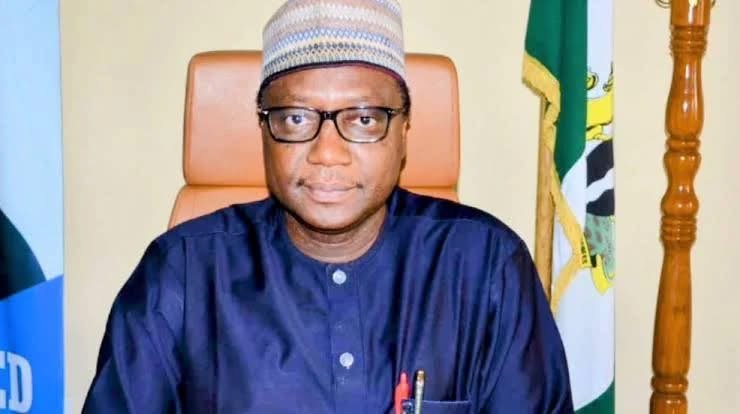
The Chairman of the Revenue Mobilisation, Allocation and Fiscal Commission (RMAFC), Dr Mohammed Bello Shehu, has warned that Nigeria’s corruption challenge extends beyond the payment or receipt of bribes, arguing that practices such as abuse of office, favouritism and conflicts of interest also undermine public institutions and national development.
Shehu’s position places the corruption debate within the broader question of how public power, government resources and institutional responsibilities are exercised.
As chairman of RMAFC, Shehu oversees a constitutional commission responsible for, among other functions, monitoring revenue accruals to the Federation Account, advising governments on fiscal efficiency and determining remuneration for political office holders. The commission’s official records identify him as its chairman as of August 2026.
Corruption Is More Than Bribery
The conventional understanding of corruption often centres on bribery, embezzlement and the diversion of public funds. However, Shehu’s position broadens the discussion to include conduct that may not always involve an obvious financial transaction.
Abuse of office, for example, can occur when an official uses the authority attached to a public position for an improper personal, political or institutional advantage.
Favouritism can similarly undermine public administration when decisions concerning appointments, contracts, opportunities or access to government resources are influenced by personal relationships rather than established rules, competence or merit.
Conflicts of interest present another challenge because they can compromise the impartiality expected of public officials when private interests overlap with official responsibilities.
These practices can weaken public confidence even where there is no straightforward evidence of a bribe or direct diversion of money.
For Nigeria, where government remains a major actor in the allocation of public resources, procurement, appointments and economic regulation, the broader definition of corruption has significant implications for governance.
RMAFC’s Role in Nigeria’s Fiscal System
The Revenue Mobilisation, Allocation and Fiscal Commission occupies an important position within Nigeria’s public-finance architecture.
Under its constitutional mandate, RMAFC is responsible for monitoring revenue accruing to the Federation Account, advising governments on fiscal efficiency and determining appropriate remuneration for political office holders.
The commission also plays a central role in reviewing Nigeria’s revenue-allocation framework.
Its responsibilities therefore place it at the intersection of revenue mobilisation, fiscal accountability and the distribution of federally collected resources.
In recent months, the commission has intensified its focus on improving Nigeria’s fiscal system.
In August, Shehu announced that RMAFC had completed a comprehensive review of the country’s revenue-allocation formula, while its review of remuneration for executive and legislative office holders had also reached an advanced stage.
The commission said the revenue formula review followed extensive consultations and was designed to establish a framework more responsive to Nigeria’s current economic and fiscal realities.
Accountability Must Accompany Public Resources
Shehu’s comments come against the backdrop of continuing efforts by Nigerian institutions to strengthen transparency and accountability in the management of public resources.
RMAFC has recently emphasised the need to reduce revenue leakages and improve the amount of money reaching the Federation Account.
In August, the commission said it had intensified monitoring of revenue-generating agencies, particularly in the oil and gas sector, where changes in production, investment and revenue collection can have significant consequences for government finances.
RMAFC has also been working with other institutions to improve transparency in the extractive sector.
In September, the commission pledged to deepen its collaboration with the Nigeria Extractive Industries Transparency Initiative (NEITI) to strengthen revenue monitoring, transparency and accountability in Nigeria’s oil and gas industry.
Such efforts are significant because oil and gas revenues remain an important component of Nigeria’s public finances.
Weak monitoring, inaccurate reporting or institutional conflicts can therefore affect not only government revenue but also the resources available for public services and development.
The Link Between Governance and Development
The broader meaning of corruption highlighted by Shehu is important because institutional misconduct can produce consequences even when it does not immediately appear as missing money.
When appointments are influenced by favouritism, public institutions may lose qualified personnel.
When contracts are affected by conflicts of interest, government may receive poorer value for money.
When officials abuse their positions, citizens may lose confidence in government processes.
And when regulations are selectively applied, businesses and citizens may face an uneven playing field.
The cumulative effect can be considerable.
Corruption can increase the cost of government, weaken institutions and reduce the effectiveness of public policies. It can also make citizens less willing to trust public authorities or comply with government programmes.
For a country seeking to increase domestic revenue, attract investment and improve public services, institutional integrity is therefore closely connected to economic performance.
Nigeria’s Wider Anti-Corruption Challenge
Nigeria has established several institutions and legal frameworks aimed at combating corruption, including the Economic and Financial Crimes Commission (EFCC), the Independent Corrupt Practices and Other Related Offences Commission (ICPC) and the Code of Conduct Bureau.
However, tackling corruption requires more than investigations and prosecutions.
Preventive measures such as transparent procurement, effective auditing, disclosure of interests, institutional checks and balances and clear administrative procedures are also important.
The distinction matters because enforcement typically addresses wrongdoing after it has occurred, while strong institutions can reduce opportunities for misconduct in the first place.
This is particularly relevant to abuse of office and conflicts of interest, which may not always produce an easily identifiable financial trail.
Public Officials and the Standard of Conduct
Public office carries responsibilities beyond the lawful management of government funds.
Officials are expected to exercise their authority impartially and in the public interest.
That principle is particularly important when government decisions affect millions of people or involve large amounts of public money.
RMAFC itself has recently linked remuneration reforms to accountability and performance.
While discussing the review of salaries and allowances for political, public and judicial office holders, Shehu stressed that improved remuneration should be matched by improved service delivery. The Federal Ministry of Information and National Orientation reported that the commission had emphasised that remuneration reforms should not simply amount to higher pay without corresponding accountability.
The argument reflects a broader principle of public administration: higher remuneration does not by itself eliminate corruption.
Institutional controls, ethical standards, transparency and effective enforcement remain necessary.
Revenue Reforms and the Accountability Question
The discussion is particularly relevant as Nigeria works to reform its revenue-allocation system.
RMAFC’s completed review of the revenue formula is expected to shape how federally collected resources are distributed among the federal, state and local governments once the relevant constitutional and institutional processes are completed.
The commission has also been working on measures aimed at improving revenue mobilisation.
Its recent engagement with stakeholders in the oil and gas sector has focused on attracting investment and improving the revenues generated from Nigeria’s hydrocarbon resources. The Guardian reported that RMAFC was preparing an investment initiative targeting Chinese investors as part of efforts to increase investment, production and revenue from the sector.
For such reforms to deliver meaningful benefits, however, increased revenue must be accompanied by strong accountability mechanisms.
More public revenue without stronger oversight could create additional opportunities for waste and misuse.
Why Shehu’s Position Matters
The significance of Shehu’s position lies in its emphasis on the institutional dimensions of corruption.
Reducing corruption cannot be limited to catching people who receive bribes or divert government money.
It also requires attention to the systems that allow public authority to be used improperly.
That includes ensuring that government decisions are based on transparent criteria, that officials disclose relevant interests, that institutions operate according to established rules and that breaches of public trust are properly investigated.
Such measures are important not only for protecting government finances but also for strengthening confidence in the state.
For ordinary Nigerians, the consequences of weak accountability can eventually appear in everyday life through poor public services, abandoned projects, inefficient institutions and reduced economic opportunities.
What Happens Next
The effectiveness of Nigeria’s anti-corruption efforts will ultimately depend on how institutional reforms are implemented.
For RMAFC, ongoing work includes the implementation of its constitutional responsibilities on revenue monitoring, fiscal efficiency and revenue allocation, alongside the consideration of its completed revenue-formula review and remuneration reforms.
The commission has also continued to strengthen collaboration with institutions such as NEITI in monitoring revenue and improving transparency in the extractive sector.
For the wider government system, the challenge is to ensure that accountability is incorporated into everyday decision-making rather than treated solely as an issue for law-enforcement agencies.
Shehu’s warning therefore points to a broader understanding of Nigeria’s corruption problem: bribery and diversion of public funds are only part of the challenge. Abuse of authority, favouritism and conflicts of interest can equally weaken institutions when public responsibilities are placed behind private or sectional interests.
Ultimately, the success of Nigeria’s governance reforms will depend not only on how much revenue the country generates, but also on how transparently that revenue is managed and how responsibly public power is exercised.
Weng Global – Stories beyond borders
Sources
- Revenue Mobilisation Allocation and Fiscal Commission (RMAFC) — Official information on the commission’s mandate and activities.
- Federal Ministry of Information and National Orientation — Official reporting on RMAFC’s revenue-allocation and remuneration reforms.
- The Guardian Nigeria — Reporting on RMAFC’s revenue and oil-sector initiatives.
- The Tide — Reporting on RMAFC and NEITI’s collaboration on revenue transparency.