Reported Simon Daniel Yusuph l journalist at wengglobal
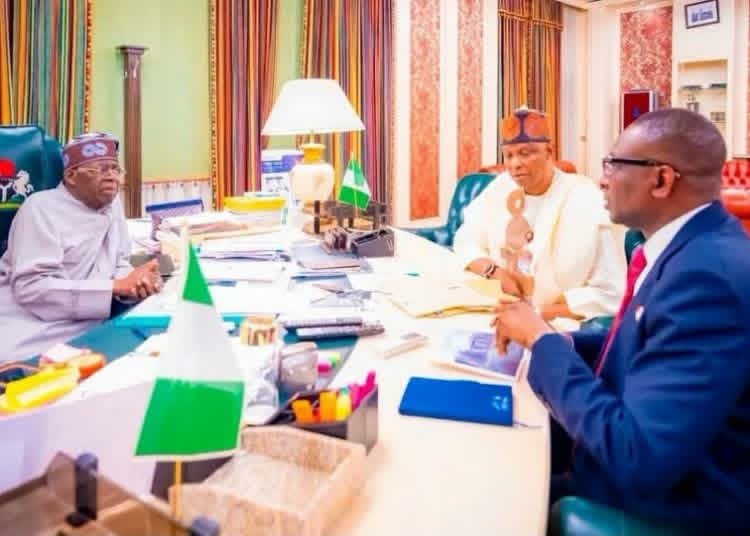
President Bola Ahmed Tinubu’s campaign for a second term has continued to gather political momentum, with a growing number of support groups, political organisations and stakeholders publicly declaring their backing for his bid to remain in office beyond 2027.
The latest wave of endorsements comes as Nigeria enters a more intense phase of political mobilisation ahead of the 2027 general elections, with the ruling All Progressives Congress (APC) increasingly consolidating its structures around Tinubu’s candidacy.
The development comes against the backdrop of the formal confirmation of Tinubu as the APC’s presidential candidate for the 2027 election. In May 2026, the President secured the party’s nomination after a nationwide direct primary in which he overwhelmingly defeated his only challenger, Stanley Osifo. According to the State House, Tinubu received 10,999,162 votes in the exercise. (State House Abuja)
While the specific organisation identified in the headline as “RECAP” could not be independently verified from the major Nigerian news reports reviewed for this report, the broader development described—growing endorsements for Tinubu’s second-term bid—is well documented by reputable Nigerian media outlets.
Endorsements widen ahead of 2027
Tinubu’s re-election campaign has received endorsements from several political and civic groups in recent months, reflecting an expanding network of organisations seeking to mobilise support for the President.
One of the more prominent endorsements came from the Association of Local Governments of Nigeria (ALGON), which backed Tinubu for a second term at its expanded national executive meeting in Abuja.
According to The PUNCH, ALGON said its endorsement was influenced by what it described as the administration’s Renewed Hope Agenda and its impact on fiscal capacity and local government autonomy. The association said continuity under Tinubu could further deepen grassroots governance. (Punch Newspapers)
In another development, the North Central Agenda (NCA), a political advocacy organisation, endorsed Tinubu for a second term and expressed confidence in his prospects in the region.
TheCable reported that the group’s convener, Ene Ogbole, made the declaration during a conference in Abuja focused on development in the North-Central under the Renewed Hope Agenda. The group argued that the region had experienced improvements in infrastructure and development under the Tinubu administration. (TheCable)
The endorsements demonstrate the extent to which the 2027 presidential contest is already being shaped by political mobilisation across Nigeria’s geopolitical zones.
APC structures consolidate around Tinubu
The President’s position within the APC has also been strengthened by endorsements from the party’s formal structures.
In May 2025, the APC National Working Committee endorsed Tinubu as the party’s presidential candidate for the 2027 election. The endorsement followed support from APC governors and lawmakers, who had also passed a vote of confidence in the President. (Punch Newspapers)
The process moved further in 2026 when the party conducted its presidential primary.
The PUNCH reported that Tinubu’s victory in the primary was overwhelming, with the exercise effectively becoming an affirmation of his candidacy after APC structures across the country had already endorsed him.
The primary was conducted across 8,809 wards nationwide, with Tinubu securing the overwhelming backing of party delegates. His only challenger, Osifo, received negligible support. (Punch Newspapers)
The result effectively settled the question of the APC presidential ticket and shifted attention toward the general election campaign.
First-term APC governors endorse continuity
Another significant endorsement came from APC governors serving their first terms.
In July 2026, the governors unanimously endorsed Tinubu for another term, arguing that continuity was necessary to sustain the administration’s economic reforms and national development policies.
The PUNCH reported that the governors issued a communiqué after a meeting in Kebbi State, stating that their support was based on what they described as the need for policy continuity, economic stability and stronger cooperation between the federal and state governments. (Punch Newspapers)
The governors’ endorsement is politically significant because state-level structures will be central to the APC’s mobilisation strategy during the election.
Governors control substantial political structures within their respective states and are often influential in coordinating grassroots mobilisation, campaign organisation and voter engagement.
The unanimous position of APC first-term governors therefore provides Tinubu’s campaign with an important layer of institutional support.
A growing coalition of support groups
The President has also attracted support from organisations outside the formal APC structure.
In May, a coalition of more than 1,500 political and support organisations endorsed Tinubu for a second term during a national unity rally in Abuja.
According to The PUNCH, the coalition, known as the Tinubu Mega Group, included professional organisations, civil society groups, youth and women organisations, artisans, traders, religious leaders and grassroots mobilisers drawn from across the 36 states and the Federal Capital Territory.
The coalition described its support as a preference for continuity and argued that the administration’s policies should be given additional time to mature. (Punch Newspapers)
Similarly, the Association of Local Governments of Nigeria’s endorsement illustrates an effort to build support around the administration at the grassroots level.
These endorsements do not automatically translate into votes, however. Nigeria’s electoral history demonstrates that public declarations by political organisations must ultimately be tested against voter behaviour at the ballot box.
Tinubu campaign enters a more competitive phase
The growing endorsements for Tinubu come at a time when Nigeria’s political environment is becoming increasingly competitive.
The 2027 presidential election is expected to feature a number of prominent opposition figures and emerging political alliances.
Recent reporting by Reuters and The Associated Press has highlighted the increasingly competitive nature of the presidential contest, including the challenges facing Tinubu’s administration over economic hardship, insecurity and public dissatisfaction.
Reuters reported on August 19 that Nigeria had entered the campaign season with Tinubu seeking re-election while the APC faced scrutiny over the consequences of economic reforms and persistent security problems. The report also noted the fragmented nature of the opposition. (Reuters)
The Associated Press similarly reported that Tinubu’s re-election prospects are being shaped by both public frustration over economic conditions and the inability of major opposition figures to form a unified political platform. (AP News)
The competing narratives are likely to define much of the campaign ahead of the election.
While the Tinubu camp will emphasise economic reforms, infrastructure development, investment and institutional changes, opposition parties are expected to focus heavily on inflation, living costs, unemployment, insecurity and the broader economic difficulties experienced by households.
Economic reforms at centre of Tinubu’s campaign
Tinubu’s economic reform agenda is expected to remain one of the major issues in the 2027 presidential contest.
Since assuming office in May 2023, his administration has implemented major reforms, including the removal of the petrol subsidy and changes to the foreign exchange system.
The reforms have been praised by some investors and economic institutions for addressing long-standing structural distortions, but they have also generated significant hardship for many Nigerians through higher living costs and reduced purchasing power.
The President has consistently defended the measures, arguing that difficult reforms were necessary to place the economy on a more sustainable footing.
At his acceptance of the APC presidential nomination in May 2026, Tinubu said another four years would allow his administration to consolidate reforms and advance economic expansion, industrialisation, energy security, infrastructure development and food sufficiency. (State House Abuja)
The administration’s ability to convince voters that the benefits of these reforms are becoming more visible will be central to the President’s re-election campaign.
Support does not eliminate electoral challenges
Despite the growing number of endorsements, political support for Tinubu is not without challenges.
Public opinion remains divided over the administration’s economic record, security performance and overall direction of the country.
Reuters reported that economic hardship and insecurity remain among the principal concerns of Nigerian voters, with the President’s reform programme producing both support among investors and significant dissatisfaction among sections of the population. (Reuters)
The opposition is also seeking to exploit these concerns.
However, opposition fragmentation could work in favour of the incumbent. The Associated Press reported that several prominent opposition figures have so far failed to form a unified political front capable of presenting a single strong challenger to Tinubu. (AP News)
The eventual shape of opposition alliances will therefore be an important factor in determining the competitiveness of the election.
The road to 2027
Tinubu’s growing endorsements demonstrate that the political machinery supporting his second-term bid is already becoming increasingly organised.
From APC governors and party structures to local government representatives, advocacy organisations and grassroots support groups, the President has accumulated a broad network of political backing.
Nevertheless, endorsements are only one component of an electoral campaign.
The ultimate test will be whether the administration can translate its political structures into voter confidence, particularly among citizens facing economic pressures.
For the APC, the task will be to demonstrate that the reforms introduced since 2023 are producing tangible improvements in living standards while maintaining public confidence in the government’s security and development agenda.
For the opposition, the challenge will be to convert dissatisfaction into a coherent national political alternative capable of competing effectively against the APC’s expanding political structure.
As the 2027 election approaches, the contest is therefore likely to become increasingly focused not merely on endorsements, but on performance, credibility, policy alternatives and the ability of each political camp to mobilise voters.
For now, the growing number of endorsements represents a clear political advantage for Tinubu and signals that his campaign machinery is moving into a more active phase.
But in Nigeria’s electoral system, the final verdict remains with the electorate.
Sources
- Reuters — Reporting on the opening of Nigeria’s 2027 campaign season, Tinubu’s re-election bid and the political challenges facing the APC. (Reuters)
- Associated Press (AP) — Coverage of Tinubu’s re-election campaign, opposition fragmentation and Nigeria’s 2027 presidential race. (AP News)
- The PUNCH — Report on Tinubu’s victory in the APC presidential primary and endorsements from party structures. (Punch Newspapers)
- The PUNCH — Report on APC first-term governors’ endorsement of Tinubu for a second term. (Punch Newspapers)
- The PUNCH — Report on the endorsement of Tinubu by ALGON. (Punch Newspapers)
- The PUNCH — Report on the coalition of 1,500 groups backing Tinubu for a second term. (Punch Newspapers)
- TheCable — Report on the North Central Agenda’s endorsement of Tinubu for 2027. (TheCable)
- State House — Official confirmation of Tinubu’s APC presidential nomination and his stated plans for a second term. (State House Abuja)