Reported Simon Daniel Yusuph l journalist at wengglobal
President Bola Ahmed Tinubu has intensified efforts to ensure greater transparency and accountability in the management and disposal of properties and other assets recovered or forfeited to the Federal Government, as the administration moves to strengthen its asset-recovery and anti-corruption agenda.
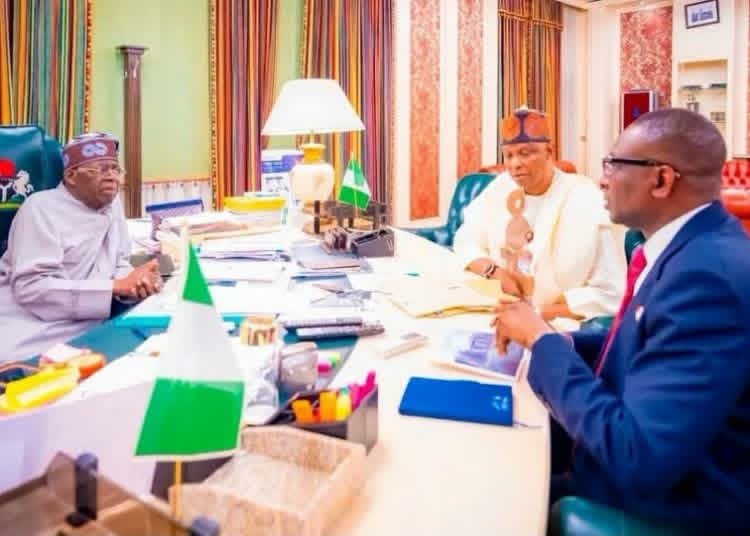
The President’s engagement with the Minister of Housing and Urban Development, Ahmed Dangiwa, and the Chairman of the Economic and Financial Crimes Commission (EFCC), Ola Olukoyede, comes amid growing public attention over what happens to properties and other valuables after they are seized, recovered or permanently forfeited through court processes.
The issue has become increasingly important as Nigerian anti-corruption agencies continue to secure forfeiture orders involving high-value properties, while the Federal Government faces pressure to demonstrate that recovered assets are not simply transferred from one form of mismanagement to another.
The administration has repeatedly said that assets recovered from corruption and other financial crimes should ultimately be deployed for the benefit of Nigerians.
That principle was demonstrated in May 2025 when the EFCC handed over a 753-unit housing estate in Abuja, previously linked to former Central Bank of Nigeria Governor Godwin Emefiele, to the Federal Ministry of Housing and Urban Development following a final forfeiture order. The government subsequently announced plans to complete the estate and make the units available through a transparent and competitive process.
The latest presidential focus therefore places asset management at the centre of Nigeria’s broader accountability conversation.
From Asset Recovery to Asset Management
Recovering assets suspected to be proceeds of crime is only one stage of the anti-corruption process.
The more difficult question is what happens afterwards.
Properties can deteriorate if left vacant, vehicles and equipment can lose value, businesses can become unproductive and other movable assets can require significant maintenance costs. Without a credible management system, assets recovered through lengthy investigations and court proceedings could lose much of their economic value before they are eventually disposed of or transferred for public use.
This is why transparency in the management and disposal process has become a critical part of Nigeria’s anti-corruption policy.
The Federal Government has previously acknowledged the need for proper management of recovered assets. Nigeria’s legal and institutional framework has evolved through measures including the Proceeds of Crime (Recovery and Management) Act, 2022, which provides for the recovery, management and disposal of properties forfeited to the Federal Government.
The Open Government Partnership has also identified transparent management of recovered assets as an important element of Nigeria’s anti-corruption commitments, including public reporting on recovered assets and their utilisation.
Emefiele Estate Offers a Test Case
The 753-unit housing estate in Abuja has emerged as one of the clearest examples of the government’s approach to recovered property.
The estate, located in Lokogoma District, covers more than 150,000 square metres and comprises hundreds of residential units.
The EFCC secured its final forfeiture in December 2024. In May 2025, the commission formally handed the property to the Housing Ministry.
At the handover, the Housing Ministry said it would conduct structural and integrity assessments, complete outstanding infrastructure and subsequently offer the housing units for sale through a transparent and competitive process.
The government also said the process would involve nationwide advertisement and the Renewed Hope Housing Portal, while some units could be reserved for special government needs.
The EFCC Chairman, Olukoyede, stressed at the time that recovered proceeds of crime should not be allowed to be misappropriated again.
That principle remains central to the current debate.
If an asset was recovered because it was allegedly acquired through illicit proceeds, Nigerians expect the post-forfeiture process to be cleaner, more transparent and more accountable than the circumstances that led to its recovery.
Recent Forfeitures Increase Pressure on Government
The Federal Government’s asset-management challenge has become more significant following a series of major forfeiture orders.
In July 2026, the Federal High Court in Abuja ordered the final forfeiture of 48 properties linked to former Attorney-General of the Federation and Minister of Justice, Abubakar Malami.
Premium Times reported that the properties, which the newspaper calculated at about N180.4 billion based on values attached by the EFCC, included hotels, a university, malls, residential properties and other assets spread across several states.
The court’s ruling followed objections by Malami and other parties connected to the properties.
The distinction between an allegation and a final judicial determination remains important. The forfeiture order represents the court’s decision regarding the properties, but it should not automatically be presented as equivalent to a criminal conviction of every individual associated with the assets.
The development nevertheless illustrates the scale of assets that government agencies may increasingly have to manage.
The EFCC and other recovery agencies therefore face a dual responsibility: ensuring that assets are recovered through lawful processes and ensuring that their subsequent management remains transparent.
Supreme Court Decision Adds to Asset Recovery Activity
The country’s asset recovery landscape has also witnessed significant judicial developments.
In July 2026, the Supreme Court restored the final forfeiture of seven high-value properties linked to former CBN Governor Godwin Emefiele, overturning an earlier Court of Appeal decision.
Channels Television reported that the five-member Supreme Court panel unanimously allowed the EFCC’s appeal and reinstated the Federal High Court’s final forfeiture order involving the properties and $2.045 million.
The ruling further illustrates the importance of judicial oversight in asset forfeiture.
Assets should only be transferred permanently to government ownership through legally established procedures, particularly where individuals or companies contest the basis for seizure or forfeiture.
This legal safeguard is essential to protecting property rights while allowing the state to recover assets that courts determine are connected to unlawful activity.
Transparency Must Continue After Forfeiture
Public accountability should not end when a court issues a final forfeiture order.
The public needs to know:
- What assets were recovered?
- What was their estimated value?
- Where are they located?
- Who currently manages them?
- What expenses have been incurred?
- Were they sold, transferred or retained for public use?
- How much revenue was generated?
- Where did the proceeds go?
These questions become particularly important when assets are sold.
A transparent disposal process should provide clear information about valuation, advertising, bidding, successful purchasers and the final amount realised.
Such disclosure would reduce speculation and help protect the government against allegations that recovered assets are being sold below market value or transferred to politically connected individuals.
Nigeria’s previous experience with the disposal of seized assets demonstrates why public confidence cannot be assumed.
Past controversies involving the management and sale of seized and forfeited properties have repeatedly raised questions about institutional coordination and oversight. The need for clear rules governing asset tracing, recovery, management and disposal has been recognised for years.
Housing Ministry’s Role Extends Beyond Construction
The involvement of the Housing Ministry in managing recovered property adds another dimension to the issue.
The ministry’s responsibility is not simply to receive properties and complete buildings. It must also demonstrate that the eventual allocation or sale of such properties is conducted according to clear, publicly available rules.
The Emefiele-linked estate provides an example.
When the property was transferred to the Housing Ministry, officials said technical assessments would be conducted before the buildings were completed and offered for sale.
Channels Television reported that the government intended to make the homes available to Nigerians through a transparent process after the necessary assessments and infrastructure works.
This approach potentially allows the government to turn a recovered asset into a productive public resource.
But the credibility of the process will depend heavily on implementation.
Recovered Assets Should Deliver Public Value
There is a wider economic argument for effective management of forfeited assets.
Idle properties do not necessarily generate public value. Completed housing units, functioning commercial facilities, productive agricultural assets or properly sold properties can generate economic benefits.
In the housing sector, for example, completing recovered residential estates could increase the supply of homes while generating revenue for government.
The ICPC’s recent handover of forfeited land in Kaba District, Abuja, provides another example of this approach.
In July 2026, the commission handed over forfeited land to the Federal Mortgage Bank of Nigeria for the completion of a planned 962-unit housing project. The ICPC said the land was forfeited following a Federal High Court order and that the project was intended to return the recovered asset to productive public use.
Such initiatives demonstrate that asset recovery can potentially move beyond punishment and become part of broader public development policy.
Need for Inter-Agency Coordination
The President’s engagement with the Housing Ministry and EFCC also highlights the need for effective coordination among institutions responsible for asset recovery and management.
The EFCC is not the only Nigerian institution involved in recovering assets.
The Independent Corrupt Practices and Other Related Offences Commission (ICPC), Nigeria Police Force, courts, Ministry of Justice, Federal Mortgage Bank and other agencies can become involved depending on the nature and ownership of the assets.
Without clearly defined responsibilities, overlapping mandates can create delays and uncertainty.
Nigeria’s Open Government Partnership commitments have previously called for stronger coordination and public monitoring of recovered assets.
The challenge is therefore institutional as much as political.
Tinubu Administration Faces Accountability Test
President Tinubu’s anti-corruption agenda will increasingly be judged not simply by the amount of money or property recovered, but by what happens to those assets afterwards.
Asset recovery statistics can demonstrate enforcement activity, but citizens ultimately want tangible results.
They want to see recovered housing estates completed, public assets protected, proceeds properly accounted for and beneficiaries selected fairly.
The government must therefore establish a system in which the public can track an asset from recovery to final utilisation.
Such a system could include a regularly updated national asset register containing information about recovered properties, their legal status, estimated value, location, management arrangements and final disposition.
This would make it easier for civil society organisations, journalists, lawmakers and citizens to independently monitor the process.
Legal Safeguards Remain Essential
Transparency must also coexist with due process.
Not every property seized by an enforcement agency has necessarily been permanently forfeited. Some cases remain before the courts, and individuals affected by seizure orders have legal rights to challenge them.
Consequently, the government must distinguish between seized, restrained, interim-forfeited and finally forfeited assets.
Disposal before the conclusion of the appropriate legal process could undermine confidence in the system and expose the government to unnecessary litigation.
The ultimate objective should be a system where legitimate property rights are protected while proceeds of unlawful activity are recovered and redirected for public benefit.
Wengglobal Perspective
President Tinubu’s renewed attention to the transparent management and disposal of seized and forfeited assets comes at a critical stage in Nigeria’s anti-corruption campaign.
The government has demonstrated that it can recover substantial properties through the courts and transfer them to ministries and public institutions. The next challenge is proving that those assets can be managed without creating another layer of opacity.
The 753-unit Abuja housing estate linked to former CBN Governor Godwin Emefiele, the properties recently forfeited in the Malami case and the Kaba District housing project all demonstrate the growing scale and complexity of recovered assets in government hands.
For Wengglobal, the central issue is therefore not merely how much government recovers, but how transparently it manages what it recovers.
Every forfeited property represents public value once ownership has been transferred to the state through due process. That value must be protected.
Government should publish clear information on recovered assets, establish transparent valuation and disposal procedures, disclose beneficiaries or purchasers where legally appropriate, and provide regular reports on revenue generated from sales.
The EFCC and relevant ministries should also maintain clear records showing the journey of each major asset from seizure through court determination, handover, management and final disposal or utilisation.
If successfully implemented, such measures could strengthen public confidence in Nigeria’s anti-corruption institutions and demonstrate that asset recovery is not simply about taking property away from alleged offenders.
It is about ensuring that assets recovered through lawful processes are preserved, properly managed and ultimately converted into measurable benefits for the Nigerian people.
That is the real test of transparency—and one that the Tinubu administration will increasingly have to meet as the volume and value of recovered assets continue to grow.
Sources
- Federal Ministry of Information and National Orientation (FMINO) — Reported the EFCC’s handover of the 753-unit Abuja housing estate to the Housing Ministry and the government’s plans for transparent disposal.
- Channels Television — Reported the inspection and planned disposal of the 753-unit estate and later reported the Supreme Court’s restoration of forfeiture involving properties linked to Emefiele.
- TheCable — Reported the transfer of the 753-unit estate to the Housing Ministry and the government’s proposed transparent sales process.
- Premium Times — Reported the Federal High Court’s final forfeiture of 48 properties linked to former AGF Abubakar Malami.
- Independent Corrupt Practices and Other Related Offences Commission (ICPC) — Reported the handover of forfeited Kaba District land for development of 962 housing units.
- Open Government Partnership — Provides context on Nigeria’s commitments to transparent management, monitoring and reporting of recovered assets.