Reported Simon Daniel Yusuph l journalist at wengglobal
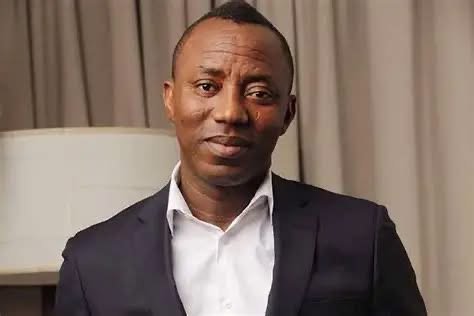
ABUJA, Nigeria — African Action Congress (AAC) presidential candidate Omoyele Sowore has criticised Nigeria’s National Peace Accord ahead of the 2027 general elections, arguing that repeated political agreements have done little to prevent electoral violence or guarantee accountability for those responsible for attacks during elections.
Sowore made the comments on Tuesday, August 18, 2026, on the sidelines of the National Peace Accord signing ceremony in Abuja, where political candidates and other stakeholders gathered to commit themselves to peaceful conduct ahead of the 2027 elections.
The former presidential candidate described the accord as a largely ceremonial exercise, questioning whether another political pledge could produce a different outcome when previous agreements had not, in his view, prevented violence.
His remarks were reported by The PUNCH, which quoted Sowore as saying he did not have confidence in the process but continued to participate because he wanted to bring “faith” to the system. (Punch Newspapers)
Sowore’s criticism comes only days after the August 15 governorship election in Osun State, where political parties had previously signed a peace agreement ahead of the poll.
The activist cited what he described as 50 deaths connected to the Osun election as evidence that signing a peace accord does not necessarily prevent violence.
However, the reported figure of 50 deaths is Sowore’s claim and has not been independently established in the available reports reviewed by wengglobal. It should therefore not be presented as a confirmed death toll from the Osun election without corroboration from election observers, security authorities, hospitals, civil society organisations or other authoritative sources.
Sowore questions the value of repeated peace pledges
Speaking to journalists after the Abuja ceremony, Sowore questioned what he described as the repetitive nature of Nigeria’s electoral peace process.
According to The PUNCH, he argued that political actors sign agreements, campaign during elections and then move on without sufficient mechanisms to ensure that commitments are respected or violations are properly investigated and punished. (Punch Newspapers)
The AAC candidate said his participation should not be interpreted as an endorsement of the effectiveness of the arrangement.
“I don’t have faith in it. I’m bringing faith to the system. Those are two different things,” he said, according to the report. (Punch Newspapers)
He also described the ceremony as potentially becoming a social gathering for politicians rather than a mechanism capable of changing behaviour during elections.
The criticism places the effectiveness of Nigeria’s electoral peace architecture under renewed scrutiny as political parties prepare for one of the country’s most consequential election cycles.
Osun election provides immediate context
The Osun governorship election provides the immediate backdrop to Sowore’s argument.
Ahead of the August 15 poll, candidates and political stakeholders signed a peace accord intended to discourage violence and promote peaceful campaigning and voting.
The Guardian reported on July 31 that the signing of the Osun peace agreement was overshadowed by allegations and counter-allegations between the ruling Accord Party and the All Progressives Congress (APC). The newspaper reported that Governor Ademola Adeleke accused police authorities of intimidating members of his administration and party, while the APC demanded the removal of the state’s Secretary to the Government over his arrest. (The Guardian Nigeria)
The National Peace Committee had urged political actors to exercise restraint, while traditional and electoral stakeholders also warned against violence and vote buying.
The episode illustrated one of the central difficulties confronting peace accords: signing an agreement can establish a formal commitment, but implementation depends on the willingness of political parties, candidates, supporters and security agencies to comply with its provisions.
Sowore’s argument is therefore focused not merely on the existence of the agreement but on what happens after the ceremony.
The National Peace Committee’s role
The National Peace Committee is a non-governmental initiative established in 2014 ahead of the 2015 general elections.
The committee, chaired by former Head of State General Abdulsalami Abubakar, has played a prominent role in bringing political candidates together before elections to secure commitments against violence and encourage peaceful conduct.
The initiative became particularly prominent during the 2015 presidential election and continued during subsequent electoral cycles.
Its supporters argue that the process provides an important platform for political leaders to communicate directly, reduce tensions and establish common expectations ahead of elections.
Critics, however, contend that voluntary commitments require stronger enforcement mechanisms if they are to deter political violence effectively.
That tension is now at the centre of Sowore’s criticism.
The AAC candidate’s position is that political leaders should not simply sign documents but should also be held accountable when violence occurs.
From “Peace Accord” to “Justice Accord”
Sowore has called for a stronger accountability-focused approach, describing what he wants as a “Justice Accord.”
His argument is that electoral peace should not be limited to a promise by candidates to avoid violence. It should also involve clear consequences for individuals or groups responsible for political violence.
Under such an approach, commitments made before an election would be linked to investigations, prosecution and other lawful sanctions where violations occur.
This would represent a significant shift in emphasis.
Rather than treating the peace accord primarily as a political pledge, it would connect electoral peace with the justice system and institutional accountability.
Such a framework would also raise practical questions about who would investigate alleged violations, what evidence would be required, how political interference would be prevented and which institutions would have authority to impose sanctions.
These questions are particularly relevant in Nigeria, where allegations of political violence can emerge from competing political camps, making impartial investigation essential.
Peace accords cannot replace institutions
The debate also highlights a broader point about electoral security.
A peace agreement can encourage political restraint, but it cannot replace the responsibilities of the police, electoral authorities, courts and other institutions.
The Independent National Electoral Commission (INEC) is responsible for administering elections, while security agencies are responsible for maintaining public order and protecting voters, candidates and electoral materials.
Where violence or intimidation is alleged, credible investigations and lawful prosecution are necessary if public confidence is to be maintained.
The effectiveness of a peace accord therefore depends partly on the broader institutional environment in which it operates.
If political actors believe that violations will carry no meaningful consequences, a signed document may have limited deterrent value.
Conversely, where violations are investigated transparently and perpetrators are prosecuted regardless of political affiliation, peace commitments may carry greater weight.
Osun’s pre-election tensions underscore the challenge
The events leading to the Osun election illustrate why political peace agreements remain important despite their limitations.
The July peace accord was signed amid intense political competition between the Accord Party, APC and other political parties.
The Guardian reported that the National Peace Committee was urging restraint at a time when competing allegations were already increasing tensions in the state. (The Guardian Nigeria)
The situation demonstrated the dual role of peace accords.
First, they provide a platform through which political actors can publicly commit themselves to non-violence.
Second, they provide a benchmark against which their conduct can subsequently be assessed.
The question raised by Sowore is whether the second function is being sufficiently developed.
If an agreement is signed but there is no transparent mechanism for determining whether it has been breached, its practical value can be weakened.
Sowore’s broader political message
Sowore’s criticism is consistent with his broader political positioning ahead of the 2027 presidential election.
The AAC candidate has presented himself as an alternative to Nigeria’s established political establishment and has repeatedly advocated structural changes to the country’s political and governance systems.
At the Abuja event, he argued that Nigerians should support candidates with what he described as different ideas and greater willingness to challenge the existing political order.
He said his campaign would be based on programmes, people and ideas rather than conventional political arrangements. (Punch Newspapers)
His participation in the National Peace Accord therefore carries a dual message: he is willing to join a collective commitment to peaceful elections while simultaneously challenging the effectiveness of the process.
That distinction is important.
Political participation in a peace initiative does not necessarily mean every participant believes the mechanism is sufficient.
The 2027 election raises the stakes
The debate comes as Nigeria moves closer to the 2027 general elections, a contest expected to attract intense political competition across the country.
Political parties are already building alliances, selecting candidates and expanding their campaign structures.
The growing political activity has increased attention on election security, particularly given Nigeria’s history of electoral violence, voter intimidation and disputes over results.
For the peace process to retain credibility, observers are likely to expect more than public ceremonies.
They will also look for evidence that political parties are educating supporters, restraining inflammatory rhetoric, discouraging attacks on opponents and cooperating with security and electoral authorities.
Civil society organisations are similarly expected to play a role in monitoring compliance.
Accountability remains the central question
Sowore’s criticism ultimately centres on a straightforward question: what happens when a peace agreement is violated?
The answer will determine much of the credibility of the process.
If candidates sign an agreement and subsequently face no consequences for incitement or violence, critics may continue to dismiss the initiative as symbolic.
But if institutions investigate credible allegations, establish responsibility through due process and prosecute offenders irrespective of political affiliation, the peace process could gain greater legitimacy.
The distinction between allegation and established fact is also crucial.
Sowore’s reference to 50 deaths in Osun should therefore be independently verified before being treated as an established election casualty figure. At present, the available report establishes that he made the claim, not that the figure has been officially confirmed.
That caution is particularly important in politically sensitive reporting, where unverified casualty figures can increase tensions and contribute to misinformation.
A test for Nigeria’s electoral institutions
The controversy surrounding the National Peace Accord comes at a moment when Nigeria’s democratic institutions are under renewed scrutiny.
The country needs political competition that allows candidates to challenge government policies vigorously while maintaining respect for the lives, rights and property of citizens.
Peace agreements can contribute to that objective, but they are unlikely to be sufficient on their own.
Political parties must take responsibility for the conduct of their members and supporters. Security agencies must act impartially. Electoral authorities must maintain public confidence in the voting process. Courts must provide credible avenues for resolving disputes.
Most importantly, violations must be addressed through transparent and lawful processes.
For wengglobal, Sowore’s intervention should therefore be understood as part of a wider debate about how Nigeria can move from symbolic electoral commitments to enforceable standards of political conduct.
The National Peace Accord remains an important platform for dialogue, but its credibility will ultimately depend on what political actors and institutions do beyond the signing ceremony.
As the 2027 elections approach, Nigeria’s challenge is not simply to persuade candidates to promise peace.
It is to build an electoral environment in which violence is prevented, credible allegations are investigated, victims receive justice and perpetrators are held accountable regardless of political status.
That is the standard against which any future peace accord — or Sowore’s proposed “Justice Accord” — will ultimately be measured.
Sources
- The PUNCH — Sowore mocks peace accord, cites Osun deaths despite similar pact — Primary report on Sowore’s August 18, 2026 comments. (Punch Newspapers)
- The Guardian Nigeria — Fresh claims, counterclaims overshadow Osun peace accord ahead of polls — Background on the Osun peace accord and political tensions before the election. (The Guardian Nigeria)
- Channels Television — Police Arrest Osun SSG, Five Others as Accord Party Alleges Intimidation — Background on security and political tensions surrounding the Osun election. (Channels TV)
- The Nation — Updated: DSS urges court to return Sowore to prison over inability to meet bail conditions — Background on Sowore’s ongoing legal and political activities. (The Nation)
- The PUNCH — Court orders Sowore to open defence in Tinubu defamation trial — Background on Sowore’s legal proceedings. (Punch Newspapers)