Radda: Katsina Delivers Over ₦30bn in Projects Without Borrowing, Maintains Salary and Pension Payments
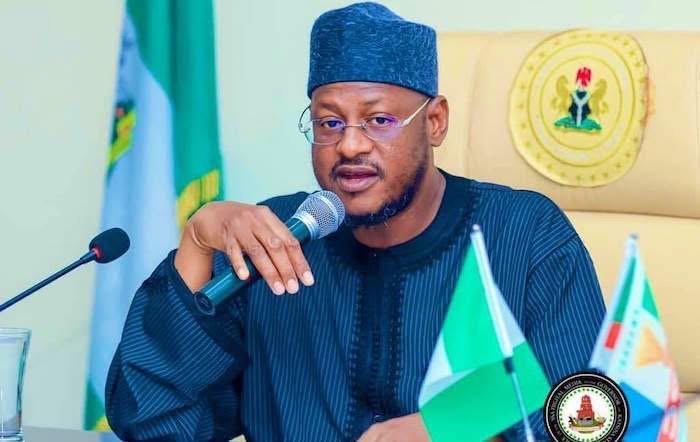
Katsina State Governor, Dikko Umaru Radda, says his administration has executed development projects valued at more than ₦30 billion without resorting to borrowing, while maintaining regular payment of salaries and pensions to workers and retirees.
The governor’s claim places fiscal discipline, workers’ welfare and infrastructure delivery at the centre of his administration’s account of its stewardship in Katsina State, where governments have faced the twin pressures of funding development and meeting recurrent obligations amid Nigeria’s broader economic challenges.
Radda’s position is significant because state governments across Nigeria have continued to contend with rising personnel costs, pension liabilities, inflation and the need to finance infrastructure. For Katsina, a predominantly agrarian state with 34 local government areas, the question of how government balances recurrent expenditure with capital projects remains central to public discussion.
The governor’s claim should, however, be understood as an assertion by the state government rather than an independently audited assessment of every project covered by the ₦30 billion figure. Available official records and reports do provide evidence of substantial infrastructure spending and significant interventions in salaries, pensions, education, agriculture, roads and other sectors.
Radda’s claim on projects and fiscal management
Radda has consistently presented his administration as one focused on fiscal prudence and project delivery.
The governor’s administration has pursued an urban renewal programme involving road reconstruction and dualisation in several parts of the state. In July 2026, the Katsina State Government commissioned the reconstructed and dualised 3.9-kilometre Funtua–Katsina Road and the upgraded 1.2-kilometre Tsohuwar Kasuwa Road.
According to the state government, the Funtua–Katsina section cost ₦5.8 billion, while the Tsohuwar Kasuwa Road project cost ₦637 million, bringing the combined value of the two commissioned projects to more than ₦6.4 billion. Both roads were fitted with solar-powered street lighting.
The projects form part of a broader infrastructure programme that the administration says is intended to improve transportation, stimulate commercial activity and enhance safety across Katsina’s urban centres.
The Federal Ministry of Information and National Orientation had earlier reported that Radda’s urban renewal programme included three major road projects in Funtua with an estimated combined value of about ₦20 billion. The projects included the 5.9-kilometre Funtua–Sokoto Road, the 3.9-kilometre Funtua–Katsina dual carriageway and the 1.2-kilometre Tsohuwar Kasuwa-Funtua road.
These figures demonstrate the scale of capital commitments made by the state, although the precise accounting treatment of individual projects and the source of financing remain matters that should be assessed against official budget and financial records.
No borrowing claim requires context
The governor’s assertion that the projects were executed without borrowing is particularly notable.
Borrowing is a common mechanism used by Nigerian states to finance major infrastructure because internally generated revenue and statutory allocations may not always be sufficient to meet capital requirements.
A claim that more than ₦30 billion in projects was executed without borrowing would therefore suggest that Katsina relied on internally available resources, federal allocations, internally generated revenue, savings, grants, partnerships or other financing arrangements rather than conventional state borrowing.
The distinction is important.
A project can be described as having no state borrowing while still receiving support from federal programmes, development partners, grants or other sources. It is therefore necessary to examine project-by-project financing arrangements before drawing a conclusion that all expenditure was funded solely from Katsina’s internally generated revenue.
Katsina’s 2026 Citizens’ Budget itself distinguishes between grants and loans or borrowings, recognising that grants and development assistance do not have to be repaid, while loans create repayment obligations.
For a state government seeking to demonstrate fiscal responsibility, transparency around these funding sources is essential.
Workers’ salaries remain a major obligation
Beyond infrastructure, Radda has repeatedly emphasised the payment of salaries and the welfare of pensioners.
This is a significant issue because recurrent expenditure consumes a substantial share of state resources.
Figures previously released by the Katsina government showed the scale of the financial obligations facing local governments. In 2024, Radda said the state’s 34 local government councils had spent ₦128 billion through their joint account between June 2023 and June 2024.
According to the governor’s account, ₦66 billion was spent on salaries, ₦10.1 billion on pensions and gratuities, and ₦12.13 billion on security within the period. Pulse Nigeria, reporting an agency report, published the figures.
The figures illustrate why maintaining salary and pension payments while financing capital projects presents a significant fiscal challenge.
Radda’s administration has also introduced measures aimed at addressing historical pension liabilities.
More than ₦45bn approved for gratuities and death benefits
In January 2026, the Katsina State Government announced the disbursement of ₦21.1 billion for outstanding retirement and death gratuities involving state and local government workers.
The state government said the money was intended to clear liabilities accumulated between September 2023 and October 2025.
It disclosed that ₦7.71 billion had been approved for outstanding gratuities and death benefits of retired state civil servants, while ₦13.39 billion was allocated for retirees across the 34 local government areas and Local Education Authorities.
The administration further stated that it had previously disbursed more than ₦23 billion to clear pension and gratuity arrears covering the period from 2019 to August 2023.
According to the state government, the combined amount approved and released for gratuities and death benefits had reached ₦45.89 billion, benefiting 14,560 people across the state, local governments and education authorities.
These figures are important in assessing the governor’s claim about consistently meeting pension obligations.
They indicate that the administration has made substantial payments toward inherited liabilities, although the distinction between clearing arrears and maintaining current pension payments remains important.
Pension reforms introduced
The administration has also moved to reform the pension system rather than rely solely on periodic payments to clear accumulated liabilities.
PUNCH reported in November 2025 that Katsina introduced a new pension reform law intended to address administrative difficulties and delays in pension and gratuity payments.
The law was presented as an effort to improve pension administration, address inaccurate pension data and prevent the continued accumulation of liabilities.
The Katsina State Government subsequently said its pension reform introduced a Contributory Defined Benefits Scheme.
The administration said the scheme would involve a combined 20 per cent contribution by government and employees, with funds professionally managed by licensed Pension Fund Administrators.
The objective is to create a more sustainable system in which retirement obligations can be met without repeatedly accumulating large arrears.
That reform could become an important measure of the administration’s long-term fiscal strategy.
₦19bn pension savings
In January 2026, Premium Times reported that Radda said Katsina had saved more than ₦19 billion under its Contributory Pension Fund between June 2023 and December 2025.
The governor said the investment generated additional returns of more than ₦668 million during the same period.
The disclosure came shortly after pensioners visited the Government House to acknowledge the administration’s payment of pensions and outstanding gratuities.
While such figures are based on the governor’s disclosure, they provide additional context to his argument that Katsina is attempting to move from a reactive approach to pension payments toward a more structured financing system.
Infrastructure expansion across Katsina
Radda’s infrastructure claims extend beyond the projects in Funtua.
In July 2026, the state government announced approval for 20.37 kilometres of additional township roads, alongside flood-control projects in 37 communities and water-supply interventions in Rimi and Safana.
The Executive Council also approved other initiatives targeting education, youth innovation and protection of women and girls.
The development programme illustrates the breadth of demands on the state treasury.
Roads require capital expenditure, while salaries, pensions, security and social programmes require recurrent funding. The ability to finance both categories without excessive debt is therefore a major test of state-level financial management.
Education takes significant share of spending
Education is another area in which the administration says it has committed substantial resources.
In May 2026, the Katsina State Government said more than 75 secondary schools had been completed, while more than 30 others were under construction.
The government also reported the recruitment of 7,325 teachers, training of more than 18,000 teachers and the provision of laptops to more than 20,000 teachers. It said scholarships worth more than ₦7 billion had been awarded to students within and outside Nigeria.
A model secondary school in Radda was also commissioned as part of the administration’s planned network of modern schools.
These investments demonstrate that the government’s claim of project delivery is not limited to roads and physical infrastructure.
Agriculture remains central to the administration’s strategy
Agriculture is another major component of Radda’s development programme.
In 2024, PUNCH reported that the Katsina Government planned to invest ₦30 billion in irrigation farming, with the objective of allowing farmers to cultivate throughout the year.
The governor said the programme would include agricultural mechanisation centres in each of the state’s 34 local government areas.
Daily Trust similarly reported that the state planned to inject more than ₦30 billion into agricultural mechanisation, with the centres intended to provide farmers with modern equipment and technical support.
The programme is particularly relevant to Katsina because agriculture remains a major source of employment and household income.
However, it is important to distinguish between projects that have already been executed and projects that were announced or planned.
The ₦30 billion irrigation and agricultural mechanisation commitment announced in 2024, for instance, should not automatically be added to the value of completed projects unless there is documentary evidence of actual expenditure.
Economic pressures remain significant
Radda’s claims come against the backdrop of a difficult national economic environment.
The removal of fuel subsidies, high inflation, rising construction costs and increased demand for social services have placed pressure on state governments.
At the same time, states have benefited from improved federal allocations following changes in national revenue flows.
The challenge for Katsina is to convert available resources into measurable improvements while maintaining fiscal sustainability.
The state’s approach to internally generated revenue is therefore relevant.
The Katsina State Government says its monthly internally generated revenue increased from about ₦400 million when Radda assumed office to approximately ₦3 billion.
If sustained, increased IGR would provide the state with greater fiscal flexibility and reduce dependence on unpredictable revenue sources.
However, the figures should ideally be assessed against official reports from the state’s revenue authorities and audited financial statements to establish the extent of the increase and its sustainability.
Project delivery must be independently measured
One of the most important questions arising from the governor’s claim is how project execution should be measured.
Government announcements and commissioning ceremonies provide evidence that projects exist, but independent verification is necessary to establish quality, cost effectiveness and value for money.
In May 2026, the Katsina State Government cited a Tracka report backed by BudgIT which ranked Katsina first among 30 states for project delivery, with an 85.84 per cent completion rate.
The government said the assessment reviewed 114 projects valued at ₦26.79 billion, of which 89 were completed and 17 were ongoing.
Such external monitoring, where methodology and underlying data are publicly available, is valuable because it provides an assessment beyond government press statements.
For the Radda administration, continued independent scrutiny could strengthen public confidence in its claims about project delivery and financial discipline.
The bigger question: sustainability
The central issue is not simply how much Katsina has spent, but whether the spending is sustainable.
A government can deliver large infrastructure projects in the short term, but long-term fiscal health requires sufficient resources to maintain those projects, pay workers, fund social services and meet pension obligations.
The introduction of pension reforms, efforts to increase internally generated revenue and the administration’s emphasis on completing projects suggest an attempt to address that challenge structurally.
At the same time, Katsina must continue to demonstrate transparency over project costs, funding sources, procurement processes and implementation timelines.
This is particularly important when the government makes a major claim such as executing more than ₦30 billion in projects without borrowing.
What the claim means for Katsina residents
For ordinary residents, the value of the government’s fiscal strategy will ultimately be judged by tangible outcomes.
A road project matters if it reduces travel time and improves access to markets.
A school matters if it improves learning conditions and educational outcomes.
Agricultural investment matters if farmers can produce more, access markets and increase household income.
Regular salaries matter because they support thousands of families and sustain economic activity in local communities.
Pension payments matter because retirees depend on them for basic needs after decades of public service.
The Radda administration’s challenge is therefore to ensure that financial discipline translates into improvements that residents can see and measure.
Accountability remains essential
Radda’s assertion that Katsina has executed more than ₦30 billion in projects without borrowing is a significant claim, but it should be assessed alongside the state’s audited accounts, budgets, procurement records and project completion certificates.
Likewise, the government’s record on salary and pension payments should be assessed using payroll records, pension payment schedules and independent fiscal data.
Such scrutiny does not diminish the significance of the administration’s achievements. Rather, it strengthens public accountability and allows citizens to understand how public resources are being managed.
For wengglobal, the broader story is about the balance between development and fiscal responsibility.
Katsina’s experience demonstrates the difficult choices confronting state governments: how to build roads, schools, hospitals and agricultural infrastructure while paying workers, supporting retirees, addressing insecurity and maintaining essential public services.
Governor Radda says his administration has managed that balance without relying on borrowing for the projects referenced.
The evidence available publicly supports the existence of significant capital investments and major pension interventions, while the precise scope and financing of the governor’s ₦30 billion project claim require continued verification against official financial records.
As Katsina moves further into the administration’s development programme, the durability of its fiscal model will ultimately be measured by whether the state can sustain investment, honour its obligations and continue delivering projects without creating unsustainable liabilities.
That balance between ambition, accountability and affordability will remain central to the state’s economic and governance story.
Sources
- Katsina State Government — Official records on infrastructure projects, pension payments, education and fiscal interventions.
- Premium Times — Report on Katsina’s ₦19 billion contributory pension savings and pension reforms.
- PUNCH — Report on Katsina’s pension reforms and the earlier ₦30 billion agricultural investment plan.
- Daily Trust — Report on Katsina’s proposed more than ₦30 billion agricultural mechanisation investment.
- Federal Ministry of Information and National Orientation — Report on the ₦20 billion Funtua urban renewal programme.
- Pulse Nigeria/NAN — Report on Katsina local government expenditure, including salaries, pensions and security spending.
- Voice of Nigeria — Recent report on infrastructure and economic projects under Radda’s administration.
Editorial Note
The statement that Katsina has executed over ₦30 billion in projects without borrowing is attributed to Governor Dikko Radda and should not be interpreted as an independently audited figure. Publicly available records confirm substantial projects and financial interventions but do not, in the sources reviewed, provide a single independently audited statement establishing that every project included in the ₦30 billion figure was financed without borrowing. wengglobal therefore presents the claim with appropriate attribution and context.