Reported by Simon yusuph,| Journalist at wengglobal
Nigeria’s political landscape has witnessed another twist ahead of the 2027 general elections, with a faction of the Peoples Democratic Party (PDP) led by former Minister of Special Duties, Tanimu Turaki (SAN), accusing the Independent National Electoral Commission (INEC) of bias over the recognition of the party’s leadership and presidential candidate.
The development is the latest episode in the prolonged internal crisis that has continued to divide Nigeria’s main opposition party, raising fresh questions about its preparedness for the 2027 presidential election and its ability to present a united front against the ruling All Progressives Congress (APC).
According to the Turaki-led faction, it validly submitted the name of former President Goodluck Jonathan as the PDP’s presidential candidate for the 2027 election, alongside the names of other party officials. However, the group alleges that INEC has refused to acknowledge its submissions while recognizing documents presented by a rival faction within the party.
Allegations of Bias Against INEC
Addressing journalists, representatives of the Turaki-led faction maintained that they complied with constitutional and electoral requirements governing political party submissions. They argued that the electoral commission acted selectively by refusing to recognize their leadership structure despite what they described as lawful compliance with existing procedures.
The faction alleged that INEC’s actions amount to institutional bias capable of undermining confidence in the electoral process if not addressed promptly.
According to the group, equal treatment of all legally constituted party organs remains fundamental to maintaining public trust in Nigeria’s democratic institutions. The faction urged the electoral umpire to remain neutral and avoid actions that could be interpreted as favouring one group over another.
Jonathan’s Name Emerges Amid Leadership Dispute
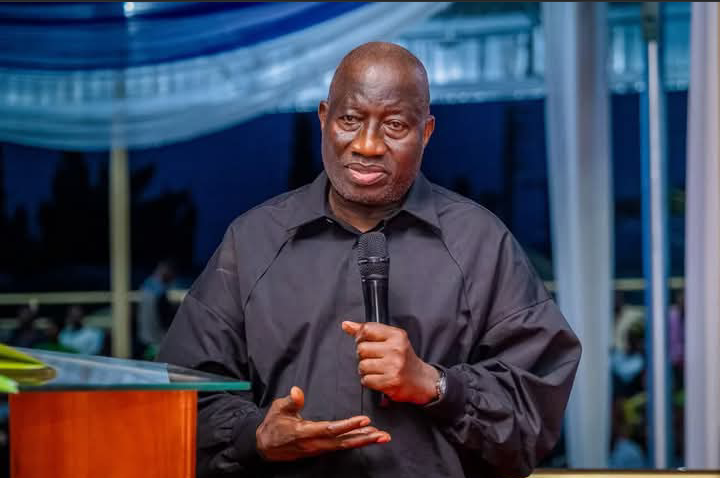
A significant aspect of the controversy is the inclusion of former President Goodluck Jonathan’s name as the PDP’s alleged presidential candidate for the 2027 election.
Jonathan, who served as Nigeria’s President between 2010 and 2015, has consistently remained a respected figure within the PDP and across sections of the political spectrum. However, as of the time of reporting, there has been no public confirmation from Jonathan indicating that he has accepted any presidential nomination or declared an intention to contest the 2027 election.
Political observers note that Jonathan has repeatedly maintained a cautious public posture regarding future electoral ambitions, often choosing not to comment on recurring speculation surrounding possible political comebacks.
His reported nomination by the Turaki-led faction therefore adds another layer of complexity to the PDP’s already fragmented internal politics.
PDP’s Internal Crisis Continues
The dispute reflects the wider leadership crisis that has plagued the PDP in recent years.
Since losing the 2023 presidential election, the opposition party has struggled with disagreements over its national leadership, zoning arrangements, disciplinary actions, and control of party structures across several states.
Multiple court cases, parallel meetings, and competing claims to legitimacy have complicated efforts to rebuild the party ahead of the next electoral cycle.
Political analysts warn that unless the PDP resolves these internal disputes well before the commencement of formal election activities, its ability to mount an effective national campaign could be significantly weakened.
The latest disagreement involving the Turaki-led faction further illustrates the challenges facing the party as different groups continue to assert authority over its affairs.
INEC Yet to Respond Publicly
As of the time this report was prepared, INEC had not issued any official public response specifically addressing the allegations made by the Turaki-led PDP faction.
The electoral commission has consistently maintained that it operates strictly within the framework of the Nigerian Constitution, the Electoral Act, and judicial pronouncements when dealing with disputes involving political parties.
INEC has repeatedly stated in previous disputes that recognition of party officials and submissions depends on compliance with applicable legal provisions and valid court decisions where necessary.
Political stakeholders are therefore expected to monitor any formal clarification from the commission regarding the latest allegations.
Legal and Political Implications
Election law experts say internal party disputes often have significant consequences for candidate nominations, congresses, and convention outcomes.
Where multiple factions submit conflicting documents or leadership lists, the matter frequently shifts from administrative processes to judicial determination.
Should the disagreement remain unresolved, courts may ultimately determine which faction possesses the legal authority to act on behalf of the PDP regarding candidate nominations and party administration.
Analysts also note that prolonged litigation could consume valuable campaign preparation time as political parties position themselves for the 2027 elections.
Implications for Nigeria’s Opposition Politics
The PDP remains one of Nigeria’s largest political parties despite its internal challenges.
Many observers believe that strengthening internal democracy and resolving leadership disagreements will be critical if the party hopes to remain a competitive national opposition force.
The emergence of rival factions making competing claims over party leadership and presidential nominations risks creating uncertainty among party members, supporters, and potential electoral partners.
Political commentators argue that a transparent resolution process—whether through reconciliation, party mechanisms, or judicial interpretation—would be essential to preserving confidence in the opposition ahead of the next election cycle.
Looking Ahead
With the 2027 general elections still some distance away, Nigeria’s political environment is expected to witness further realignments, coalition discussions, and internal restructuring across major political parties.
For the PDP, resolving its leadership crisis may prove just as important as selecting eventual candidates.
Meanwhile, allegations of bias against INEC underscore the importance of maintaining institutional neutrality and public confidence in Nigeria’s electoral process. As political activities intensify, stakeholders are likely to continue scrutinizing every decision made by the electoral commission.
Whether the Turaki-led faction’s claims gain legal recognition or remain part of the broader internal contest within the PDP will largely depend on future administrative decisions and, potentially, judicial interpretation.
For now, the controversy highlights the continuing struggle for control within Nigeria’s leading opposition party and the broader challenges of consolidating democratic institutions ahead of another critical electoral cycle.
Sources
- The Punch
- Vanguard Nigeria
- Daily Trust
- Premium Times
- Channels Television
- TheCable
- Independent National Electoral Commission (INEC) official communications