Adeleke Re-Election Bid Reflects Public Confidence in Osun Administration, Says PDP Chieftain!
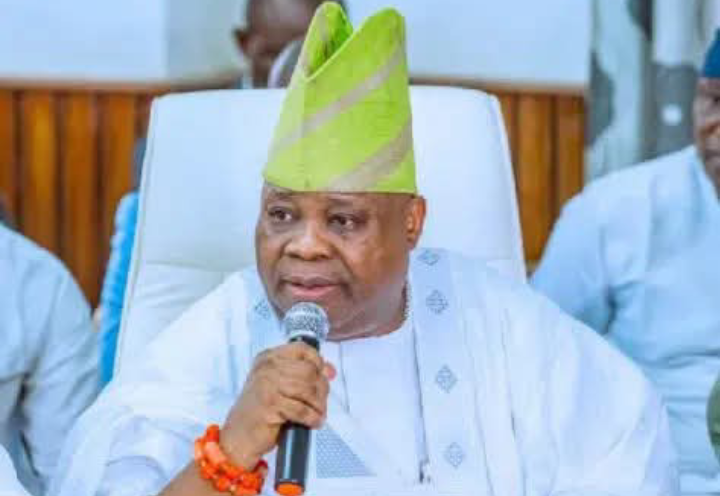
A senior figure within the Peoples Democratic Party (PDP) has described Governor Ademola Adeleke’s re-election bid in Osun State as a reflection of what he called the confidence and trust of residents in the governor’s administration, as the state enters a crucial phase of its political transition.
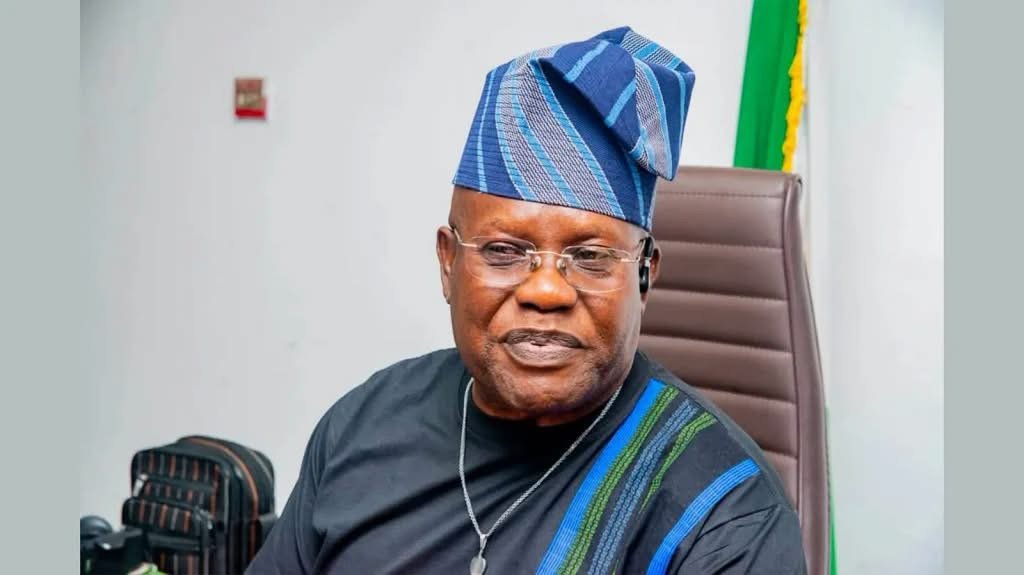
Prince Diran Odeyemi, a prominent PDP figure and former party spokesperson, said Adeleke’s continued political support demonstrated that many residents remained willing to entrust the governor with another term based on the administration’s record in office.
Odeyemi’s position comes amid an intensely contested political environment in Osun, where the 2026 governorship election has been shaped by competing claims over governance, development, political legitimacy and the performance of the incumbent administration.
However, the assertion that Adeleke’s re-election bid itself “confirms” the people’s trust remains a political assessment rather than an independently measurable fact. Ultimately, the electorate’s level of confidence in an administration is best established through voting patterns, credible opinion research and the outcome of the election.
Governor Adeleke, who is seeking a second term, has consistently presented his administration’s record as the central argument for his re-election. In March, the governor unveiled an upgraded five-point agenda focused on youth, women and workers’ welfare, infrastructure, agro-industrial development, healthcare and education, as well as improving the business environment. (Osun State Official Website)
Adeleke’s performance becomes centre of re-election campaign
The governor has repeatedly argued that his first term has produced measurable improvements across several sectors of the state.
In his March re-election statement, Adeleke cited the rehabilitation of health centres, renovation of schools, developments at Osun State University and the establishment and expansion of the University of Ilesa as some of the achievements his administration intends to consolidate if returned to office.
He also pointed to improvements in public-sector welfare, healthcare and education, while promising to deepen infrastructure development and expand economic opportunities for young people, women and workers.
These claims form a major part of the political narrative being presented by the governor and his supporters ahead of the election.
The administration’s claims, however, have faced criticism from political opponents, particularly the All Progressives Congress (APC), which has argued that the state requires a change in leadership.
The APC’s governorship candidate, Munirudeen Bola Oyebamiji, has repeatedly challenged Adeleke’s record and expressed confidence that his party can defeat the incumbent.
In April, the APC campaign council declared that Adeleke would not be re-elected, arguing that the opposition party had the organisational strength and grassroots support necessary to take control of the state. (Punch Newspapers)
The competing narratives illustrate the central issue confronting Osun voters: whether Adeleke’s first-term record justifies continuity or whether the state should opt for a change in administration.
Political realignment adds new dimension to Osun contest
The 2026 election has also been influenced by significant political realignments.
Adeleke resigned from the PDP and subsequently joined the Accord Party, under which he is contesting the governorship election. His move followed prolonged internal disagreements within the PDP and significantly altered the political calculations surrounding the Osun contest.
The development has produced an unusual situation in which a politician who became governor through the PDP is seeking re-election on another political platform.
Premium Times reported in June that Adeleke formally launched his re-election campaign under the Accord platform in Osogbo, with supporters of former APC National Secretary Iyiola Omisore among those who moved into the governor’s political camp. (Premium Times Nigeria)
The Guardian also reported that former commissioners and aides associated with former Governor Gboyega Oyetola joined Accord during the launch of Adeleke’s re-election campaign. (The Guardian Nigeria)
For Adeleke’s camp, such defections have been presented as evidence of expanding support beyond the traditional structure of his former party.
For the opposition, however, the political defections are part of the normal realignment that often accompanies competitive elections and do not necessarily translate into votes on election day.
That distinction is important in assessing claims about electoral popularity.
Odeyemi’s intervention and the PDP connection
Diran Odeyemi has been a longstanding political voice in Osun politics and has previously served in senior communication roles within the PDP.
His comments therefore carry political significance, particularly because Adeleke’s departure from the PDP created a complicated relationship between the governor and elements of the party.
Reports in April indicated that Odeyemi was among members of a campaign committee assembled to support Adeleke’s re-election bid, despite the governor’s departure from the PDP. Osun Defender reported that Odeyemi was named a member of a 52-member campaign committee for Adeleke’s re-election, alongside Osun PDP chairman Sunday Bisi. (Osun Defender)
The development demonstrates the extent to which political loyalties in Osun have shifted around the 2026 election.
It also illustrates the distinction between party identity and individual political allegiance. While Adeleke is contesting on the Accord platform, some politicians associated with the PDP have continued to support his second-term ambition.
Endorsements strengthen Adeleke’s campaign narrative
Adeleke’s campaign has received a number of endorsements from community groups, traditional institutions and political figures during the election season.
In July, the Osun State Government reported that traditional rulers and community stakeholders in Irepodun Local Government Area expressed support for the governor’s re-election during his campaign mobilisation tour.
The report said leaders in Erin-Osun and Ilobu praised the administration for what they described as inclusive governance and improvements in human-capital development. (Osun State Official Website)
Earlier in April, the state government also reported endorsements from traditional security organisations and ethnic groups, with supporters citing the governor’s performance in infrastructure and security as reasons for backing his second-term bid. (Osun State Official Website)
Such endorsements can provide political momentum, particularly when they come from influential community structures.
Nevertheless, endorsements should not automatically be interpreted as evidence of statewide electoral support. The strength of any endorsement ultimately depends on whether it translates into actual voter mobilisation and turnout.
Opposition challenges Adeleke’s record
While Adeleke’s supporters have highlighted projects and endorsements, the APC has maintained that the governor’s administration should not be returned to office.
Oyebamiji has accused the government of failing to adequately address the needs of Osun residents and has promised an alternative approach to governance.
In August, The Sun reported that Oyebamiji remained confident that the APC would defeat Adeleke, arguing that his campaign had built sufficient grassroots support across the state. (The Sun Nigeria)
The APC campaign has therefore sought to make the election a referendum on the performance of the incumbent government.
This creates a direct contrast with Adeleke’s campaign message, which is built largely around continuity.
The governor has argued that his administration should be judged by what it has delivered since taking office in 2022, while the opposition has insisted that the electorate should consider what it describes as shortcomings in governance.
A contest with wider political implications
Beyond Osun State, the election has attracted attention because it is one of the major off-cycle governorship contests ahead of Nigeria’s 2027 general elections.
The outcome is expected to provide political parties with important lessons about voter sentiment, campaign organisation, incumbency advantage and the effectiveness of political realignment.
The contest has also been closely watched because of the unusual party configuration surrounding Adeleke’s candidacy.
INEC’s final list of candidates released ahead of the election identified Adeleke as the Accord candidate seeking re-election, alongside candidates from other parties. The official list confirmed the governor’s participation in the governorship contest. (Fed Min Info & Nat Orientation)
The political stakes have consequently remained high.
For Adeleke, victory would provide a fresh mandate and reinforce his claim that his administration’s performance has earned the confidence of Osun voters.
For the APC and other opposition parties, defeating the incumbent would demonstrate that the electorate is ready for a change and would significantly alter the political balance in the state.
Trust must ultimately be measured at the ballot box
Odeyemi’s argument that Adeleke’s re-election represents public trust is therefore best understood within the context of a competitive political campaign.
Supporters of the governor point to projects, endorsements, political defections and his administration’s policy agenda as evidence that he retains significant support.
Opponents counter that campaign popularity and political endorsements should not be confused with actual electoral victory.
That distinction is especially important in democratic reporting.
A candidate can attract large crowds and endorsements without necessarily securing a majority of votes. Conversely, an apparently quiet campaign can produce strong electoral results.
The final judgment belongs to voters.
As Osun prepared for the election, stakeholders also continued to stress the importance of a peaceful and credible process. Civil society organisations, security agencies, traditional rulers, political parties and other stakeholders had previously participated in an election peace and security summit where they called for non-violence, responsible political communication and respect for the electoral process. (Beta Reports)
For wengglobal, the significance of Odeyemi’s statement lies not simply in the claim that Adeleke enjoys public confidence, but in what the claim represents within the broader contest: a battle over the record of the incumbent government and the direction voters want Osun State to take.
Ultimately, the credibility of the election will depend on whether voters are allowed to make their choice freely and whether the electoral process accurately reflects that choice.
Whatever the eventual outcome, the 2026 Osun governorship contest has already demonstrated the importance of performance, political organisation, public accountability and voter confidence in determining the future direction of the state.
Sources
- Premium Times — Adeleke launches re-election campaign, receives Omisore supporters
- The Guardian — Osun 2026: Oyetola’s ex-commissioners, aides, others dump APC for Adeleke’s Accord
- PUNCH — Adeleke flags off re-election campaign, receives Omisore supporters
- The Sun — Osun poll: APC’ll defeat Adeleke, Oyebamiji declares
- PUNCH — Osun APC vows to defeat sitting governor in upcoming poll
- Federal Ministry of Information — INEC releases final list of candidates for August 2026 governorship election
- Osun State Government — Why I deserve to be re-elected, Gov Adeleke
Editorial Note: Diran Odeyemi’s assessment that Adeleke’s re-election reflects public trust is presented as a political statement and not as an independently established fact. The article distinguishes campaign claims and endorsements from the objective measurement of voter sentiment, which can ultimately be determined through credible electoral results and verified opinion data.