Reported by Weng Patrick Atokor | Journalist at Weng Global
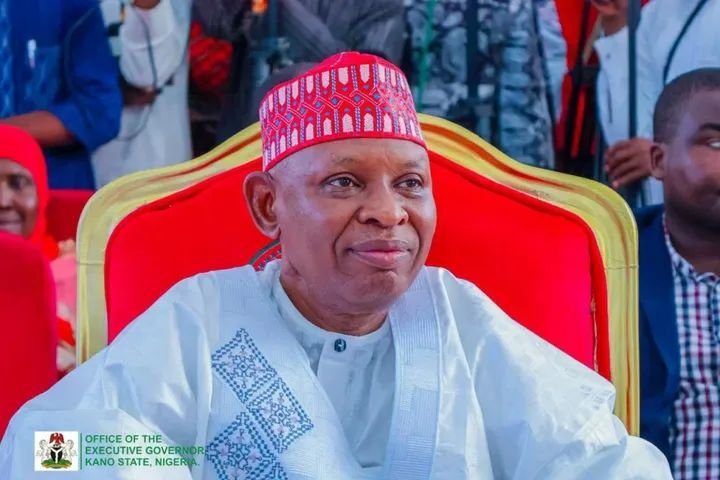
The Kano State Government has announced the completion of 867 projects out of a total portfolio of 1,557 projects being implemented across the state, representing about 55.7 per cent of the projects under Governor Abba Kabir Yusuf’s administration.
The Commissioner for Public Procurement, Projects Monitoring and Evaluation, Nura Maaji, disclosed the figures during a media briefing in Kano on Sunday, August 16, 2026. According to the commissioner, the projects have a combined contract value of N996.29 billion, reflecting the scale of the state government’s ongoing investment programme.
Maaji said the 867 completed projects represented 55.68 per cent of the total 1,557 classified projects, while approximately 42 per cent remained at various stages of implementation. The projects are spread across the state’s 44 local government areas and cover several sectors considered critical to economic and social development.
Projects span infrastructure, healthcare and education
The commissioner said the government’s project portfolio includes urban infrastructure, rural development, roads, bridges, mass housing, healthcare, education, traffic management and other public infrastructure.
The breadth of the projects reflects an attempt to distribute government investment across both urban and rural communities rather than concentrating development solely in Kano metropolis.
According to details released by the state government, the eight metropolitan local government areas account for 598 projects with a combined contract value of about N299.36 billion, representing roughly 30.01 per cent of the total contract value.
The 36 rural local government areas, meanwhile, account for 653 projects valued at approximately N287.9 billion. These projects include roads, healthcare facilities, schools, housing, feeder roads and other essential infrastructure.
The figures indicate that rural development constitutes a significant component of the administration’s overall capital investment programme.
Nearly N1 trillion project portfolio
The N996.29 billion project portfolio represents a substantial commitment of public resources at a time when state governments across Nigeria are under pressure to deliver infrastructure while managing rising construction and operational costs.
Maaji explained that N695.20 billion had been approved through notices of no objection, while payment certificates worth N444.75 billion had been vetted by the ministry.
The commissioner’s disclosure provides a broader picture of the government’s procurement and project-monitoring process, particularly as the administration seeks to demonstrate progress on its development agenda.
The state government has repeatedly highlighted infrastructure, education, healthcare, water supply and economic development as major areas of focus since Governor Yusuf assumed office.
In May 2026, Yusuf said his administration had fulfilled 90 per cent of the promises it made to Kano residents within its first three years in office. He cited progress in education, healthcare, agriculture, infrastructure, water supply, youth empowerment and economic development.
Education remains a major priority
Education is among the sectors included in Kano’s extensive project portfolio.
The administration has previously approved funding for the renovation of schools, improvement of educational facilities and other interventions designed to strengthen the state’s education system.
In November 2025, the Kano State Government approved more than N4.9 billion for education-related projects. The programme included the renovation of Government Technical College, Ungogo, production of instructional materials, completion and furnishing of an e-library and other interventions across tertiary and secondary education institutions.
The government has also reported broader education initiatives, including the recruitment of teachers and reductions in tuition fees at state-owned tertiary institutions.
These investments are significant for Kano, one of Nigeria’s most populous states, where pressure on schools and other public services continues to grow alongside population expansion.
Healthcare and public services
Healthcare is another major component of the state’s development programme.
The government has previously approved funding for maternal and child healthcare, immunisation and the operation of healthcare institutions. In 2025, the state approved counterpart funding for its Free Maternal, Neonatal and Child Health programme as well as routine immunisation.
The administration has also said it has recruited additional health professionals and introduced measures aimed at improving access to healthcare.
The completion of healthcare-related projects could have a direct impact on communities, particularly where residents previously travelled long distances to access medical services.
Water supply and urban development
Water infrastructure has also featured prominently in Kano’s development plans.
In May 2026, Governor Yusuf announced the approval of N21.89 billion for the rehabilitation and upgrading of the Challawa and Tamburawa water treatment plants.
The government said N9.9 billion was allocated to the rehabilitation of the Challawa Water Treatment Plant, while N11.99 billion was earmarked for upgrading the Tamburawa Water Treatment Plant. The projects are intended to improve reliable pipe-borne water supply in Kano metropolis and surrounding communities.
Urban roads, bridges, traffic management infrastructure and housing are also among the projects included in the government’s wider development programme.
A sharp increase from earlier project figures
The latest figures show an increase from project statistics released earlier in 2026.
In July, the Kano State Government said it had executed 1,508 projects worth N928 billion, with 799 projects completed and 709 at different stages of completion.
The latest disclosure puts the total classified project portfolio at 1,557, with 867 completed. This suggests that additional projects have entered the government’s classification and monitoring system as implementation has progressed.
The change also highlights the importance of transparent project monitoring as governments expand their capital programmes.
What the figures mean for Kano residents
For residents, however, the ultimate measure of the projects will not simply be the number completed or the amount committed.
The real impact will depend on whether completed roads improve transportation, schools provide better learning environments, healthcare facilities expand access to quality medical care, and rural infrastructure improves economic opportunities.
The government’s own figures show that significant resources are being directed towards both metropolitan and rural communities.
The 653 projects in the 36 rural local government areas are particularly important because rural communities often face infrastructure gaps that can limit access to markets, healthcare, education and employment opportunities.
At the same time, the large number of projects still under implementation means the government faces the challenge of ensuring that ongoing contracts are completed within reasonable timelines and according to approved standards.
Transparency will remain important
With a total contract value approaching N1 trillion, transparency and accountability will be critical to sustaining public confidence in Kano’s infrastructure programme.
The commissioner’s ministry is responsible for procurement, project monitoring and evaluation, making accurate reporting of project status an important part of the process.
As the administration moves forward, attention is likely to focus on the remaining projects and whether they can be completed without significant delays, cost increases or quality concerns.
For Kano residents, the success of the programme will ultimately be measured by tangible improvements in daily life.
The completion of 867 projects represents a significant milestone, but with 690 projects still not classified as completed, the administration has a substantial implementation agenda ahead.
The Kano Government says its focus remains on translating public spending into infrastructure and services that can support economic activity, improve living conditions and strengthen development across the state.
Sources: News Agency of Nigeria/Peoples Gazette; Daily Trust; Tribune Online; Kano Focus; Kano State Government.