Obi, Kwankwaso Rally NDC Governorship Candidates in Northern Strategy Session Ahead of 2027 Elections!
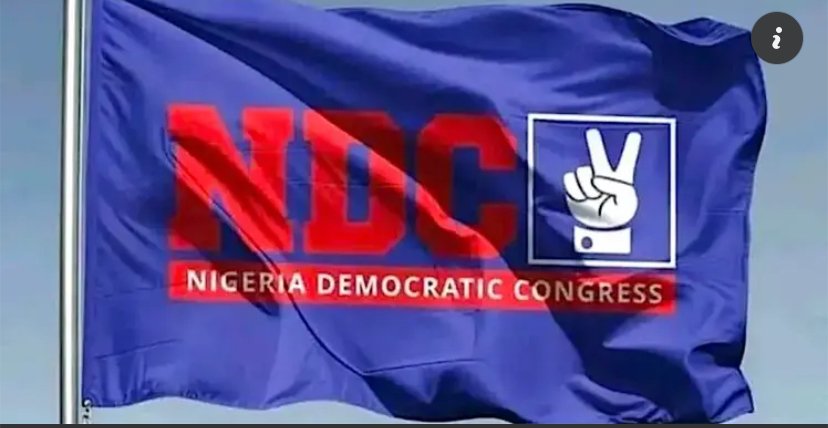
ABUJA, Nigeria — The Nigeria Democratic Congress (NDC) has stepped up its preparations for the 2027 general elections, with its presidential candidate, Peter Obi, and running mate, Rabiu Musa Kwankwaso, meeting governorship candidates from Bauchi, Sokoto and Borno states in Abuja to discuss campaign coordination and electoral readiness.
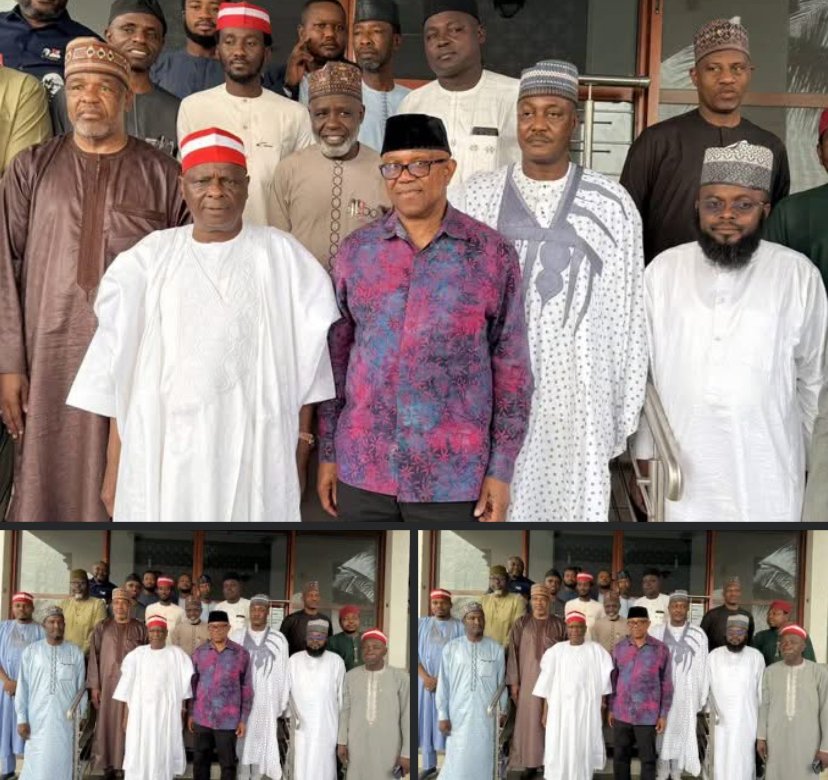
The strategic meeting, held at Kwankwaso’s residence in Maitama, Abuja, brought together the party’s candidates for the three states as part of efforts to strengthen coordination between the national leadership and its state-level candidates ahead of the next general elections.
According to the NDC, the meeting focused on campaign strategies, the preparedness of the candidates and the development of coordinated campaigns intended to support the party’s candidates at different levels.
The meeting was attended by Barrister Ibrahim Muhammad Kashim, the NDC governorship candidate for Bauchi State; Dr Shamsu Aliyu, the party’s candidate in Sokoto State; and retired Admiral Sunusi Sir Kashim Ibrahim, the candidate for Borno State. Other party figures at the gathering included former federal lawmaker and NDC leader Buba Galadima, Kebbi State Chairman Alhaji Mustapha Umar, Sokoto State Chairman Alhaji Bello Sani Yabo and other party officials. (Punch Newspapers)
The meeting represents one of the latest visible steps by the opposition party to build its organisational structure ahead of the 2027 elections, particularly across states in northern Nigeria.
NDC seeks stronger coordination ahead of 2027
In a statement referenced by both PUNCH and TVC News, the NDC said the meeting provided an opportunity for its leaders to assess the readiness of the governorship candidates and discuss strategies for the elections.
The party said particular emphasis was placed on coordinated campaigns aimed at securing victories for its candidates at different levels.
The statement did not disclose detailed campaign plans, specific policy commitments or the timetable for the commencement of state-level campaigns.
That distinction is important as political parties begin positioning themselves well ahead of the 2027 electoral cycle. While internal strategy meetings are an essential part of election preparation, their occurrence alone does not establish the level of popular support a candidate or party enjoys in a particular state.
For the NDC, however, the engagement signals an effort to ensure that its presidential and governorship campaigns operate with a greater degree of coordination rather than functioning as separate electoral projects.
Who are the three NDC governorship candidates?
The Bauchi candidate, Ibrahim Kashim, is a former Secretary to the Bauchi State Government. He emerged as the NDC’s governorship candidate through a consensus arrangement in May 2026.
The Guardian reported that Kashim was affirmed as the party’s candidate following consultations among party stakeholders and other aspirants. His emergence placed him at the centre of the NDC’s effort to establish a foothold in Bauchi ahead of the 2027 election. (The Guardian Nigeria)
BusinessDay similarly reported that Kashim emerged through a consensus process and pledged to focus on areas including education, healthcare, agriculture, youth empowerment, infrastructure and transparent governance. (Business Day)
The other two candidates are Dr Shamsu Aliyu of Sokoto State and retired Admiral Sunusi Sir Kashim Ibrahim of Borno State, both of whom were identified by the NDC and current media reports as participants in the Abuja meeting. (Punch Newspapers)
The three states are strategically significant for any party attempting to build a national political coalition because they provide representation across two northern geopolitical zones — the North-East through Bauchi and Borno, and the North-West through Sokoto.
Obi-Kwankwaso ticket takes centre stage
The meeting also underscores the growing political significance of the Obi-Kwankwaso ticket within the NDC.
Former Anambra State governor Peter Obi and former Kano State governor Rabiu Musa Kwankwaso joined the NDC in May 2026 after leaving the African Democratic Congress amid wider opposition realignments.
Premium Times reported that both politicians formally received NDC membership cards at the party’s national secretariat in Abuja, marking their entry into the party ahead of the 2027 elections. (Premium Times Nigeria)
TheCable subsequently reported that the NDC ratified Obi as its presidential candidate at a national convention in Abuja and that Obi announced Kwankwaso as his running mate. (The Cable)
Their partnership brought together two prominent opposition figures with different political bases and previous electoral experiences.
Obi became a major national political figure after his 2023 presidential campaign under the Labour Party, while Kwankwaso has maintained a substantial political presence in Kano and other parts of northern Nigeria.
The NDC’s challenge is now to translate the national visibility of its presidential ticket into functioning party structures and competitive campaigns at state and local levels.
Northern states could be central to NDC’s strategy
The involvement of Bauchi, Sokoto and Borno candidates in the latest strategy meeting highlights the importance of northern Nigeria in the party’s electoral calculations.
Bauchi and Borno are in the North-East, while Sokoto is in the North-West. The regions contain millions of registered voters and have historically played an important role in determining the outcome of Nigeria’s presidential elections.
For the NDC, developing credible governorship candidates and functional state structures could help the party compete beyond the areas traditionally associated with its leading figures.
The political significance of that strategy should not, however, be overstated.
A successful presidential campaign requires more than prominent candidates. It depends on party organisation, voter mobilisation, campaign financing, credible messaging, candidate acceptance, polling-unit structures and the ability to translate national support into votes across individual states.
The NDC will therefore face the task of building these structures as the election approaches.
From opposition realignment to electoral competition
The NDC’s emergence has occurred amid one of the most significant periods of opposition realignment since the 2023 elections.
Obi and Kwankwaso were previously associated with different political platforms. Their eventual decision to join the same party reflects the continuing search among opposition figures for a platform capable of challenging the governing All Progressives Congress (APC) in 2027.
Voice of Nigeria reported in May that the entry of Obi and Kwankwaso into the NDC was regarded as a significant development in the country’s political landscape and came amid broader efforts to consolidate opposition forces. (Voice of Nigeria)
PUNCH also reported that the two politicians’ entry into the NDC was part of the party’s rapid emergence as a significant subject of national political discussion ahead of 2027. (Punch Newspapers)
However, opposition consolidation in Nigeria has historically faced challenges involving competing interests, leadership structures, candidate selection and regional expectations.
The NDC’s ability to maintain internal cohesion while managing its national and state-level ambitions will therefore be closely watched.
Bauchi candidate’s political profile
Kashim’s political background could give the NDC a candidate with familiarity with government structures in Bauchi.
He previously served as Secretary to the Bauchi State Government under Governor Bala Mohammed before emerging as the NDC’s candidate.
His nomination was reported by several Nigerian media organisations, including The Guardian and BusinessDay, which described his emergence as a consensus process following consultations among party stakeholders. (The Guardian Nigeria)
His campaign will nevertheless have to compete within an established political environment where the governing party and other opposition parties already have significant structures.
The NDC’s national leadership will therefore need to support state candidates without allowing the presidential campaign to overshadow local issues that could determine governorship contests.
Election preparations gather pace
Although the 2027 general elections remain ahead, political parties have increasingly begun positioning candidates, building structures and developing campaign strategies.
The latest NDC meeting reflects that early phase of electoral preparation.
For the party, the immediate objective appears to be strengthening internal coordination and ensuring that candidates across different states understand the broader direction of the presidential campaign.
The emphasis on coordinated campaigns also suggests an attempt to create a common political narrative between the national ticket and state candidates.
Whether that strategy will produce electoral gains will depend on how effectively the party eventually converts its plans into grassroots organisation and voter engagement.
What the meeting means for 2027
The Abuja meeting involving Obi, Kwankwaso and the NDC governorship candidates is significant primarily as evidence of the party’s continuing organisational preparations for the 2027 elections.
It brings together the presidential leadership and candidates from three northern states at a time when Nigeria’s political parties are beginning to intensify their preparations for the next general election.
The meeting also places greater attention on the NDC’s effort to establish itself as a national political platform rather than one centred solely on its presidential candidates.
For Bauchi, Sokoto and Borno, the coming months will provide an opportunity for the party’s candidates to articulate state-specific programmes and demonstrate their capacity to build local support.
For the national leadership, the challenge will be to maintain cohesion, coordinate campaigns and present a message capable of appealing to voters across Nigeria’s diverse political landscape.
The 2027 contest remains months away, and political alliances, candidate strategies and voter preferences can still change considerably before election day.
What is clear, however, is that the NDC has begun moving from the formation and consolidation of its political leadership towards the more demanding task of building an electoral organisation capable of competing across states.
The meeting in Abuja is therefore another marker in the unfolding 2027 political contest — one that places Obi, Kwankwaso and their governorship candidates increasingly at the centre of the NDC’s national campaign preparations.
Wengglobal will continue to monitor the party’s preparations, candidate activities and broader political developments ahead of the 2027 general elections, with emphasis on verified information, competing perspectives and the issues that matter to Nigerian voters.
Sources and related reporting
- PUNCH Newspapers — Report on Peter Obi and Rabiu Kwankwaso’s meeting with NDC governorship candidates from Bauchi, Sokoto and Borno. PUNCH Newspapers report
- TVC News — Report detailing the Abuja strategy meeting, participating candidates and NDC’s stated objectives. TVC News report
- Premium Times — Report on Obi and Kwankwaso formally joining the NDC ahead of the 2027 elections. Premium Times report
- TheCable — Report on Obi’s ratification as NDC presidential candidate and his selection of Kwankwaso as running mate. TheCable report
- The Guardian Nigeria — Report on Ibrahim Kashim’s emergence as NDC governorship candidate for Bauchi State. The Guardian report
- BusinessDay — Report on Kashim’s emergence and the policy priorities outlined following his nomination. BusinessDay report
SEO Tags: