Tinubu Lives Modestly and Eats Once Daily, NRS Chairman Adedeji Says Amid Debate Over Presidential Spending!
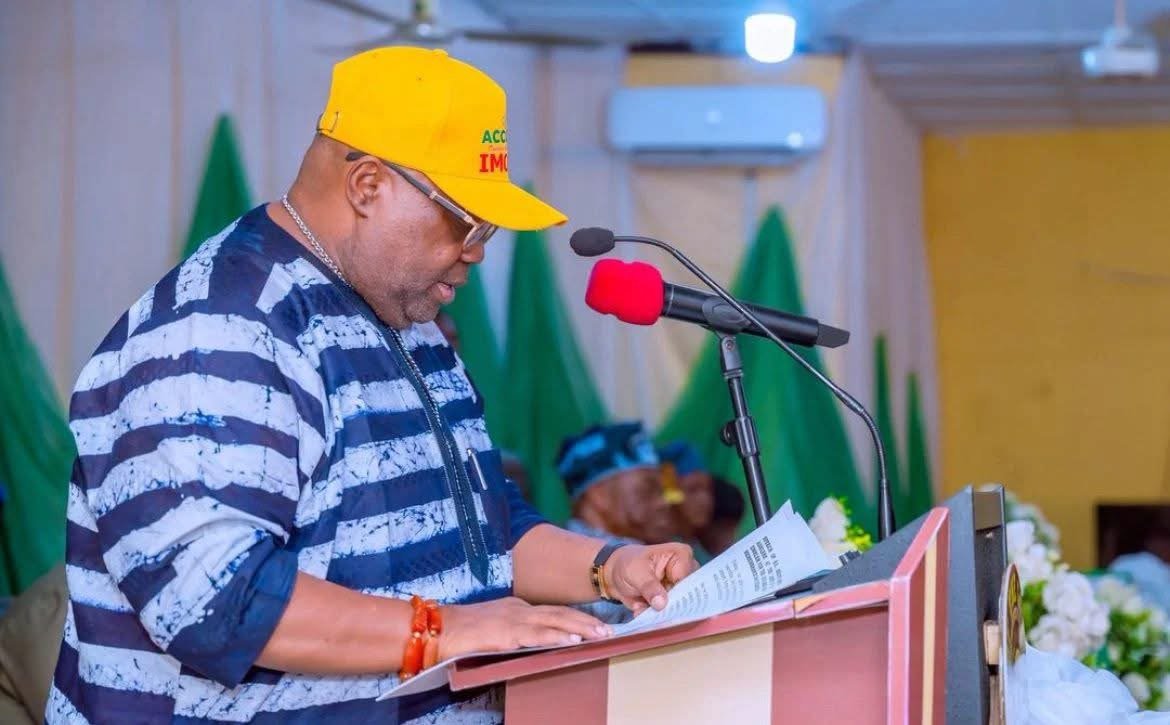
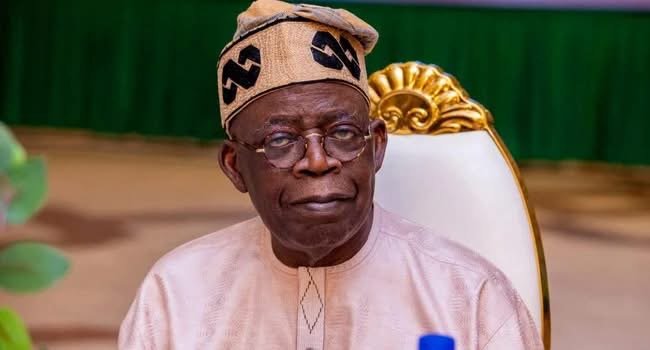
ABUJA, Nigeria — Nigeria’s public debate over the lifestyle of political office holders and the cost of governance has taken a fresh turn after Nigeria Revenue Service (NRS) Chairman Zacch Adedeji reportedly defended President Bola Ahmed Tinubu’s personal lifestyle, claiming that the President sometimes treks to his office and eats only once a day.
The claim, which has attracted attention amid continuing public scrutiny of government expenditure and the economic pressures confronting Nigerian households, presents a markedly different picture from the perception held by some members of the public about the lifestyle of senior political leaders.
Adedeji’s reported comments come against the backdrop of a wider national conversation about the cost of governance, public-sector spending and the sacrifices expected from political leaders as the Federal Government implements economic reforms that have significantly altered the cost of living and household spending patterns.
While the NRS chairman’s account portrays Tinubu as personally restrained in his daily habits, such claims should be distinguished from questions surrounding government expenditure, official facilities, security arrangements, presidential travel and other institutional costs attached to the office of the President.
The distinction is important because the personal lifestyle of an office holder and the expenditure associated with running a presidential institution are not necessarily the same thing.
Adedeji’s defence of Tinubu
Adedeji, one of the administration’s prominent economic policy officials, has consistently been closely associated with the Federal Government’s revenue and fiscal reform agenda.
He was appointed to lead the then Federal Inland Revenue Service (FIRS) in 2023 after previously serving as Special Adviser to President Tinubu on Revenue Matters. Under the subsequent restructuring of Nigeria’s revenue administration, the agency became the Nigeria Revenue Service.
The NRS chairman has been an important public voice in defending the economic rationale behind some of the administration’s most consequential policies, including changes to taxation, revenue mobilisation and the removal of petrol subsidy.
In April 2026, for instance, Adedeji argued that Nigeria’s economic reforms had prevented inflation from rising dramatically higher, a position reported by The Punch amid a wider debate over the effects of the government’s policies on Nigerians. (Punch Newspapers)
The latest remarks attributed to him therefore fit into a broader pattern in which senior economic officials have sought to explain and defend the administration’s policies while acknowledging the difficult adjustment facing the country.
However, the assertion that President Tinubu treks to his office and eats once daily is a claim about the President’s personal routine. It does not, by itself, establish the overall cost of the presidency or answer questions about public expenditure.
Lifestyle claims meet public scrutiny
The timing of the remarks is significant.
Since the beginning of the Tinubu administration, questions surrounding the cost of government have remained a recurring subject of public discussion. Nigerians have debated spending on official vehicles, renovations, foreign trips, presidential transportation, security and other government-related activities.
The controversy has often intensified because the administration’s economic reforms have required citizens to adjust their household budgets.
The removal of petrol subsidy in May 2023 and subsequent changes in the foreign-exchange regime placed considerable pressure on household finances, particularly through higher transportation and food costs. Reports by Nigerian media documented how some families responded by cutting expenses, changing their transport habits and, in some cases, reducing the number of meals they consumed each day.
BusinessDay, reporting in 2024, noted that rising food prices had pushed some Nigerian households towards eating one meal a day, illustrating the severity of the economic pressure being experienced by sections of the population. (BusinessDay)
That context makes any statement that the President himself eats once daily particularly sensitive. For some Nigerians, the claim could be interpreted as evidence that the country’s leadership is personally experiencing the same pressures confronting ordinary citizens. For others, however, it may raise a different question: whether personal frugality by a public official is sufficient to address concerns about the broader expenditure of government.
Those are separate questions and should be assessed separately.
From FIRS to NRS: Adedeji’s growing influence
Adedeji has emerged as one of the central figures in the Tinubu administration’s revenue strategy.
Before his appointment to the revenue service, he served as Commissioner for Finance in Oyo State under the late Governor Abiola Ajimobi and later headed the National Sugar Development Council.
His professional background includes private-sector experience and extensive work in public finance. Reports on his appointment have highlighted his accounting background and his first-class degree from Obafemi Awolowo University. (Naija News)
President Tinubu has also publicly praised Adedeji’s performance.
In a birthday message reported by Leadership, the President commended the NRS chairman for revenue reforms, digitalisation, staff development and the adoption of the National Single Window initiative. The presidency also credited Adedeji with helping to strengthen revenue collection and modernise the agency’s operations. (Leadership)
The NRS chairman’s prominence has nevertheless made him a subject of public and political scrutiny.
In December 2025, the Arewa Consultative Youth Movement called for Adedeji to step aside and face investigation over what it described as concerns about his lifestyle and issues relating to the revenue service. The organisation’s allegations were disputed by Adedeji’s representatives, who argued that the group had not provided specific evidence of wrongdoing. The Punch, TheCable, BusinessDay and other Nigerian outlets reported the controversy. (Punch Newspapers)
Mediatracnet similarly reported the FIRS response, quoting Adedeji’s representative as rejecting the demand and describing it as an attempt to damage the chairman’s reputation. (Mediatracnet)
That earlier controversy provides additional context for why comments from Adedeji concerning the President’s lifestyle are likely to attract attention.
Personal sacrifice versus institutional spending
The latest claim also raises a broader question about how political leadership should be evaluated.
A president walking to an office or limiting his meals would represent a personal choice. Government spending, by contrast, is determined by budgets, appropriations, procurement procedures, security requirements and the operational demands of the presidency.
Consequently, even if Adedeji’s account of Tinubu’s personal routine is accurate, it would not necessarily settle debates about the cost of governance.
Conversely, criticism of government expenditure should not automatically be used to infer that the President personally lives extravagantly without evidence.
For journalists, policymakers and citizens, separating verifiable expenditure from perceptions about lifestyle is essential.
The Nigerian Constitution and public financial-management framework place obligations on government institutions to account for public resources. That means questions concerning expenditure are best answered through budget documents, procurement records, audited accounts and official disclosures rather than assumptions based solely on an individual’s personal habits.
A message amid economic pressure
The political significance of Adedeji’s statement lies partly in its symbolism.
The Tinubu administration has repeatedly argued that Nigerians must endure short-term difficulties in order to achieve longer-term economic stability. Officials have pointed to reforms aimed at improving revenue mobilisation, strengthening fiscal sustainability and reducing dependence on borrowing.
Critics, however, have maintained that the burden of adjustment has fallen disproportionately on ordinary citizens.
The debate is therefore no longer simply about whether reforms are economically necessary. It is increasingly about who bears their cost, how public resources are managed and whether political leaders demonstrate sufficient restraint.
Against this background, Adedeji’s reported description of Tinubu as someone who treks to work and eats once daily could be interpreted as an attempt to portray the President as personally disciplined and conscious of the economic realities confronting Nigerians.
But the claim remains an assertion attributed to the NRS chairman and should not be treated as independently established evidence of the President’s complete lifestyle.
For Wengglobal, the central issue is therefore not whether a political leader can point to personal sacrifice, but whether Nigeria’s public institutions can demonstrate transparency, efficiency and accountability in the management of public resources.
As the country moves deeper into the economic and political cycle ahead of the 2027 general elections, questions surrounding leadership conduct, public spending and economic hardship are likely to remain prominent.
Ultimately, the credibility of any claim about official frugality will depend less on rhetoric and more on transparent evidence.
The public conversation over Tinubu’s lifestyle may continue, but the larger accountability question remains firmly on the table: how effectively is government translating public revenue into measurable improvements in the lives of Nigerians?
Sources and related reporting
- The Punch — Reporting on Zacch Adedeji, the revenue service and the wider debate over Nigeria’s economic reforms and inflation. (Punch Newspapers)
- TheCable — Coverage of the controversy surrounding calls for Zacch Adedeji to step aside and the response from his supporters. (TheCable)
- BusinessDay — Reporting on the economic pressures facing Nigerians and the effects of rising food and living costs. (BusinessDay)
- Mediatracnet — Coverage of the response by the revenue service to allegations concerning Adedeji. (Mediatracnet)
- Leadership — Reporting on President Tinubu’s commendation of Adedeji’s work at the Nigeria Revenue Service. (Leadership)
- Naija News — Background reporting on Adedeji’s appointment and professional history. (Naija News)