Reported by Weng Patrick Atokor | Journalist at Weng Global
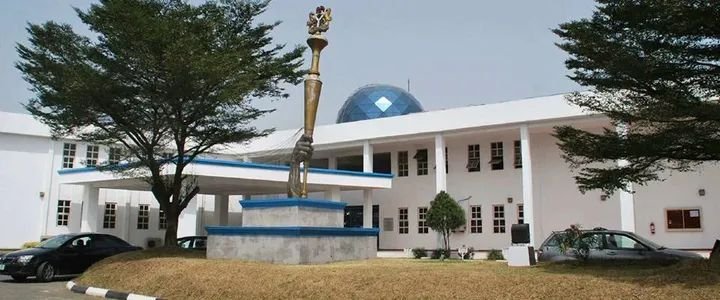
Despite the completion of the newly constructed Rivers State House of Assembly complex several months ago, members of the Rivers State House of Assembly have yet to relocate to the facility, raising fresh questions over the prolonged political crisis that has continued to shape governance in the oil-rich state.
The multimillion-naira legislative complex, built to provide lawmakers with a modern and secure environment for legislative activities, has remained largely unoccupied while the Assembly continues to conduct its business from temporary facilities located within the Government House residential quarters in Port Harcourt.
The situation has attracted renewed public attention as residents, civil society groups, and political observers question why a completed public project financed with taxpayers’ money remains unused despite repeated assurances that it was ready for occupation.
A Modern Complex Standing Idle
The new Assembly complex was conceived following the demolition of the former Rivers State House of Assembly building during the height of the political conflict involving factions loyal to Governor Siminalayi Fubara and lawmakers aligned with Federal Capital Territory Minister Nyesom Wike.
Government officials had described the project as a state-of-the-art legislative facility equipped with modern chambers, committee rooms, administrative offices, security installations, and technological infrastructure designed to improve legislative efficiency.
Construction progressed rapidly, and officials announced its completion months ago.
However, despite the commissioning of the facility, lawmakers have not moved into the complex.
Instead, plenary sessions and legislative activities continue to take place at the temporary Assembly chamber within the Government House premises.
Political Tensions Continue
Observers believe the continued refusal to occupy the complex cannot be separated from Rivers State’s prolonged political crisis.
The state has witnessed months of political disagreements involving the executive and legislative arms of government, resulting in legal battles, party realignments, impeachment threats, and repeated interventions by national political leaders.
Although President Bola Tinubu earlier brokered a peace agreement intended to restore political stability in the state, disagreements over its implementation have continued to generate uncertainty.
Political analysts argue that relocating to the Assembly complex may carry political symbolism that neither side in the crisis appears ready to embrace until broader issues are resolved.
Temporary Chambers Still in Use
Lawmakers have continued to deliberate on bills, pass resolutions, screen government nominees, and perform other constitutional duties from the temporary legislative chamber.
Assembly officials insist that legislative business has not been disrupted and that governance continues despite operating outside the permanent complex.
Nonetheless, critics argue that remaining in temporary facilities undermines public confidence in government planning and raises concerns about accountability regarding public infrastructure investments.
Several civil society organisations have called for greater transparency over the reasons preventing occupation of the completed building.
Public Questions Value for Money
The prolonged non-use of the Assembly complex has also sparked concerns about value for money.
Residents argue that leaving a completed public facility idle exposes it to deterioration while increasing future maintenance costs.
Infrastructure experts note that public buildings require regular occupation and maintenance to prevent damage to electrical systems, plumbing installations, air-conditioning equipment, and other essential facilities.
Some analysts have warned that extended delays could eventually require additional public expenditure before the building becomes fully operational.
Calls for Official Explanation
Stakeholders have urged both the executive and legislative arms of government to provide a clear explanation regarding the delay.
They argue that taxpayers deserve transparency about why a project completed with public funds has not begun serving its intended purpose.
Political commentators believe open communication would help reduce speculation surrounding the facility and reassure residents that the investment will eventually deliver value.
Others have called on lawmakers to prioritise institutional integrity by ensuring the Assembly operates from its designated legislative headquarters once all outstanding issues are resolved.
Governance Beyond Infrastructure
Experts note that while modern infrastructure enhances legislative work, political stability remains essential for democratic institutions to function effectively.
The Rivers Assembly complex represents more than a physical structure; it symbolises the state’s commitment to democratic governance, accountability, and effective lawmaking.
As long as political disagreements continue to overshadow institutional development, public confidence in governance may remain affected.
Citizens are increasingly calling for political leaders to place governance above partisan interests and ensure public resources are utilised efficiently.
Awaiting the Next Move
Neither the Rivers State Government nor the leadership of the House of Assembly has announced a definitive date for relocating legislative activities to the new complex.
With the facility remaining unused months after completion, attention is expected to remain focused on whether ongoing political reconciliation efforts will eventually pave the way for lawmakers to occupy the building.
Until then, the impressive legislative complex stands as a completed project awaiting the political consensus necessary to bring it into full use.
For many Rivers residents, the expectation remains simple: public infrastructure financed by taxpayers should serve the public without unnecessary delay. The continued vacancy of the Assembly complex has therefore become another visible reminder of how prolonged political disputes can affect governance, public administration, and the effective utilisation of state resources.
Sources:
- Punch Newspapers
- The Nation Nigeria
- Channels Television
- Vanguard News
- Premium Times
Meta Description: Months after its completion, the Rivers State House of Assembly complex remains unoccupied as lawmakers continue sitting in temporary chambers amid lingering political tensions. Weng Global examines the reasons behind the delay and its implications for governance.
SEO Tags: Rivers Assembly Complex, Rivers State House of Assembly, Siminalayi Fubara, Rivers political crisis, Nigeria politics,Weng Global,