Reported by Simon yusuph,| Journalist at wengglobal
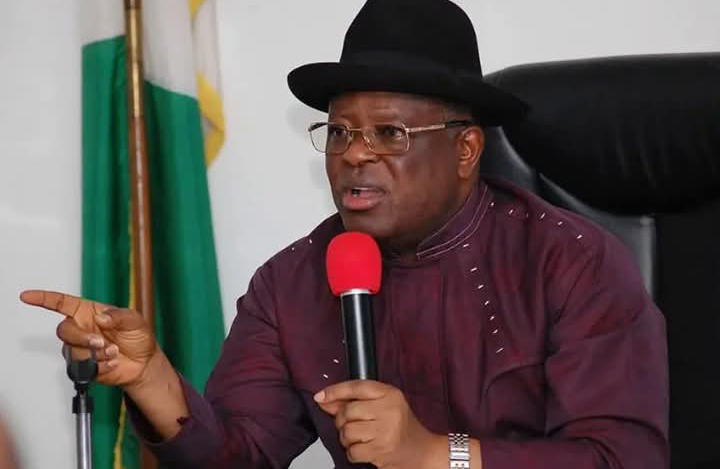
Nigeria’s Minister of Works, David Umahi, has denied allegations that he attacked supporters of Labour Party presidential candidate Peter Obi, insisting that his recent remarks were aimed at presenting what he described as factual reasons why the South-East should support President Bola Ahmed Tinubu rather than criticizing any political group.
Umahi made the clarification while responding to public reactions that followed the circulation of a video from a recent public event. The clip generated widespread debate on social media, with some viewers interpreting his comments as a direct attack on supporters of Peter Obi, popularly known as the “Obidient” movement.
Rejecting that interpretation, the former Governor of Ebonyi State said his message was intended to encourage political engagement based on development, governance, and the Federal Government’s investments in the South-East rather than personal attacks or political hostility.
“I didn’t attack anyone,” Umahi said. “I only presented the facts and appealed to the people of the South-East on why they should vote for President Tinubu.”
Umahi Defends His Remarks
According to the minister, his comments focused on highlighting infrastructure projects and policy initiatives undertaken by President Tinubu’s administration across the South-East.
Umahi argued that citizens should evaluate political leaders based on measurable performance, especially in areas such as road infrastructure, economic development, and national integration.
He maintained that democratic societies thrive when citizens are free to express political opinions and persuade others through facts rather than intimidation.
The minister stressed that encouraging support for a political candidate should not automatically be interpreted as hostility toward supporters of another candidate.
Renewed Debate Over South-East Politics
Umahi’s remarks come amid growing political conversations ahead of Nigeria’s next general election cycle, with major political figures seeking to strengthen their influence across different geopolitical zones.
The South-East remains a politically strategic region following the 2023 presidential election, where Peter Obi recorded overwhelming support across most states in the zone. Since then, political leaders from different parties have continued efforts to consolidate support ahead of future elections.
As one of the highest-ranking South-East officials in President Tinubu’s administration, Umahi has consistently defended the government’s policies while encouraging greater political cooperation between the region and the Federal Government.
Political observers note that his latest comments reflect broader efforts by the ruling All Progressives Congress (APC) to expand its electoral appeal in the South-East.
Focus on Infrastructure Development
During several public appearances in recent months, Umahi has repeatedly highlighted ongoing federal road projects as evidence of the Tinubu administration’s commitment to regional development.
Among the projects frequently referenced are sections of the Enugu-Port Harcourt Expressway, rehabilitation works on major federal highways, and other transportation infrastructure intended to improve economic connectivity within the South-East and neighbouring regions.
The minister has argued that these investments demonstrate that the current administration is pursuing inclusive national development rather than favouring particular regions.
Supporters of the government have echoed this position, saying infrastructure delivery should be a major factor in assessing political leadership.
Mixed Public Reactions
The clarification has drawn mixed reactions across Nigeria’s political landscape.
Supporters of the minister argue that political leaders have every right to campaign for their preferred candidates and explain why they believe voters should support them.
Others, particularly supporters of Peter Obi, maintain that public officials should exercise caution in their political messaging to avoid statements that could deepen existing political divisions.
Political analysts say the controversy underscores the continued sensitivity surrounding discussions involving the 2023 presidential election and the evolving political dynamics ahead of future contests.
They note that while robust political debate remains an essential feature of democracy, public officials are often expected to communicate in ways that promote national unity and constructive engagement.
The Role of Political Communication
Nigeria’s increasingly digital political environment has amplified the impact of speeches, interviews, and short video clips, many of which quickly circulate across social media platforms.
Analysts caution that excerpts taken out of context can sometimes fuel misunderstanding, making clarifications such as Umahi’s an important part of public accountability.
They also stress the importance of verifying complete speeches before drawing conclusions, particularly during politically charged periods.
For democratic institutions to remain strong, experts argue, political disagreements should be addressed through facts, policy debates, and respectful engagement rather than inflammatory rhetoric.
Looking Ahead
As preparations gradually begin for Nigeria’s next electoral cycle, political engagement across all regions is expected to intensify.
The APC, Labour Party, Peoples Democratic Party (PDP), and other political parties are likely to increase consultations with stakeholders while promoting their governance records and future policy agendas.
Umahi’s latest clarification illustrates the delicate balance public office holders must maintain between promoting government achievements and avoiding statements that may be perceived as politically divisive.
Ultimately, voters across the South-East and the rest of Nigeria will continue to assess political leaders based on governance performance, economic outcomes, infrastructure delivery, security, and broader national development priorities.
For now, the Minister of Works maintains that his message was neither an attack on Peter Obi’s supporters nor an attempt to diminish opposing political views. Instead, he insists it was a straightforward appeal for the South-East to consider President Bola Tinubu’s record and support his administration based on what he described as demonstrable achievements.
Sources
- Channels Television
- The Punch
- Premium Times Nigeria
- Vanguard Nigeria
- The Nation Nigeria
- Daily Trust