Reported by Simon yusuph, | Journalist at wengglobal
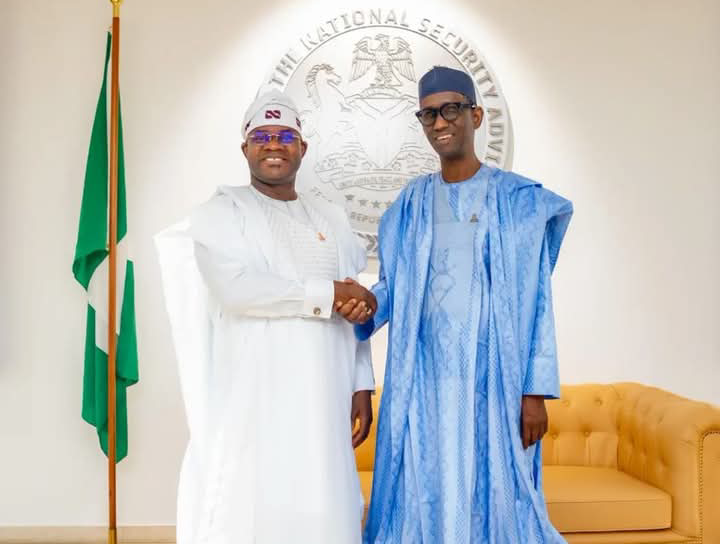
Former Kogi State Governor, Yahaya Bello, has commended the administration of President Bola Ahmed Tinubu for what he described as measurable progress in addressing Nigeria’s longstanding security challenges, following a meeting with the National Security Adviser (NSA), Nuhu Ribadu.
Bello’s remarks come at a time when the Federal Government continues to intensify military and intelligence operations against terrorism, banditry, kidnapping, oil theft, and other forms of violent crime across different parts of the country. His comments add to the growing public discourse surrounding the Tinubu administration’s security policies, which remain one of the government’s highest priorities.
According to information released after the meeting, Bello praised the commitment of President Tinubu and the Office of the National Security Adviser for strengthening coordination among Nigeria’s security agencies and sustaining operations aimed at restoring peace in troubled communities.
The former governor noted that although security challenges remain in several regions, available evidence suggests that coordinated military offensives and intelligence-led operations have resulted in significant gains against criminal groups operating in parts of the North-West, North-East, North-Central, and the Niger Delta.
Bello stated that improved collaboration between the armed forces, intelligence agencies, and other security institutions has contributed to reducing the operational capacity of several criminal networks. He stressed that continued political support for security agencies would be essential in sustaining recent achievements.
The meeting with Ribadu also highlighted the importance of maintaining a whole-of-government approach to national security. Since assuming office, the National Security Adviser has consistently advocated closer cooperation among federal institutions, state governments, traditional rulers, and local communities to address both immediate security threats and their underlying causes.
President Tinubu’s administration has repeatedly stated that security remains the foundation for economic recovery, investment, agricultural production, and national development. Government officials have argued that improving safety across the country is necessary to stimulate business confidence, enhance food security, and encourage infrastructure development.
Security has remained one of Nigeria’s most pressing national concerns over the past decade, with insurgency in the North-East, bandit attacks in the North-West, communal conflicts in parts of the North-Central, separatist-related violence in the South-East, and oil theft in the Niger Delta presenting significant challenges to national stability.
Since taking office, the Tinubu administration has announced several reforms aimed at improving operational efficiency among security agencies. These include increased intelligence sharing, procurement of additional military equipment, improved welfare for security personnel, and expanded collaboration with regional and international partners in combating terrorism and transnational crime.
Official statements from Nigeria’s defence authorities have indicated that sustained military operations have led to the neutralisation of numerous terrorist commanders, the rescue of kidnapped victims, and the recovery of weapons from criminal groups. Security agencies have also reported the arrest of suspected financiers and collaborators linked to various criminal networks.
Despite these reported gains, security analysts continue to caution that long-term peace will depend not only on military action but also on addressing socioeconomic issues such as unemployment, poverty, youth empowerment, education, and effective governance. Experts argue that sustainable security requires investments in community development, justice, and institutional reforms alongside security operations.
Observers also note that the National Security Adviser has increasingly emphasised intelligence-driven operations, inter-agency coordination, and preventive strategies designed to disrupt criminal activities before attacks occur. These measures have been presented as part of broader efforts to modernise Nigeria’s national security architecture.
Bello’s commendation reflects broader support from some political leaders who believe recent security initiatives are beginning to produce measurable results. However, civil society organisations and policy experts continue to encourage transparency, accountability, and regular public reporting on security operations to enable citizens to assess progress objectively.
The Federal Government has maintained that while challenges remain, ongoing military operations will continue until terrorist groups, bandits, kidnappers, and other violent criminal organisations are decisively weakened. Authorities have also reaffirmed their commitment to protecting lives, safeguarding national assets, and ensuring that displaced communities can safely return to their homes.
For many Nigerians, security remains closely linked to everyday economic realities. Farmers require safe access to their farmlands, businesses depend on secure transportation networks, and investors often consider security conditions before committing resources. Consequently, improvements in national security have implications beyond defence, influencing economic growth, food production, employment, and social stability.
Political observers believe meetings such as the one between Bello and Ribadu underscore the importance of bipartisan support for national security efforts. Regardless of political affiliations, many analysts agree that addressing insecurity requires sustained collaboration among federal and state governments, security agencies, community leaders, and citizens.
As Nigeria continues confronting evolving security threats, the Tinubu administration faces the challenge of consolidating reported operational successes while ensuring that improvements are felt across all regions of the country. Continued investment in intelligence, technology, personnel training, and community engagement is expected to remain central to the government’s security agenda.
While assessments of the administration’s performance differ across political and policy circles, there is broad consensus that sustained efforts against insecurity will remain critical to Nigeria’s economic recovery, national unity, and long-term development.
Sources
- Reuters
- Premium Times Nigeria
- The Punch
- Channels Television
- Daily Trust
- Nigerian Tribune
- Official statements from the Office of the National Security Adviser