Reported by Weng Patrick Atokor | Journalist at Weng Global
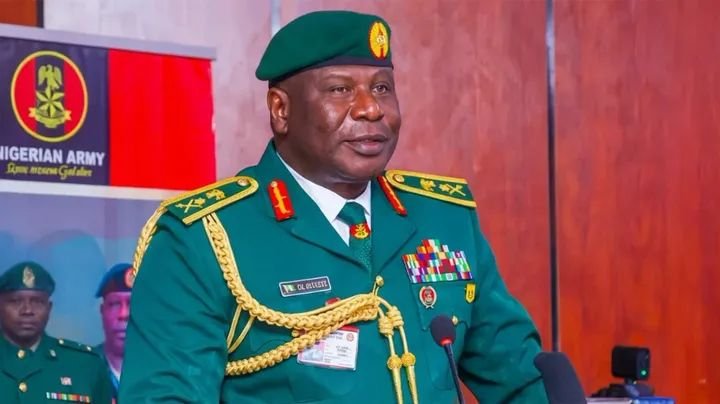
Nigeria’s Chief of Defence Staff (CDS), General Christopher Gwabin Musa, has called for deeper trust, stronger collaboration, and sustained partnerships among security agencies, government institutions, communities, and international partners as part of a comprehensive strategy to address the country’s persistent security challenges.
The Defence Chief stressed that military operations alone cannot completely eliminate insecurity without the active support and confidence of citizens, traditional institutions, civil society organizations, and other critical stakeholders.
Speaking during a security engagement, General Musa noted that Nigeria’s evolving security landscape requires a united national approach built on intelligence sharing, cooperation, transparency, and mutual trust.
According to him, strengthening relationships among security institutions and the public will significantly improve efforts to combat terrorism, banditry, kidnapping, insurgency, oil theft, piracy, and other forms of criminality threatening national stability.
Military Seeks Greater Public Confidence
General Musa emphasized that trust remains one of the most effective weapons in modern security operations. He explained that communities often possess valuable intelligence capable of preventing attacks and disrupting criminal networks, but such information can only be shared when citizens have confidence in security institutions.
He urged Nigerians to see security as a collective responsibility rather than the sole duty of the armed forces.
“The fight against insecurity requires everyone. Security agencies, government institutions, traditional rulers, religious leaders, youth groups, community organizations, and citizens all have important roles to play,” he said.
The CDS noted that communities that cooperate with security agencies generally experience quicker responses to threats because timely intelligence enables forces to act before criminals execute their plans.
Building Stronger Alliances
General Musa highlighted the importance of strategic alliances among the Armed Forces of Nigeria, the Nigeria Police Force, intelligence agencies, the Nigeria Security and Civil Defence Corps, immigration authorities, customs officials, and regional security partners.
He explained that criminals increasingly operate across state and national borders, making coordinated operations essential.
According to him, improved collaboration allows agencies to share intelligence, pool operational resources, avoid duplication of efforts, and respond more effectively to emerging threats.
The Defence Chief also emphasized Nigeria’s continued cooperation with neighbouring countries through regional security frameworks aimed at combating terrorism and transnational organized crime across West Africa.
He noted that insecurity in one country can easily affect neighbouring states, making regional partnerships increasingly important.
Addressing Complex Security Threats
Nigeria continues to face multiple security challenges across different regions.
In the North-East, security forces remain engaged in operations against Boko Haram and Islamic State West Africa Province (ISWAP) fighters.
The North-West continues to witness attacks linked to armed bandits involved in mass kidnappings, cattle rustling, and village raids.
Parts of North-Central Nigeria have experienced violent clashes involving criminal groups and communal conflicts, while oil theft, pipeline vandalism, and maritime crimes remain concerns in the Niger Delta and the Gulf of Guinea.
Separately, security agencies continue efforts to tackle separatist-related violence and criminal activities in parts of the South-East.
General Musa noted that addressing these diverse threats requires flexible strategies supported by modern technology, intelligence-driven operations, and stronger community engagement.
Importance of Intelligence Sharing
The CDS reiterated that actionable intelligence remains critical to successful military operations.
He encouraged citizens to promptly report suspicious movements and criminal activities through appropriate security channels.
According to him, timely information has helped security agencies prevent attacks, rescue kidnapped victims, recover weapons, and arrest criminal suspects in several operations across the country.
He assured Nigerians that the military remains committed to protecting informants and maintaining confidentiality where necessary.
General Musa added that security agencies are continuously improving intelligence gathering capabilities through technology, surveillance systems, and collaboration with both local and international partners.
Community Participation Essential
The Defence Chief stressed that communities should not view themselves merely as victims of insecurity but as active partners in restoring peace.
He encouraged traditional rulers, community leaders, religious organizations, youth associations, and women groups to continue promoting peace, unity, and dialogue while discouraging criminal activities within their localities.
According to him, early intervention through community engagement often prevents conflicts from escalating into violence.
He also urged parents and guardians to monitor young people and discourage recruitment into criminal groups or extremist organizations.
Military Reforms and Professionalism
General Musa reaffirmed the Armed Forces’ commitment to professionalism, discipline, and respect for human rights while carrying out security operations.
He stated that military personnel continue to receive training aimed at improving operational effectiveness, civil-military relations, and adherence to international humanitarian standards.
The CDS said maintaining public confidence requires accountability, transparency, and responsible conduct by security personnel.
He acknowledged that trust between citizens and security agencies is strengthened when operations are carried out professionally and within the rule of law.
Technology Driving Security Operations
The Defence Chief highlighted the growing importance of technology in combating insecurity.
He said the military is increasingly utilizing surveillance platforms, intelligence systems, drones, communications technology, and data analysis to improve operational planning and battlefield awareness.
According to him, technological innovation enhances precision, reduces operational risks, and enables faster responses to emerging threats.
However, he maintained that technology alone cannot replace the role of human intelligence provided by local communities.
Government Support Remains Critical
General Musa commended the Federal Government for its continued support toward strengthening the nation’s security architecture through investments in military equipment, logistics, personnel welfare, and operational capabilities.
He expressed optimism that sustained investment in defence institutions, combined with stronger stakeholder collaboration, would improve Nigeria’s capacity to address both existing and emerging security threats.
He also appreciated development partners and friendly nations providing technical assistance, training, and intelligence cooperation to Nigeria’s security agencies.
Call for National Unity
The Defence Chief concluded by urging Nigerians to reject misinformation, ethnic divisions, religious intolerance, and narratives capable of undermining national unity.
He said criminals often exploit social divisions to achieve their objectives, making unity among citizens an essential component of national security.
General Musa appealed to Nigerians to continue supporting lawful security efforts while remaining vigilant against individuals seeking to destabilize communities.
He expressed confidence that with stronger trust, improved collaboration, and sustained partnerships, Nigeria would make significant progress in overcoming insecurity and strengthening national peace and development.
As security challenges continue to evolve, the Defence Chief’s appeal underscores the growing recognition that lasting peace requires more than military strength. It demands cooperation among government institutions, security agencies, local communities, civil society, and international partners working together toward a shared goal of a safer and more secure Nigeria.
Sources:
- Defence Headquarters (DHQ)
- News Agency of Nigeria (NAN)
- Federal Ministry of Defence