Reported by Simon Yusuph | Journalist at WengGlobal.
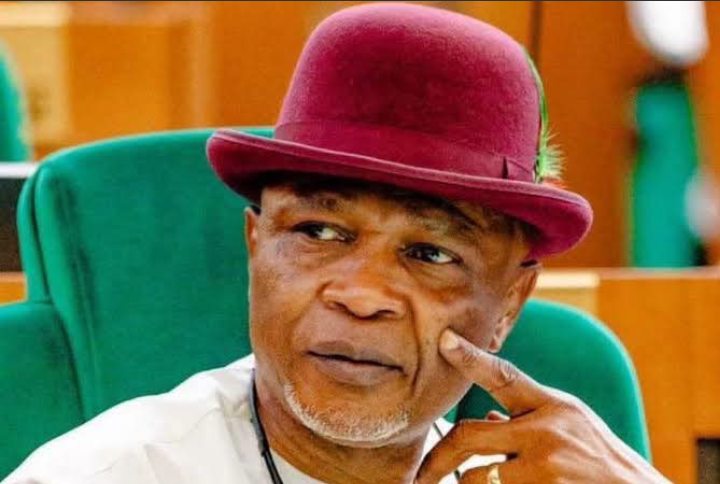
As political activities continue to gather momentum ahead of Nigeria’s 2027 general elections, the All Progressives Congress (APC) in Oyo State has taken another significant step in consolidating its campaign machinery. The party’s governorship candidate, Senator Sharafadeen Abiodun Alli, has officially received his Independent National Electoral Commission (INEC) nomination form while formally unveiling Adesoji Adedeji as his deputy governorship candidate.
The development marks a crucial milestone in the APC’s preparations for the highly anticipated governorship election in Oyo State, where the party hopes to reclaim power through a renewed political strategy, experienced leadership, and a ticket designed to broaden its electoral appeal across the state’s geopolitical zones.
The presentation of the INEC nomination form signifies the completion of another important phase in the electoral process, enabling the APC ticket to move forward with campaign planning in accordance with Nigeria’s electoral guidelines. It also provides clarity to party supporters, stakeholders, and voters regarding the individuals who will represent the APC in one of the country’s most politically significant states.
APC Formalizes Governorship Ticket
Senator Sharafadeen Alli’s receipt of the INEC nomination form effectively confirms his status as the APC’s officially nominated governorship candidate for Oyo State, subject to the electoral timetable established by INEC.
At the same event, the party formally introduced Adesoji Adedeji as the deputy governorship candidate, completing the APC ticket ahead of intensified campaign activities expected across all 33 local government areas of the state.
Party leaders described the unveiling as part of broader efforts to present a united front ahead of the election while emphasizing internal cohesion and readiness for the electoral contest.
Political observers note that the completion of the governorship ticket is often viewed as a strategic phase in Nigerian elections, allowing parties to shift attention from internal nomination processes to voter engagement, policy messaging, grassroots mobilization, and coalition-building.
Strategic Importance of the Running Mate
The selection of a deputy governorship candidate is frequently one of the most closely watched decisions in Nigerian politics. Beyond constitutional requirements, the choice often reflects strategic political calculations involving geography, party structure, professional experience, grassroots influence, religious balance, and regional representation.
By naming Adesoji Adedeji as his running mate, Senator Alli has completed a ticket that APC leaders believe will strengthen the party’s electoral competitiveness in Oyo State.
Although election campaigns typically focus on the governorship candidate, deputy governorship candidates increasingly play important roles in community outreach, stakeholder consultations, youth engagement, and policy advocacy throughout campaign periods.
Political analysts say balanced tickets can enhance voter confidence, especially in states where regional inclusiveness remains an important consideration.
Who is Senator Sharafadeen Alli?
Senator Sharafadeen Abiodun Alli is regarded as one of Oyo State’s experienced political figures, having served in multiple leadership positions throughout his public career.
Over the years, he has built a reputation through legislative service and active participation in state politics. His political experience has positioned him as one of the APC’s prominent leaders in Oyo State.
Supporters argue that his understanding of governance, legislative affairs, and grassroots politics provides a strong foundation for addressing the state’s development priorities.
His emergence as the APC governorship candidate followed the party’s internal nomination process, after which stakeholders intensified efforts toward party reconciliation and campaign coordination.
Focus Shifts to the 2027 Campaign
With the nomination form officially received and the deputy governorship candidate unveiled, political attention is expected to shift toward issue-based campaigning.
Analysts anticipate that infrastructure development, education, healthcare delivery, employment generation, industrial growth, agriculture, security, internally generated revenue, and local government administration will dominate campaign conversations in Oyo State.
As one of Nigeria’s economically significant states, Oyo remains a major political battleground, attracting considerable national attention during election cycles.
Political parties are therefore expected to present comprehensive policy agendas aimed at addressing citizens’ concerns while outlining practical governance strategies.
Electoral Process and INEC’s Role
The Independent National Electoral Commission (INEC) remains responsible for supervising Nigeria’s electoral process, including candidate nominations, verification of submissions, voter education, election administration, and declaration of official results.
The submission and acceptance of nomination forms represent one of several procedural stages established by the Electoral Act before political parties begin full-scale campaigns.
INEC has consistently emphasized compliance with electoral regulations, urging political parties to adhere to campaign guidelines while promoting peaceful participation throughout the election period.
Election observers have repeatedly stressed that transparent adherence to these procedures contributes to strengthening public confidence in Nigeria’s democratic institutions.
Oyo State’s Political Significance
Oyo State remains one of Nigeria’s most influential political and economic centres.
Home to the historic city of Ibadan, the state plays an important role in national politics due to its sizeable voting population, educational institutions, commercial activities, agricultural production, and strategic location within the South-West geopolitical zone.
Governorship elections in Oyo State often attract nationwide attention because of their potential influence on regional political dynamics and party fortunes.
Political parties have therefore intensified preparations well ahead of the election cycle, recognizing the state’s strategic importance within Nigeria’s democratic landscape.
Expectations from the APC Ticket
The APC leadership has expressed optimism that the Sharafadeen Alli-Adesoji Adedeji ticket will resonate with voters across the state.
Party officials have indicated that upcoming campaign activities will focus on engaging communities, presenting policy proposals, expanding grassroots structures, and strengthening relationships with traditional institutions, professional bodies, youth groups, women organizations, and civil society stakeholders.
Supporters believe the ticket combines political experience with organizational capacity, while critics are expected to scrutinize the party’s policy proposals and governance agenda as campaigns progress.
As is typical in democratic contests, voters will ultimately evaluate competing visions presented by all participating political parties before casting their ballots.
Broader National Context
Across Nigeria, political parties have begun making strategic preparations for the 2027 general elections despite the official commencement of campaign periods remaining subject to INEC’s timetable.
Activities including consultations, coalition-building, reconciliation among party members, leadership meetings, candidate positioning, and policy development have intensified nationwide.
Political analysts note that early organization allows parties to strengthen internal cohesion while building momentum ahead of formal campaign activities.
For voters, these developments provide opportunities to assess prospective leaders based not only on political alliances but also on governance records, policy commitments, integrity, and capacity to address socioeconomic challenges.
Democratic Competition and Electoral Responsibility
Nigeria’s democratic system depends on competitive elections conducted in accordance with constitutional provisions and electoral laws.
Political parties are expected to campaign peacefully, respect democratic institutions, avoid inflammatory rhetoric, and encourage issue-based engagement throughout the election season.
Civil society organizations have consistently encouraged voters to evaluate candidates based on competence, accountability, transparency, economic policies, and commitment to public service rather than identity politics.
Election observers also continue to emphasize the importance of peaceful participation by political actors, supporters, security agencies, and electoral officials to ensure credible elections.
Looking Ahead
The official presentation of the INEC nomination form to Senator Sharafadeen Alli and the unveiling of Adesoji Adedeji as his running mate represent another defining moment in Oyo State’s evolving political landscape.
While the APC has now completed a key procedural requirement ahead of the governorship election, the coming months are expected to witness increased political engagement as parties articulate their visions for governance and seek public support.
Ultimately, the success of any campaign will depend not only on political strategy but also on the strength of policy proposals, grassroots engagement, public trust, and adherence to democratic principles.
As Oyo State moves steadily toward the 2027 governorship election, citizens, political stakeholders, civil society groups, and election observers will continue to monitor developments closely, with expectations that the electoral process will remain peaceful, transparent, inclusive, and reflective of the democratic aspirations of the people.
Sources
- Independent National Electoral Commission (INEC)
- Nigerian Tribune
- The Punch
- Vanguard Nigeria
- The Nation Newspaper
- Daily Trust
- Premium Times
- Channels Television