Reported by Weng Patrick Atokor l Journalist at Weng Global
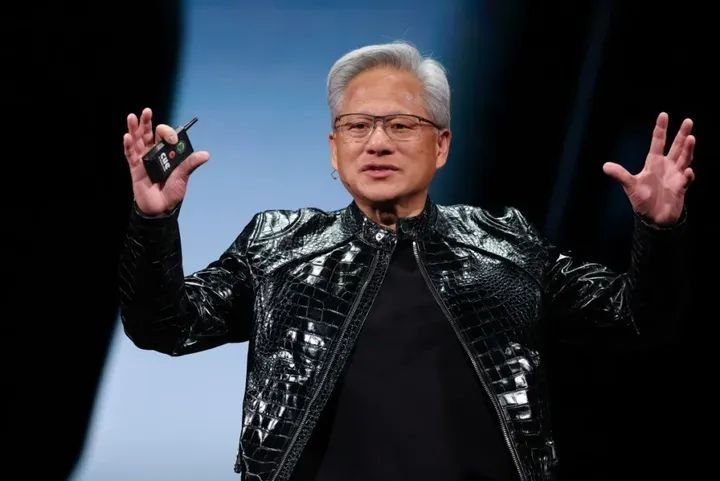
Nvidia Chief Executive Officer Jensen Huang is facing fresh allegations of an extramarital relationship with a senior company executive, adding to growing scrutiny surrounding the leadership of the artificial intelligence chipmaker.
The allegations, reported by The New York Times on Wednesday, November 11, 2026, concern Kimberly Powell, Nvidia’s vice-president of healthcare, who reportedly worked directly under Huang.
The newspaper cited five people who had worked at Nvidia in its account of the alleged relationship. The report has not been independently established, and neither Huang nor Powell has publicly confirmed the allegations.
The development comes days after Huang acknowledged being unfaithful to his wife in a message to Nvidia employees, apologising to his family and colleagues as the company’s board launched an independent investigation into separate reports involving a woman identified as Alice Huang.
The latest allegations have intensified attention on the personal conduct of Nvidia’s founder and the potential implications for the company’s leadership, corporate governance and relationships with investors.
Kimberly Powell Identified in Fresh Allegations
According to The New York Times, the latest allegations involve Kimberly Powell, who serves as Nvidia’s vice-president of healthcare.
Powell oversees Nvidia’s healthcare business, which focuses on applying the company’s computing and artificial intelligence technologies to medical imaging, healthcare research and life sciences.
The newspaper’s report, citing five people who previously worked at Nvidia, alleged that Powell had an extramarital relationship with Huang and reported directly to him within the company’s organisational structure.
The allegations have drawn attention to the professional relationship between the two executives, particularly because of the difference in their positions within the company’s management hierarchy.
Huang co-founded Nvidia in 1993 and has led the company as its chief executive, overseeing its transformation into one of the world’s most influential technology businesses.
Powell joined Nvidia in 2008 and later became one of its senior executives.
However, the reported relationship has not been independently confirmed by the individuals involved.
Huang and Nvidia Yet to Provide Detailed Response
Nvidia did not immediately provide a statement in response to a Reuters request for comment concerning the latest allegations.
Powell also did not immediately respond to requests for comment, according to reports.
Huang reportedly declined to discuss the allegations directly when approached by a New York Times journalist.
The absence of a detailed public response means important questions surrounding the reported relationship remain unresolved.
In particular, the allegations have not been established through a public investigation or an official finding by Nvidia.
It is therefore important to distinguish the newspaper’s reporting from confirmed findings about the conduct of the company’s executives.
Huang Previously Acknowledged Infidelity
The latest allegations follow Huang’s admission earlier in November that he had been unfaithful to his wife.
In a message published by Nvidia, the 63-year-old executive apologised to his family and colleagues, accepting responsibility for the personal consequences of his actions.
Huang acknowledged that his conduct had hurt his wife and children and said he regretted failing to meet the expectations of those closest to him.
He also addressed Nvidia employees, shareholders and business partners, acknowledging that his personal actions had affected the confidence placed in him as the company’s leader.
However, his message did not identify the individual involved in the earlier relationship.
The Associated Press reported that the earlier controversy centred on allegations involving Alice Huang, a Chinese citizen and former executive associated with Singapore-based data centre company Megaspeed.
That separate controversy attracted additional attention because of reports that US intelligence agencies suspected Alice Huang of gathering information for Beijing.
The espionage allegations have not been independently established by Reuters, while the Chinese government has rejected accusations of Chinese involvement in an intelligence operation.
Nvidia Board Launches Independent Investigation
Nvidia’s board of directors announced an independent investigation following the earlier reports concerning Huang and the alleged foreign intelligence operation.
In its November 8 statement, the board said an independent committee, assisted by external legal counsel, would oversee the investigation.
The board also stated that it had no reason to believe that US national security or Nvidia’s confidential information had been compromised.
Huang expressed support for the investigation and committed to cooperating fully.
The latest allegations involving Powell introduce another dimension to the questions facing Nvidia’s directors, particularly concerning executive conduct and the company’s internal governance arrangements.
According to Reuters, Nvidia’s board met on Wednesday, November 11, to consider Huang’s future as chief executive, following reports of two alleged extramarital relationships.
Reuters cited a source familiar with the matter. The company did not immediately respond to a request for comment on the reported meeting.
The development marked a significant change in the situation after the board had previously expressed confidence in Huang and his leadership team.
However, a reported board meeting to consider his future should not be interpreted as confirmation that a decision to remove him has been taken.
Nvidia Faces Growing Investor and Market Pressure
The controversy is also creating uncertainty around Nvidia’s corporate leadership at a time when the company occupies a central position in the global artificial intelligence industry.
Nvidia is a leading supplier of graphics processing units and advanced computing technology used to develop and operate artificial intelligence systems.
Its products support major data centres, technology companies, research institutions and businesses investing heavily in AI infrastructure.
Consequently, uncertainty surrounding Huang’s leadership has implications beyond the company’s internal affairs.
Reuters reported on November 12 that Nvidia shares had fallen approximately 7 per cent in early European trading, with the company’s market value estimated to have declined by about $600 billion during the week.
The report linked the market pressure to concerns about Huang’s possible departure and the uncertainty surrounding the company’s leadership.
Reuters also reported that some financial analysts had adjusted their assessments of Nvidia following the developments.
The market reaction highlights the importance investors attach to Huang’s position within the company.
He co-founded Nvidia in 1993 and has remained its chief executive throughout its transformation from a graphics-chip manufacturer into one of the world’s most influential artificial intelligence technology companies.
His leadership has become closely associated with the company’s product strategy, technological direction and relationships with major customers.
Why the Allegations Matter for Corporate Governance
Beyond the personal allegations, the reported relationship involving Powell raises questions about workplace relationships, executive accountability and potential conflicts of interest.
Senior executives occupy positions of considerable authority within large corporations. Relationships involving individuals in direct reporting arrangements can create concerns about professional boundaries, workplace fairness and the enforcement of internal policies.
These issues are particularly important when the individuals involved occupy positions with significant influence over company decisions and employees.
Nvidia’s code of conduct and its handling of any potential misconduct allegations may therefore attract greater attention as the controversy develops.
However, the existence of allegations does not establish that company policies were violated. Any conclusions would require appropriate investigation and evidence.
For shareholders, the central concern is whether the controversy affects the company’s management stability, decision-making processes and reputation.
For employees, the situation also raises questions about the standards expected of senior leadership and whether corporate policies are applied consistently across different levels of management.
Nvidia’s ability to address these concerns transparently could become important in maintaining confidence among its workforce, investors and business partners.
What Happens Next?
The immediate focus is on the outcome of Nvidia’s board deliberations and the independent investigation already underway.
Reuters reported that Nvidia’s board has 11 directors and that a majority can vote to remove Huang under the company’s bylaws.
The possibility of a leadership change has raised questions about succession because Huang has been the company’s only chief executive since its founding.
The company is also approaching an important financial milestone, with its quarterly results scheduled for November 17, 2026, according to Reuters.
Investors will be watching whether the controversy produces further leadership changes or affects confidence in Nvidia’s business outlook.
For now, Huang’s position remains subject to developments within the board, while the allegations involving Powell remain unconfirmed.
Neither Nvidia nor Powell had issued a detailed public response to the latest allegations in the reports available at the time of publication.
The coming days could therefore prove important in determining how Nvidia manages the leadership controversy and protects its standing in the global technology industry.
Weng Global – Stories beyond borders
Sources
- Reuters – Nvidia board weighs CEO Huang’s future as leadership crisis deepens.
- Reuters – Report on Huang’s alleged relationship with an executive.
- Associated Press – Nvidia investigates reports CEO Jensen Huang was targeted by Chinese spy.
- Nvidia – Statement from the Board of Directors.
- Nvidia – Jensen Huang’s message to company employees.