Reported by Weng Patrick Atokor | Journalist at Weng Global
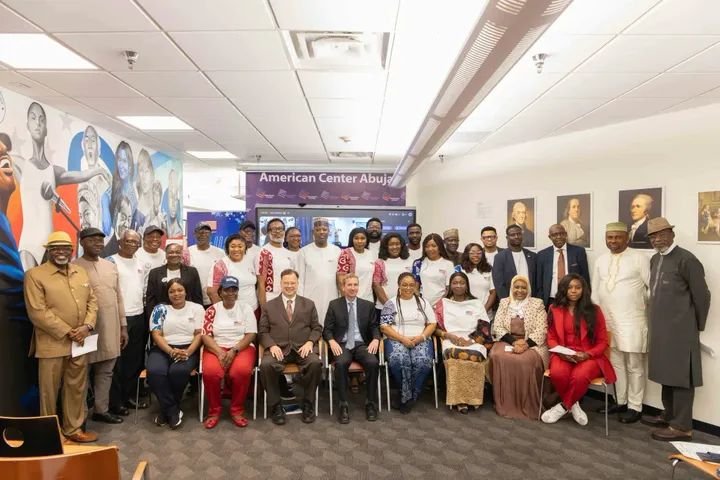
The United States Mission in Nigeria has reaffirmed its commitment to strengthening the long-standing relationship between Nigeria and the United States through educational, professional, and cultural exchange programmes aimed at promoting economic growth, innovation, entrepreneurship, and sustainable development.
According to the US Mission, exchange programmes remain one of the most effective tools for deepening bilateral cooperation by equipping Nigerian participants with global knowledge, leadership skills, and international networks that contribute significantly to Nigeria’s economic and social development.
The Mission emphasized that thousands of Nigerians have benefited from various US government-sponsored exchange initiatives over the years, returning home with expertise that has positively impacted sectors including business, technology, education, healthcare, agriculture, governance, and entrepreneurship.
Speaking on the importance of these programmes, the US Mission noted that educational and professional exchanges continue to foster mutual understanding while creating opportunities for stronger commercial partnerships between both countries.
The Mission explained that alumni of exchange programmes often become catalysts for innovation, launching businesses, creating employment opportunities, developing community projects, and promoting international collaboration that ultimately strengthens Nigeria’s economy.
According to the statement, many former participants have leveraged the skills and professional networks acquired during their exchanges to establish successful enterprises, mentor young entrepreneurs, and attract investments into Nigeria.
The US Mission further stressed that the programmes are designed not only to build individual capacity but also to strengthen institutions by encouraging collaboration between Nigerian and American universities, research institutions, businesses, and government agencies.
Officials noted that these partnerships have contributed to knowledge transfer, improved research collaboration, technological innovation, and workforce development across multiple sectors.
Among the flagship exchange initiatives highlighted by the Mission are the Young African Leaders Initiative (YALI), the Fulbright Foreign Student Programme, the Hubert H. Humphrey Fellowship Programme, the International Visitor Leadership Programme (IVLP), and the Community College Initiative Programme.
These programmes provide emerging leaders, students, academics, entrepreneurs, civil servants, and professionals with opportunities to study, receive specialized training, participate in professional exchanges, and engage with counterparts in the United States.
The Mission stated that beyond academic achievements, participants acquire practical leadership and problem-solving skills that enable them to address pressing developmental challenges within their communities upon returning to Nigeria.
According to the US Mission, exchange programmes also play an important role in promoting innovation-driven entrepreneurship by exposing Nigerian innovators and business leaders to global best practices, emerging technologies, and international investment opportunities.
This exposure, officials said, helps participants build competitive businesses capable of attracting foreign partnerships and expanding into international markets.
The Mission explained that stronger people-to-people connections remain at the heart of the Nigeria-US relationship, adding that alumni networks continue to serve as valuable platforms for collaboration long after participants complete their exchange programmes.
It noted that these networks facilitate mentorship, policy dialogue, business partnerships, research collaboration, and community development initiatives that benefit both countries.
The United States also reaffirmed its commitment to supporting Nigeria’s growing youth population by investing in leadership development, entrepreneurship, civic engagement, innovation, and educational opportunities.
Officials acknowledged that Nigeria possesses one of Africa’s largest youth populations and that empowering young leaders remains critical to unlocking the country’s economic potential.
The Mission stated that programmes targeting young professionals help build the next generation of innovators, policymakers, educators, business executives, and community leaders who will contribute to national development.
Beyond leadership development, exchange programmes have strengthened cooperation in areas including climate resilience, public health, digital technology, agriculture, conflict resolution, women’s empowerment, and good governance.
Participants often return with practical solutions that can be adapted to local realities, contributing to improved service delivery and institutional capacity.
The US Mission highlighted the growing economic relationship between both countries, noting that stronger educational and professional exchanges complement expanding trade and investment partnerships.
Officials observed that enhanced collaboration between Nigerian and American businesses continues to create opportunities for technology transfer, innovation, job creation, and increased economic competitiveness.
The Mission also encouraged eligible Nigerians from diverse backgrounds to apply for available exchange opportunities, stressing that selection processes are based on merit, leadership potential, academic excellence, and commitment to community service.
Applicants were advised to monitor official US Mission communication channels for announcements regarding programme openings, eligibility requirements, and application deadlines.
According to the Mission, diversity remains a core principle of the exchange initiatives, ensuring participants represent different regions, professions, genders, and socio-economic backgrounds across Nigeria.
The statement further emphasized that alumni frequently collaborate with government institutions, private sector organizations, civil society groups, and educational institutions to implement projects that deliver measurable social and economic impact.
Many former participants have gone on to occupy leadership positions in government, academia, business, media, healthcare, and non-profit organizations, where they continue to promote innovation and strengthen bilateral cooperation.
The Mission maintained that investment in human capital remains one of the strongest foundations for sustainable economic development.
By providing access to international education, professional training, and cross-cultural experiences, exchange programmes help build a workforce capable of competing in an increasingly interconnected global economy.
Analysts have consistently noted that educational diplomacy remains a vital component of the broader Nigeria-US relationship, fostering trust, expanding institutional partnerships, and creating long-term economic benefits for both nations.
As Nigeria continues to pursue economic diversification, digital transformation, and youth empowerment, collaboration through international exchange programmes is expected to remain an important pillar of bilateral engagement.
The US Mission reiterated that the enduring partnership between Nigeria and the United States extends beyond government-to-government relations, emphasizing that lasting progress is built through investments in people, education, innovation, and shared prosperity.
With continued collaboration across education, entrepreneurship, technology, governance, and research, both countries are expected to deepen economic cooperation while empowering future generations of leaders capable of driving inclusive growth and sustainable development.
The renewed commitment underscores the strategic importance of exchange programmes in advancing mutual interests, strengthening institutions, promoting innovation, and expanding opportunities that benefit citizens of both Nigeria and the United States.
Sources
- U.S. Mission Nigeria
- U.S. Department of State
- U.S. Embassy and Consulate in Nigeria