Reported by Simon Daniel Yusuph l Journalist at Weng Global
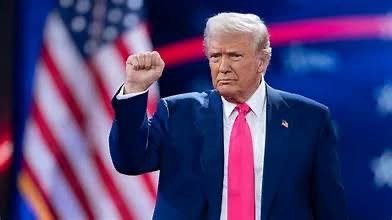
United States President Donald Trump has drawn attention after telling supporters at a Republican rally in Clarksville, Tennessee, that they would applaud him even if he said “the stupidest things,” a remark that highlighted his confidence in the loyalty of his political base.
Trump made the comment on Saturday, October 10, 2026, while addressing a crowd at F&M Bank Arena during a political gathering aimed at strengthening Republican support ahead of the November midterm elections.
The remark came as Trump campaigned for Republican candidates and praised political allies in Tennessee. It offered a glimpse into his relationship with supporters, whose enthusiasm has remained a defining feature of his political movement.
The event also reflected the importance of Trump’s personal appeal as Republicans prepare for elections that could determine control of the United States Congress.
Trump Remarks on Supporters’ Loyalty
Trump’s statement about receiving applause even when making foolish remarks was one of the notable moments from his Tennessee appearance.
“I could say the stupidest things and you’d clap,” Trump told the cheering audience, according to reporting on the rally by TheGrio and Mediaite.
The comment appeared to acknowledge the strength of his relationship with supporters, while also drawing attention to the extent to which political loyalty can shape the reception of a public figure’s statements.
Rather than presenting the remark as a formal political argument, Trump delivered it in a rally setting where audience reactions are an important part of the atmosphere.
Political rallies often provide candidates with opportunities to reinforce their connection with supporters through humour, personal stories, familiar slogans and direct appeals to shared political beliefs.
Trump has frequently relied on this style of communication throughout his political career. His public appearances often combine policy announcements and attacks on political opponents with unscripted comments designed to generate reactions from the crowd.
The Tennessee remark fitted that broader pattern, although the available reporting does not establish that Trump intended it as a serious criticism of his own supporters.
Its significance lies partly in the fact that the president openly referred to the possibility of receiving applause regardless of what he said.
The comment can be interpreted as a joke about the enthusiasm of his political base. It can also prompt broader questions about how political supporters evaluate statements made by leaders they strongly identify with.
Those interpretations should remain distinct from the confirmed event itself: Trump made the remark, and the audience was reported to have responded enthusiastically.
What Happened at the Tennessee Rally?
Trump’s appearance took place at F&M Bank Arena in Clarksville, Tennessee, as Republicans worked to mobilise supporters before the November 3, 2026, congressional midterm elections.
According to the Tennessee Lookout, the rally attracted approximately 4,500 people to an arena with a capacity of about 6,000.
The gathering provided Trump with an opportunity to praise Tennessee’s Republican leadership, promote his administration’s agenda and encourage continued support for his political allies.
He also highlighted the work of law enforcement agencies and discussed the federal response to crime in Memphis, where a multi-agency initiative had been deployed in September 2025.
Trump’s remarks formed part of a broader political message intended to reinforce Republican support in a state where the party has maintained a strong electoral position.
However, the president’s comments about his supporters’ willingness to applaud him attracted attention beyond the immediate policy discussions.
The statement offered a concise illustration of the personal loyalty that has become central to Trump’s political identity.
For his supporters, such moments can contribute to the sense that the president communicates directly with them rather than through conventional political language.
For critics, the comment can raise concerns about whether personal allegiance sometimes takes precedence over independent scrutiny of political leaders.
Neither interpretation alone establishes what individual rally attendees believe. The audience was not a representative survey of American voters, and the available reporting does not show how every person present understood the remark.
Trump’s Relationship With His Political Base
Trump’s political career has been closely associated with a committed group of supporters who identify with his approach to government, national identity, immigration, economic policy and opposition to established political institutions.
His campaign appearances frequently feature enthusiastic responses to familiar themes, including criticism of Democrats, promises to strengthen border enforcement and claims that his administration is challenging entrenched interests.
This relationship has helped Trump maintain a prominent position within the Republican Party.
For many supporters, his appeal extends beyond individual policy proposals. It also reflects his public persona, communication style and willingness to confront political opponents in unusually direct language.
Trump’s rallies provide a setting in which these elements reinforce one another. The president addresses an audience already inclined to support him, while the audience’s reaction helps create the atmosphere of political momentum.
Such events can energise party activists, encourage campaign volunteers and strengthen supporters’ sense of belonging to a broader political movement.
The president’s remark about applause touched on this dynamic by acknowledging the audience’s readiness to respond positively to him.
However, political loyalty is not necessarily the same as unconditional agreement.
Supporters may remain committed to a political leader while disagreeing with particular statements, policies or decisions. Others may view controversial comments as humour, rhetorical exaggeration or evidence of authenticity.
Without polling or direct interviews with attendees about this particular remark, it would be inaccurate to conclude that Trump’s supporters would genuinely applaud everything he said.
The statement was the president’s own characterisation of their enthusiasm, not an independently established finding about the political behaviour of his entire support base.
The Importance of Political Rallies Ahead of the Midterm Elections
The timing of the Clarksville rally is significant because the United States is approaching the November 3 congressional midterm elections.
In these elections, voters will decide contests for all 435 seats in the House of Representatives and 35 seats in the Senate.
The results will influence the political balance in Congress and determine how easily the administration can advance its legislative priorities.
For a president, midterm elections can become an important assessment of public support, particularly when the president takes an active role in campaigning for candidates from the governing party.
Trump’s appearances are therefore not simply opportunities to address enthusiastic audiences. They are also part of a wider effort to influence voter participation, reinforce party unity and help Republican candidates maintain or strengthen their positions.
The Tennessee rally offered a platform for promoting Republican candidates and encouraging supporters to remain politically engaged.
Although Tennessee is generally regarded as a Republican-leaning state in federal elections, campaigning there can still serve broader strategic purposes. It allows party leaders to mobilise established supporters, encourage turnout and demonstrate solidarity with candidates.
Trump’s personal involvement may also help attract attention to races that would otherwise receive less national coverage.
However, a successful rally does not automatically translate into electoral victory. The response of a crowd at a political event cannot reliably establish how the wider electorate intends to vote.
Election outcomes are influenced by numerous factors, including economic conditions, candidate quality, turnout, local issues and voters’ assessments of the governing party.
The president’s ability to maintain enthusiasm among his supporters is therefore one element of the electoral picture rather than a definitive measure of Republican prospects.
Humour, Political Communication and Public Accountability
Trump’s comment also raises a broader question about the relationship between humour, political loyalty and accountability.
Politicians regularly use jokes and provocative statements to connect with supporters. Humour can make a speech more memorable, reduce the formality of a political gathering and create a sense of familiarity between a leader and an audience.
In Trump’s case, his conversational and frequently combative style has become a recognisable feature of his public communication.
Supporters may appreciate this approach because they see it as spontaneous and different from the carefully controlled language often associated with politicians.
At the same time, public officials occupy positions of responsibility. Their statements can influence political debate, public understanding and perceptions of government policy.
This makes it important for audiences to distinguish between a politician’s entertainment value, personal appeal and the substance of the claims being made.
The ability to attract applause does not establish that a statement is accurate, just as criticism of a statement does not automatically prove it is false.
Political claims should be assessed according to evidence, context and their implications for public policy.
Trump’s remark was not a policy announcement or a detailed argument about governance. It was a comment about his relationship with his audience.
Nevertheless, it provides an opportunity to consider how political movements can become closely associated with individual personalities and how that relationship influences public discussion.
The question is not whether supporters should agree with every statement made by their preferred candidate. Rather, it is whether political debate leaves room for independent judgment, disagreement and the examination of evidence.
These principles are relevant across political parties and democratic systems, not only in the United States.
Reactions and Political Interpretations
The remark attracted media attention because of its direct wording and its apparent acknowledgment of the president’s confidence in his supporters’ loyalty.
Reporting by TheGrio and Mediaite highlighted the statement, while Al Jazeera also covered Trump’s comments at the Tennessee rally.
The wording lends itself to different interpretations, depending on the listener’s perspective.
For supporters, it may be understood as a humorous observation about the enthusiasm of the crowd and the strong relationship between Trump and his political base.
For critics, it may reinforce concerns that personal loyalty can sometimes overshadow substantive debate within highly polarised political environments.
However, the available reports do not establish a comprehensive public reaction to the remark, nor do they demonstrate that the statement caused a measurable shift in support for Trump.
It would therefore be premature to describe the comment as a turning point in the president’s political standing.
Its immediate significance is that it became a prominent moment from a rally already attracting attention because of the approaching midterm elections.
The broader political implications will depend on developments beyond the speech itself, including campaign performance, voter attitudes and the issues that dominate the final weeks before the election.
Why the Remark Matters
The episode illustrates the importance of political identity in contemporary American public life.
Trump’s relationship with his supporters has been a major factor in his political influence. His rallies allow him to communicate directly with audiences that are already familiar with his messaging and to reinforce the connection that has helped sustain his movement.
The remark about applause is notable because it explicitly draws attention to that relationship.
It also highlights the difference between the atmosphere at a political rally and the broader democratic process.
Rally audiences generally consist of people who have chosen to attend an event supporting a particular politician or party. Their enthusiasm can be politically significant, but it does not necessarily reflect the views of undecided voters, opposition supporters or the electorate as a whole.
For journalists and readers, maintaining this distinction is essential when evaluating the political meaning of such events.
The president’s words can be reported accurately without assuming that all supporters share the same views or that the comment establishes a particular public opinion trend.
The episode also underscores the importance of accountability in political communication. Leaders may enjoy strong personal support, but their decisions and claims remain open to examination.
Ultimately, the strength of a political movement cannot be measured by applause alone. Its electoral performance and governing record must also be considered.
What Happens Next?
Attention will now remain on the Republican Party’s campaign efforts as the United States approaches the November 3 midterm elections.
Trump is expected to remain an influential presence in Republican campaigning, particularly through public appearances intended to encourage supporters and promote candidates aligned with his administration.
The central question for Republicans is whether the enthusiasm generated by the president’s appearances will translate into sufficient voter participation and electoral support.
For Democrats, the elections present an opportunity to challenge Republican control of Congress and use public dissatisfaction with the administration, where it exists, to strengthen their own candidates.
The Tennessee rally is one event in a wider national campaign, and its immediate reception should not be treated as a reliable prediction of the final results.
The election outcome will provide a more concrete measure of the political environment than the response of a single rally audience.
For now, Trump’s comment about supporters applauding even his most foolish remarks remains a revealing moment in the president’s public communication style and his relationship with a loyal political base.
Weng Global – stories beyond borders
Sources
- TheGrio
- Mediaite
- Al Jazeera
- Tennessee Lookout