Reported by Weng Patrick Atokor l Journalist at Weng Global
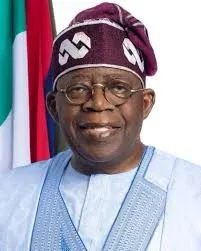
President Bola Ahmed Tinubu is expected to transmit executive bills to Nigeria’s National Assembly seeking additional legislative seats for women and Persons with Disabilities (PWDs), Speaker of the House of Representatives Tajudeen Abbas has disclosed.
Abbas said the proposed legislation would create special seats for the two groups in the federal and state legislatures, separate from the existing seats contested during general elections.
The Speaker made the disclosure in Abuja on Thursday, September 24, 2026, during a reception organised by the Nigerian Institute of Public Relations (NIPR) in honour of Professor Justin Green, President and Chief Executive Officer of the Global Alliance for Public Relations and Communication Management.
Women’s Reserved Seats Bill Under Review
According to Abbas, the proposed legislation concerning special seats for women has already been taken to the Federal Ministry of Justice for further review and refinement before it is transmitted to the National Assembly.
He said the House leadership had engaged President Tinubu on the proposal and that the President had agreed to sponsor an executive bill seeking to create additional seats for women.
Abbas said the proposed seats would be independent of the regular legislative constituencies that women and other candidates currently contest during elections.
The Speaker described the initiative as part of efforts by the 10th National Assembly to improve inclusivity and strengthen the representation of women in Nigeria’s legislative institutions.
The proposal is connected to an ongoing debate over women’s representation in Nigeria’s political institutions. Earlier legislative proposals have sought constitutional changes that would create additional seats specifically for women while preserving their right to contest existing constituencies.
A version of the proposal discussed during the National Assembly’s constitutional reform process would create additional seats in the Senate and House of Representatives, as well as additional seats in State Houses of Assembly. The proposal is intended to operate for a defined period before being reviewed.
Separate Proposal for Persons With Disabilities
Abbas also disclosed that the Federal Government is expected to present a separate executive bill addressing the representation of Persons with Disabilities.
He said the National Assembly leadership had facilitated the initiative through the President, with the aim of providing PWD representation at both national and subnational levels.
According to the Speaker, the proposed legislation could be transmitted to the National Assembly within the coming weeks.
The development follows earlier efforts by lawmakers to establish reserved legislative representation for persons with disabilities. In July, Abbas said the House would pursue constitutional amendments for PWD representation after work on the women’s reserved-seats proposal.
A separate proposal previously considered by the House sought additional representation for persons with disabilities in the National Assembly, State Houses of Assembly and local government legislative councils. Legislative proposals in this area have included representation based on Nigeria’s six geopolitical zones.
What the Proposed Women’s Seats Could Mean
The women’s proposal has been presented as an affirmative-action measure designed to address the relatively low number of women occupying elective legislative positions in Nigeria.
Under details reported about the proposal, 37 additional seats could be created in the Senate and another 37 in the House of Representatives, with one additional seat allocated to each state and the Federal Capital Territory.
The proposal would also provide three additional seats in each of Nigeria’s 36 State Houses of Assembly, with one seat corresponding to each senatorial district.
The proposed arrangement has been designed as a temporary measure, with one version providing for four general election cycles, equivalent to 16 years, before a review.
The proposal would not prevent women from contesting the existing legislative constituencies. Instead, the additional seats would operate alongside the regular elective seats.
However, the precise provisions that would eventually reach the National Assembly will depend on the final executive bills and the legislative process that follows their transmission.
Nigeria’s Representation Debate
Women remain significantly underrepresented in Nigeria’s elected legislative institutions.
According to figures cited in recent reporting, the current 10th National Assembly has four women in the Senate and 16 in the House of Representatives.
The issue has therefore become part of broader discussions about constitutional and electoral reforms in Nigeria.
Supporters of the reserved-seats proposal have argued that additional representation could provide a mechanism for increasing women’s participation in lawmaking without removing the existing right of women to compete for ordinary constituencies.
The Policy and Legal Advocacy Centre (PLAC), which has participated in discussions around the proposal, has described the special-seats initiative as an important issue in Nigeria’s constitutional reform debate.
At the same time, the proposal remains subject to Nigeria’s constitutional and legislative procedures. Presidential transmission of an executive bill would not by itself make the proposed seats law.
Legislative Process Still Ahead
Once formally transmitted, the bills would have to go through the National Assembly’s legislative process.
That process can involve first reading, committee consideration, public hearings, further legislative debate and voting, depending on the nature of the proposed constitutional amendments.
Where constitutional alteration is required, additional constitutional procedures would also apply beyond ordinary presidential assent.
This means the announcement by the Speaker represents a proposed next step rather than a completed change to Nigeria’s electoral or legislative system.
Previous discussions on the women’s special-seats proposal have also highlighted the importance of securing the participation and approval of State Houses of Assembly because constitutional amendments require broader institutional support.
Why the Proposal Matters
The proposed bills could become significant components of Nigeria’s ongoing debate over political representation and constitutional reform if they are formally introduced and subsequently considered by lawmakers.
For women, the proposal addresses the question of whether additional legislative mechanisms should be used to increase their presence in elected institutions.
For Persons with Disabilities, a dedicated representation framework would address calls for greater participation by a group that has historically had limited representation in political institutions.
However, the eventual impact will depend on the precise wording of the bills, how the seats would be filled, the duration of any special arrangement, the constitutional amendments required and whether the proposals secure the necessary legislative approvals.
The debate is therefore likely to continue beyond the President’s transmission of the bills.
What Happens Next
The women’s special-seats proposal is currently undergoing further work at the Ministry of Justice, according to Abbas.
The President is expected to transmit the executive bill to the National Assembly after that process.
A separate executive bill concerning representation for Persons with Disabilities is also expected within the coming weeks.
After transmission, lawmakers will determine how the proposals proceed through the legislative process, including the required debates, committee scrutiny and consultations.
Until those steps are completed and any required constitutional amendments are approved, the proposed special seats remain legislative proposals rather than established positions within Nigeria’s federal or state legislatures.
The development places women’s political representation and the participation of Persons with Disabilities among the continuing constitutional and governance issues before Nigeria’s National Assembly.
Weng Global – Stories beyond borders
Sources
- Punch Newspapers — report on President Tinubu’s proposed executive bills for special seats for women and Persons with Disabilities.
- The Guardian Nigeria — report on Abbas’ disclosure concerning the proposed bills.
- Punch Newspapers — July 2026 report on the House’s proposed PWD representation initiative.
- Policy and Legal Advocacy Centre (PLAC) — information on the National Assembly dialogue concerning the Special Seats Bill.
Tags: