Reported by Simon Daniel Yusuph l Journalist at Weng Global
President Bola Ahmed Tinubu has announced the approval of the Eastern railway line and Eastern Gas Pipeline project, promising increased infrastructure investment, improved electricity supply and stronger economic connectivity across Nigeria’s South-East as he seeks another presidential mandate in the 2027 general election.
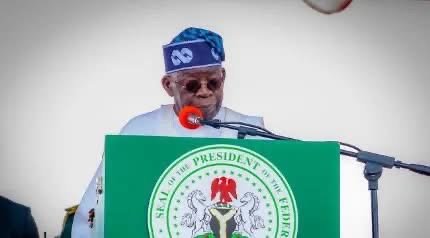
Tinubu made the announcement on Saturday, November 28, 2026, during the All Progressives Congress (APC) presidential campaign rally at Michael Okpara Square in Enugu State, where he appealed to voters in the region to support his re-election bid.
The President said the proposed infrastructure projects would strengthen transportation networks, support industrial development and improve connections between the South-East, South-South and northern parts of Nigeria.
His announcement comes amid longstanding demands for increased federal investment in the South-East, particularly in railway transportation, electricity generation and distribution, industrial infrastructure and economic development.
The President also promised interest-free loans for farmers, increased investment in education and greater opportunities for young Nigerians, presenting these commitments as part of his administration’s broader development agenda.
Tinubu Announces Approval of Eastern Railway and Gas Pipeline
Addressing party leaders, government officials and supporters at the Enugu rally, Tinubu said his administration had approved the Eastern Gas Pipeline and Eastern Nigerian railway line.
He disclosed that he was working with Enugu State Governor Peter Mbah to advance the gas infrastructure project, which is expected to support electricity generation and industrial activities across the region.
The President explained that the railway project would improve connections between different geographical zones, making it easier to transport people and goods across the country.
He said the projects reflected his administration’s commitment to connecting Nigeria through critical infrastructure.
The announcements were particularly significant for the South-East, a region with considerable commercial and industrial activity but longstanding concerns about infrastructure gaps and limited investment in major transportation and energy networks.
However, while the President announced approval of the projects, important implementation details, including the complete construction timetable, financing arrangements, procurement processes and delivery milestones for the railway, were not fully outlined in the announcement.
These details will be important in determining how quickly the commitments translate into completed infrastructure.
Eastern Gas Pipeline Expected to Support Industrial Development
The Eastern Gas Pipeline is among the major infrastructure proposals expected to influence the South-East’s economic development.
The proposed pipeline network is designed to transport natural gas from the ANOH gas processing plant in Imo State to industrial and commercial centres across the five South-Eastern states of Abia, Anambra, Ebonyi, Enugu and Imo.
Previous reports on the project have described it as an approximately 400-kilometre pipeline network intended to improve access to natural gas for businesses and industrial operators.
The project has also been associated with an estimated investment of $100 million, although its final financing and implementation arrangements will require further official clarification.
According to previous reports, the South East Development Commission, through the South East Investment Company, is involved in developing the pipeline in partnership with GasSync and NNPC Gas Marketing Limited.
Earlier projections indicated that construction could commence in the first quarter of 2027, with initial gas delivery targeted for the second quarter of 2028.
The project is expected to provide an additional energy supply option for industrial facilities, commercial establishments and other users across the region.
Natural gas plays an important role in industrial production, electricity generation and several manufacturing processes.
For businesses operating in the South-East, improved access to gas could potentially reduce energy constraints and support the expansion of production capacity.
Industries that depend heavily on reliable energy supplies could benefit from improved access to gas, particularly where infrastructure is developed alongside appropriate distribution networks and electricity generation facilities.
Nevertheless, the practical benefits will depend on the project’s completion, operational capacity, affordability of gas and the ability of industries to connect to the pipeline.
Eastern Railway Line and Regional Connectivity
Tinubu’s approval of the Eastern railway line also represents an important development in discussions surrounding railway expansion and transportation infrastructure in Nigeria.
Rail transportation remains a significant component of national economic development because it provides an alternative means of moving passengers and large volumes of goods over long distances.
For the South-East, an effective railway network could improve access to major commercial centres, reduce pressure on highways and strengthen connections with other parts of the country.
The region has several important commercial and industrial centres, including Aba, Onitsha, Nnewi, Enugu and Owerri.
Improved railway connectivity could support the movement of manufactured products, agricultural commodities, construction materials and other goods between these centres and markets outside the region.
It could also provide additional transportation options for passengers travelling between the South-East and other parts of Nigeria.
However, the President’s announcement did not provide a comprehensive breakdown of the railway’s proposed route, construction phases, projected cost or completion date.
The Federal Government will therefore need to provide further details to enable residents, investors and other stakeholders to understand the project’s scope.
The railway’s eventual economic impact will depend on its geographical coverage, operational efficiency, affordability and integration with existing road and transportation infrastructure.
Tinubu Promises Improved Electricity Supply
The President also linked the proposed gas infrastructure to improvements in electricity supply across the South-East.
He expressed confidence that the Eastern Gas Pipeline would contribute to improved energy availability, particularly through its potential to support gas-dependent electricity generation and industrial activities.
Electricity remains one of the major challenges affecting businesses and households in Nigeria.
Manufacturers, small businesses and commercial operators frequently face high operating costs associated with alternative power generation.
In the South-East, where manufacturing, trading and small-scale industrial activities contribute significantly to local economies, reliable electricity could improve productivity and reduce dependence on expensive backup power.
However, the construction of a gas pipeline alone does not guarantee improved electricity supply.
The benefits will also depend on gas processing, power generation capacity, transmission infrastructure, distribution networks and the ability of electricity providers to deliver reliable services to consumers.
Consequently, Nigerians will be watching for specific implementation measures that connect the proposed gas project to measurable improvements in electricity supply.
Interest-Free Loans for South-East Farmers
Beyond infrastructure, Tinubu announced plans to provide interest-free loans to farmers to reduce the financial difficulties associated with agricultural production.
He said the initiative would help farmers access financial support without the additional burden of interest payments.
Agriculture remains an important source of employment and livelihood across Nigeria, including the South-East, where farmers produce food crops and agricultural commodities for domestic consumption and commercial markets.
Access to affordable financing is particularly important for smallholder farmers who often struggle to obtain loans for seeds, fertilisers, equipment, labour and other production requirements.
If properly implemented, an interest-free lending programme could help farmers increase production, expand cultivated land and improve their ability to invest in agricultural activities.
However, the government will need to explain the programme’s eligibility requirements, funding arrangements, participating financial institutions and repayment conditions.
Transparency in the selection of beneficiaries will also be important to ensure that the support reaches genuine farmers rather than being concentrated among politically connected individuals.
The initiative’s effectiveness will ultimately depend on whether farmers can access the loans at the right time and use them to improve agricultural productivity.
Education and Youth Development Remain Part of Tinubu’s Agenda
The President also highlighted education and youth development as important priorities for his administration.
Commending Governor Peter Mbah for his investments in education, Tinubu described education as an important instrument for addressing poverty and building a prosperous society.
He maintained that Nigeria could not achieve sustainable development without investing adequately in young people.
The President promised continued support for programmes designed to expand educational opportunities and improve the prospects of young Nigerians.
Education remains a major issue across the country, particularly as families face financial pressures associated with school fees, learning materials and other educational expenses.
For young people in the South-East, improved access to quality education, vocational training and employment opportunities could contribute to economic participation and reduce the pressure to seek opportunities outside their communities.
The Federal Government’s existing education financing initiatives, including the Nigerian Education Loan Fund, also form part of the broader discussion surrounding access to higher education.
However, the impact of these commitments will depend on adequate funding, effective programme implementation and the availability of opportunities after graduation.
Tinubu Seeks South-East Votes Ahead of 2027 Election
The announcements were made against the backdrop of the approaching 2027 general election, with the President using the rally to seek stronger political support for the APC in the South-East.
Tinubu urged eligible voters to obtain their Permanent Voter Cards and participate in the forthcoming elections.
He also encouraged residents to mobilise their relatives and other eligible voters to support the APC and its candidates.
The President’s appeal reflects the political importance of the South-East in the broader contest for national electoral support.
The region has historically presented a challenging political environment for the APC in presidential elections, making efforts to strengthen the party’s presence and attract voters particularly significant.
Tinubu’s infrastructure and economic development promises therefore form part of a wider political engagement aimed at convincing voters that his administration is committed to addressing the region’s development concerns.
The President also urged residents to support Governor Mbah and other APC candidates, praising the Enugu governor’s performance in office.
The rally brought together several prominent political figures, including Vice-President Kashim Shettima, Senate President Godswill Akpabio and governors from different states.
Among those reported to have attended were Enugu State Governor Peter Mbah, Imo State Governor Hope Uzodimma, Anambra State Governor Charles Soludo and Ebonyi State Governor Francis Nwifuru.
The gathering also featured other APC leaders, federal lawmakers and political stakeholders.
Political Support and the Question of Infrastructure Delivery
Tinubu’s promises have placed renewed attention on the relationship between electoral commitments and infrastructure development in the South-East.
For many residents, the central issue is not simply whether major projects receive presidential approval but whether they are eventually funded, constructed and made operational.
Nigeria has previously witnessed infrastructure announcements that faced delays because of financing difficulties, administrative challenges, procurement processes and changes in government priorities.
The Eastern railway and gas pipeline projects will therefore require sustained coordination between federal institutions, state governments, development agencies and private-sector partners.
The involvement of the South East Development Commission and other project partners in the gas pipeline initiative also highlights the importance of cooperation between public institutions and private investors.
Such partnerships can support infrastructure development, but their success depends on clear responsibilities, transparent financing and effective supervision.
For the South-East, successful implementation could strengthen its position as an important industrial and commercial centre within Nigeria’s economy.
However, residents will need more than campaign assurances. They will require transparent information about project costs, construction schedules, financing arrangements and measurable progress.
Why the Projects Matter to Nigeria
The proposed railway and gas pipeline projects could have implications beyond the South-East.
Nigeria’s economic development depends partly on the ability to connect production centres, industrial facilities, agricultural communities and commercial markets through reliable infrastructure.
A functioning Eastern railway network could strengthen the movement of goods across regional boundaries, while improved access to natural gas could support industrial activities and electricity generation.
These developments could also encourage private investment if businesses are confident that transportation and energy infrastructure will be available and economically viable.
For Nigeria’s manufacturing sector, reliable energy and efficient logistics are important factors influencing production costs and competitiveness.
The South-East’s established commercial networks could benefit from improved infrastructure, particularly if the projects are integrated with existing roads, markets and industrial facilities.
Nevertheless, the projects should be assessed through their actual economic and social outcomes rather than the announcements alone.
What Happens Next?
Following Tinubu’s announcement, attention will shift towards the Federal Government’s implementation plans for the Eastern railway line and Eastern Gas Pipeline.
Relevant ministries, agencies and project partners will need to provide further information about the projects’ technical specifications, financing, construction arrangements and delivery schedules.
For the gas pipeline, the previously reported first-quarter 2027 construction target and second-quarter 2028 initial gas delivery projection will be important milestones to monitor.
The railway project will also require a clearly defined implementation framework, including its proposed routes, estimated costs, construction phases and operational plans.
The Federal Government will equally face expectations to explain how the promised interest-free agricultural loans will be administered and how increased investment in education and youth development will be sustained.
As the 2027 election approaches, voters in the South-East will have an opportunity to assess the administration’s record alongside its new commitments.
Ultimately, the significance of Tinubu’s announcement will be determined by whether the proposed projects move beyond political promises into completed infrastructure that improves electricity access, transportation, industrial productivity and living standards.
For the South-East, the expectation is clear: infrastructure commitments must translate into tangible development that benefits residents, businesses and future generations.
Weng Global – stories beyond borders
Sources
- The Cable
- Voice of Nigeria
- The Nation
- Galaxy Television
- Vanguard
- South East Development Commission project information, as reported by The Cable.