Reported by Simon Daniel Yusuph l Journalist at Weng Global
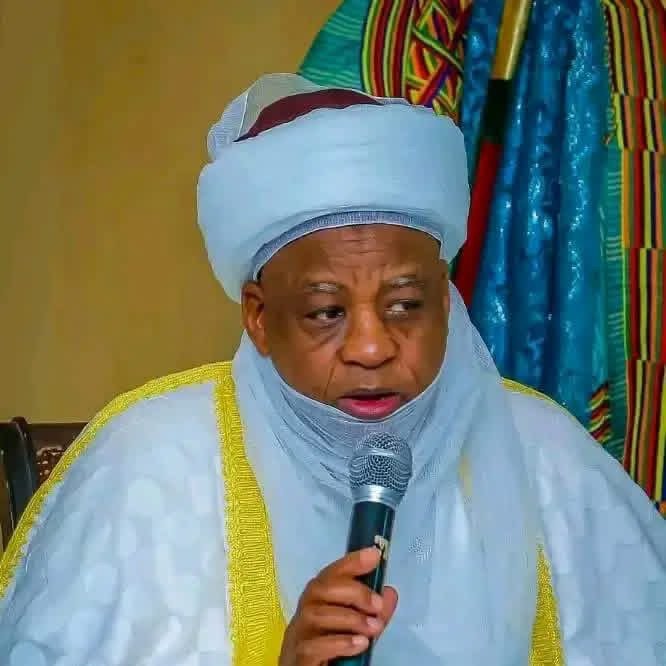
The Sultan of Sokoto and President-General of the Nigeria Supreme Council for Islamic Affairs (NSCIA), Muhammad Sa’ad Abubakar III, has urged Muslims to respect the rights and freedoms of people of other faiths, stressing that nobody should be forced to embrace Islam.
The Sultan made the remarks during the NSCIA 2026 General Assembly at the National Mosque in Abuja, where he spoke about religious freedom, unity among Muslims and the responsibilities of the Islamic community in Nigeria.
He said Muslims should be allowed to practise their religion without hindrance while respecting the religious choices of others.
The Sultan emphasised that conversion to Islam should be voluntary and that Muslims should not use force to compel people to join the religion.
‘There is no compulsion in religion’
The Sultan said the NSCIA did not intend to force anyone to become Muslim, adding that people who embrace Islam should do so out of their own free will.
He linked the position to the Islamic principle that there should be no compulsion in matters of faith.
The statement comes against the backdrop of recurring debates over religious tolerance and relations between Christians and Muslims in Nigeria.
The Sultan has previously appealed to adherents of both religions to avoid provocative or insulting comments about one another, saying mutual respect is necessary for peaceful coexistence.
His latest remarks therefore placed religious freedom and respect for people of different faiths at the centre of his message to Muslim leaders gathered in Abuja.
NSCIA assembly focuses on Muslim unity
The 2026 General Assembly was significant because it was the first such assembly of the NSCIA in about seven years.
The Sultan said the gathering provided an opportunity for Muslim leaders from across Nigeria to reconnect, exchange ideas and strengthen their unity.
According to the Voice of Nigeria, the Sultan noted that while the council had continued to conduct expanded General Purpose Committee meetings, some decisions and engagements required a properly constituted General Assembly.
The gathering also provided an opportunity for the leadership of the NSCIA to discuss issues affecting Muslims and the wider Nigerian society.
The Sultan called on Muslims to remain conscious of their responsibilities and contribute positively to national development.
Sultan stresses coexistence among Nigerians
The Sultan’s appeal for respect for other faiths comes at a time when religious identity remains an important part of public life in Nigeria.
Nigeria has a large population of both Christians and Muslims, alongside adherents of African traditional religions and other beliefs. Religious differences have at times intersected with social, political and security challenges.
Against that background, statements from prominent religious leaders can influence public conversations about tolerance and peaceful coexistence.
The Sultan has previously urged Christians and Muslims to stop insulting one another.
At a recent security conference in Abuja, he called on both communities to avoid provocative remarks and rejected the idea that one faith should regard itself as superior to another.
His message has consistently linked freedom to practise one’s religion with respect for the religious rights of others.
Oloyede calls for Islamic and Western education
The NSCIA Secretary-General, Professor Ishaq Oloyede, also addressed the General Assembly, focusing on education and the participation of Muslims in national life.
Oloyede urged Muslim parents to ensure that their children receive both Islamic and Western education.
He argued that the current generation needs knowledge from both systems to contribute effectively to society.
Oloyede also raised concerns about educational disadvantage in predominantly Muslim states and called for greater attention to education.
He further encouraged greater participation by qualified Muslims in the media and employment sectors, urging Muslim leaders to ensure that competent members of the community are considered for relevant positions.
The remarks broadened the focus of the assembly beyond religious practice to education, employment and participation in national development.
NSCIA raises questions about government role in Hajj
The NSCIA Secretary-General also questioned the continued involvement of government in organising the annual Hajj pilgrimage.
Oloyede argued that government involvement should largely focus on facilitating the pilgrimage rather than sponsoring people who cannot afford the journey.
His comments introduced another issue concerning the relationship between government institutions and religious activities in Nigeria.
The role of government in Hajj administration has long involved questions around regulation, logistics, welfare and public funding, making the issue relevant to discussions about public resources and religious obligations.
Why the Sultan’s message matters
The Sultan’s statement is significant because of his position as both the traditional ruler of Sokoto and President-General of the NSCIA, one of Nigeria’s major Islamic umbrella organisations.
His call for voluntary religious conversion and respect for other faiths reinforces the principle that religious belief should not be imposed through coercion.
It also comes at a time when Nigeria continues to grapple with questions surrounding religious tolerance, freedom of worship and peaceful relations between communities.
For ordinary Nigerians, the practical significance of the message lies in the emphasis on allowing people to practise their faith while respecting the rights of others to make different religious choices.
The statement does not resolve wider disagreements surrounding religion in Nigeria, but it provides a clear position from a prominent Muslim leader on the importance of voluntary belief and peaceful coexistence.
What happens next
The NSCIA is expected to continue engaging Muslim leaders and communities on religious, educational and national-development issues following the General Assembly.
The Sultan’s call for respect for other faiths also adds to his recent appeals for Christians and Muslims to avoid provocative language and promote peaceful coexistence.
For Nigeria’s broader interfaith relations, the implementation of such messages will depend not only on religious leadership but also on how communities and individuals conduct themselves in their daily interactions.
Weng Global will continue to follow developments involving religious freedom, interfaith relations and the role of faith-based organisations in Nigeria.
Weng Global — Stories beyond borders
sources
- Nigeria Supreme Council for Islamic Affairs
- Voice of Nigeria
- The Guardian Nigeria
- Punch
- TheCable
- Vanguard
- Tribune Online