Reported by Simon Daniel Yusuph l Journalist at Weng Global
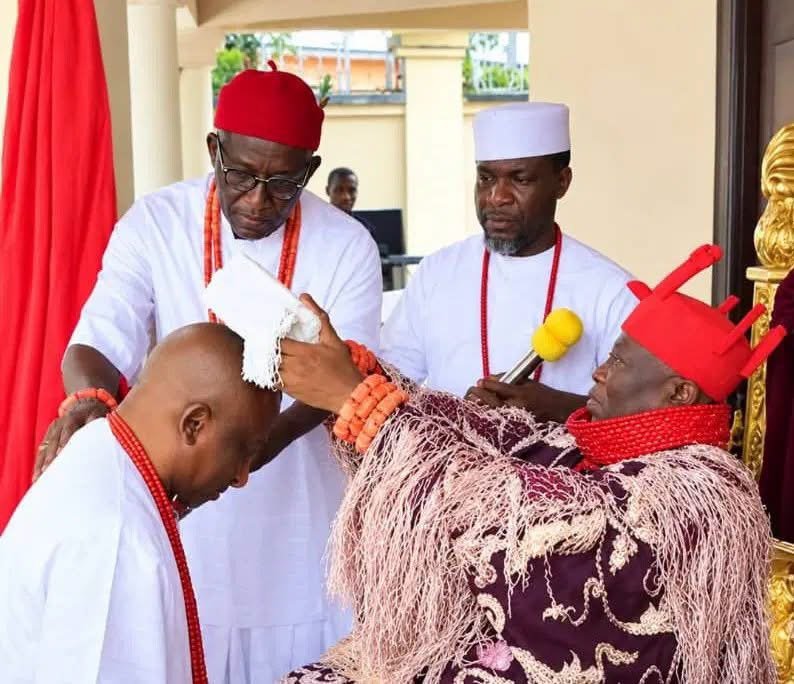
Nobel Laureate Prof. Wole Soyinka and other prominent Nigerians joined traditional rulers, community leaders and dignitaries in Asaba, Delta State, on Saturday, October 3, 2026, as the Asagba of Asaba, HRM Prof. Epiphany Azinge, SAN, conferred the traditional chieftaincy title of Olinzele of Asaba on renowned environmentalist and businessman Chief Newton Jibunoh.
The conferment formed part of activities marking the second coronation anniversary of the Asagba and represented the first chieftaincy title conferred by Prof. Azinge since he ascended the traditional throne in October 2024.
Jibunoh Receives Traditional Recognition
The ceremony brought together personalities from different parts of Nigeria and beyond to honour Jibunoh, popularly associated with his environmental advocacy and the “Desert Warrior” identity earned through his historic Sahara expeditions.
According to the Asagba, the decision to confer the title on Jibunoh was based on his contributions, values and connection with the cultural interests of Asaba.
Prof. Azinge explained that when he ascended the throne on October 5, 2024, he had initially stated that he would not confer chieftaincy titles until 2027. He said, however, that he decided to make an exception in Jibunoh’s case because he considered the honour necessary.
“I strongly believe you will add a lot of value and will enrich the tradition and customs of Asaba,” Azinge said, according to the report of the ceremony.
The monarch described the conferment as historic because it was his first since becoming Asagba. He also linked the occasion to the traditional history of the Asaba stool and his relationship with previous holders of the position.
Azinge recalled that he himself had received the title of Okilolo of Asaba from the late 13th Asagba, Prof. Chike Edozien, in 2011. He said conferring his first title on Jibunoh therefore gave him a sense of connection with his predecessors and ancestors.
Why Jibunoh Was Chosen
Jibunoh’s recognition comes after decades of involvement in environmental advocacy, cultural preservation, business and community development.
The renowned environmentalist is known for his campaigns against desertification and environmental degradation. His public profile has also been associated with the Fight Against Desert Encroachment (FADE) and the Nelson Mandela Gardens and Resort in Asaba.
Earlier in 2026, the Newton Jibunoh International Convention Centre was inaugurated at the Nelson Mandela Gardens and Resort in Asaba. Reporting on the centre described it as a facility intended to support conferences, cultural exhibitions, environmental discussions, policy engagement and other institutional activities.
Jibunoh has also been recognised for his contribution to cultural and heritage initiatives. In May 2026, the Tony Ndah Foundation handed over an ultramodern museum to the Asaba community as part of the new Asaba Palace complex. At that ceremony, the Asagba praised community members who had contributed to the development of Asaba.
The latest conferment therefore places Jibunoh’s traditional recognition within a broader record of environmental, cultural and community-related activities.
A Rare Honour for a Non-Indigene
One of the notable aspects of the ceremony was Jibunoh’s status as a person who is not originally from Asaba.
Prof. Azinge said chieftaincy titles are not ordinarily conferred on non-indigenes and described Jibunoh’s case as unusual.
The Asagba said the traditional process required consultation with and approval from the recipient’s home traditional ruler before a person from outside the kingdom could receive a title in Asaba.
According to Azinge, the required approval was obtained before the conferment proceeded.
That process is significant because it demonstrates that the conferment was not presented simply as a personal decision by the monarch but as one that followed the traditional requirements described by the Asagba.
Azinge also said only a small number of non-indigenes had previously received similar recognition in Asaba’s history, identifying former military ruler Gen. Ibrahim Badamasi Babangida and former Delta State Commissioner of Police Chief Aduba among previous recipients who remain alive.
Soyinka and Other Dignitaries Attend
The presence of Prof. Wole Soyinka added national and cultural significance to the ceremony.
Soyinka, a Nobel Prize-winning writer and one of Nigeria’s most internationally recognised intellectuals, was among the dignitaries who witnessed the conferment.
The Asagba welcomed Soyinka and the other guests, saying their attendance reflected the wider goodwill surrounding Jibunoh and the occasion.
Other personalities identified at the ceremony included HRM Abiodun Kola-Desi, Chief Ephraim Obor, Dele Atuba, Jahab Anikulapo, retired Brigadier-General Hamisu, Mohammed Aliyu Yakubu, Prince Salisu Ado Bayero, Sunny Irabor and Peter Igho.
Their participation reflected the mixture of traditional, cultural, professional and public figures associated with Jibunoh’s long career.
Jibunoh’s Environmental Legacy
The new traditional title also comes against the background of Jibunoh’s longstanding environmental advocacy.
Jibunoh became widely known for his Sahara Desert expeditions and his efforts to draw attention to desertification and environmental degradation in Africa.
His work has extended beyond environmental campaigning into cultural preservation and tourism. The Nelson Mandela Gardens in Asaba, for example, was developed as a site combining environmental, educational and cultural interests.
The project has previously been described as part of Jibunoh’s broader commitment to using public spaces to promote African heritage, environmental awareness and tourism. Earlier reports also noted his involvement with DIDI Museum and other cultural initiatives.
These activities have helped establish a public profile that extends beyond business and into environmental and cultural advocacy.
The Asagba’s Second Coronation Anniversary
The conferment was one of several events scheduled for the second coronation anniversary of Prof. Azinge.
The anniversary programme, which began on October 2 and is scheduled to continue through October 7, combines traditional ceremonies, community projects, religious activities, cultural events and remembrance activities.
Earlier details released by the anniversary committee included the commissioning of community projects, including a cemetery and primary school, as well as beautification projects and development around the permanent palace grounds.
The programme also includes the use of a new 1,000-capacity event centre being constructed at the permanent palace grounds.
The October 3 conferment therefore forms part of a wider anniversary programme intended to highlight developments within the traditional institution and community.
The celebrations are also scheduled to include a thanksgiving service, a formal anniversary reception and a cultural parade.
The programme is expected to culminate on October 7 with an Asaba Massacre Memorial Remembrance Day, an event planned to commemorate victims of the 1967 Asaba Massacre during the Nigerian Civil War. Former Head of State Olusegun Obasanjo was previously announced as expected chairman of that memorial event.
Traditional Institutions and Community Development
The conferment also highlights the continuing role of traditional institutions in recognising individuals who contribute to community life.
While traditional rulers do not exercise the same constitutional powers as elected governments, chieftaincy institutions continue to play important cultural and social roles in many Nigerian communities.
In Asaba, the current administration of the Asagba has linked traditional leadership with community projects, cultural preservation and broader participation in palace affairs.
Earlier in the year, the Asagba received a newly completed palace museum donated to the Asaba community by the Tony Ndah Foundation. The project was presented as a means of preserving local artefacts and strengthening links between Asaba residents at home and in the diaspora.
The anniversary programme similarly combines ceremonial activities with community infrastructure and heritage projects.
A Responsibility Alongside the Honour
The conferment of a chieftaincy title also comes with responsibilities within the traditional institution.
Prof. Azinge urged Jibunoh to uphold the values, principles, norms and responsibilities contained in the oaths he took during the ceremony.
The Asagba congratulated him and called on him to live up to the expectations attached to his new position.
For Jibunoh, the recognition adds another traditional title to a list of honours associated with his community and cultural activities. Earlier reporting identified him as Nna Obodo of Akwukwu-Igbo, a title conferred in January 2025 in recognition of his relationship with the community and his contributions.
His latest recognition by the Asaba traditional institution therefore represents another formal acknowledgement of his public activities.
Why the Conferment Matters
The Olinzele title places environmental advocacy, community service and traditional recognition within the same public conversation.
For Asaba, the ceremony demonstrates the traditional institution’s willingness to recognise contributions from beyond the community’s immediate indigenous population, subject to the traditional approval process outlined by the Asagba.
For Jibunoh, it adds a significant Asaba traditional honour to a public career spanning environmental advocacy, business, cultural preservation and community development.
The event also forms part of a broader anniversary programme through which the Asagba’s palace is presenting projects, cultural initiatives and historical remembrance as elements of its role in community life.
The participation of Soyinka and other nationally recognised figures further underscored the cultural and public profile of the occasion.
What Happens Next
The Asagba’s second coronation anniversary will continue with additional events in Asaba.
The programme includes a thanksgiving service, an official anniversary reception and a cultural parade before the scheduled Asaba Massacre Memorial Remembrance Day on October 7.
The memorial event is expected to bring together political leaders, traditional rulers and other stakeholders to reflect on the Asaba Massacre and its place in Nigeria’s history.
For Jibunoh, the immediate next stage will be his participation in the responsibilities associated with the Olinzele title and his continued involvement in environmental, cultural and community initiatives.
The October 3 ceremony thus marks both a personal milestone for the veteran environmentalist and an important event in the second-anniversary programme of the Asagba of Asaba.
Weng Global – stories beyond borders
Sources
- Vanguard
- The Pointer
- FrontPage Nigeria
- Newsmakers
- Newscrackers
- Asaba Massacre Memorial Monument