Reported by Weng Patrick Atokor | Journalist at Weng Global
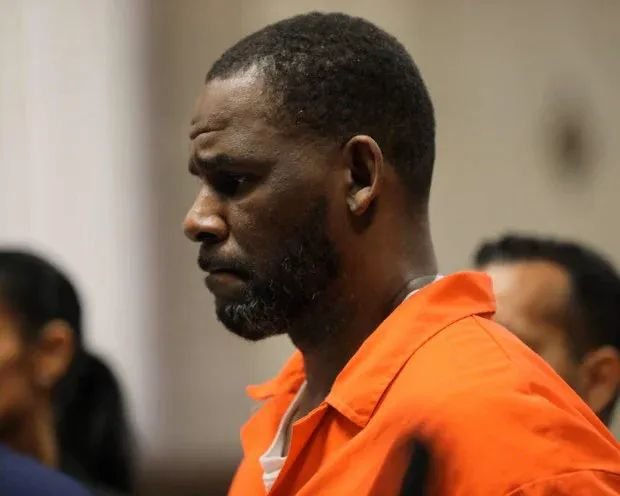
American R&B singer R. Kelly has formally appealed to United States President Donald Trump for executive clemency, seeking a reduction of the combined 31-year prison sentence he is currently serving following convictions for racketeering, sex trafficking, and child exploitation.
The clemency request marks the latest legal effort by the disgraced musician to overturn or lessen his punishment after multiple appeals through the U.S. judicial system failed to secure his release. Kelly’s legal team argues that his convictions were unfairly handled and insists that executive intervention is warranted.
The move has reignited debate across the United States over presidential pardon powers, justice for victims of sexual abuse, and whether convicted high-profile offenders should receive clemency.
Kelly’s Appeal to President Trump
According to court filings and statements released by his legal representatives, Kelly’s attorneys have formally petitioned President Trump to commute his sentence rather than grant a full pardon.
A commutation would reduce the length of Kelly’s prison term while leaving his criminal convictions intact. Unlike a pardon, which forgives a federal offense, a commutation simply lessens the punishment imposed by the court.
Kelly’s lawyers argue that the singer has already spent years behind bars and deserves reconsideration of what they describe as an excessive sentence. They also maintain that certain legal errors occurred during his prosecution and appeal process.
The White House has not publicly confirmed whether President Trump intends to consider or act upon the clemency application.
Background of the Convictions
R. Kelly, whose real name is Robert Sylvester Kelly, was once among the world’s most successful R&B performers, producing numerous chart-topping songs over a career spanning more than three decades.
His career collapsed following years of allegations involving sexual abuse of minors and vulnerable young women.
In 2021, a federal jury in New York found Kelly guilty of racketeering and multiple violations of the Mann Act for using his celebrity status to recruit and exploit victims for sexual purposes.
The following year, a federal court in Chicago convicted him on separate charges involving child pornography and enticing minors for sexual activity.
The combined sentences from both cases amount to approximately 31 years in federal prison.
Federal prosecutors described Kelly as the leader of a criminal enterprise that enabled decades of abuse through intimidation, manipulation, and financial control over victims.
Previous Appeals Unsuccessful
Kelly has repeatedly challenged both convictions through federal appeals courts.
His legal team argued that prosecutors improperly applied racketeering laws, relied on prejudicial testimony, and violated aspects of his constitutional rights during trial.
However, appellate courts upheld the convictions and sentences, concluding that sufficient evidence supported the jury’s verdict.
With judicial options becoming increasingly limited, the clemency petition represents one of the few remaining legal avenues available to the singer.
Supporters Call for Mercy
Supporters of Kelly argue that he has received an unusually harsh punishment and deserves compassionate consideration.
Some have pointed to his age, health concerns, and the amount of time already spent in custody as reasons for reducing his sentence.
His lawyers have also suggested that Kelly faces difficult prison conditions and continues to maintain his innocence regarding several allegations.
While these arguments form the basis of the clemency request, they have not altered the legal findings reached by multiple federal courts.
Victims’ Advocates Oppose Clemency
Organizations representing survivors of sexual abuse have strongly criticized any suggestion that Kelly’s sentence should be reduced.
Victims’ advocates argue that the convictions followed years of extensive investigations, testimony from numerous survivors, and careful judicial review.
Several women who testified during Kelly’s trials described years of emotional, psychological, and sexual abuse, allegations that juries found credible after hearing weeks of evidence.
Advocates warn that reducing Kelly’s sentence could undermine confidence in the justice system and discourage victims of abuse from coming forward.
Presidential Clemency Powers
Under the U.S. Constitution, the president has broad authority to grant pardons and commute sentences for federal crimes.
This power has historically been used to correct perceived injustices, show mercy in exceptional cases, or recognize rehabilitation.
However, clemency decisions involving serious violent or sexual offenses often attract intense public scrutiny because of their impact on victims and public confidence in the justice system.
A commutation would not erase Kelly’s convictions or restore his criminal record. It would only reduce the amount of time he is required to remain in federal prison.
Public Reaction
News of Kelly’s clemency request has generated widespread discussion across social media and legal circles.
Some supporters believe every inmate deserves the opportunity to seek mercy through constitutional processes.
Others insist that Kelly’s convictions involved extensive evidence and multiple victims, making executive clemency inappropriate.
Legal analysts note that presidential clemency remains entirely discretionary, meaning there is no obligation for the White House to act on the petition.
What’s Next?
The White House has not announced any timetable for reviewing Kelly’s application.
If President Trump decides to consider the request, legal advisers within the administration may examine the court record, sentencing history, recommendations from the Department of Justice, and submissions from victims before any decision is made.
Kelly will remain incarcerated unless his sentence is commuted or another court grants relief.
For now, the singer’s request places one of America’s most controversial criminal cases back into the national spotlight, raising fresh questions about executive clemency, accountability, and justice for survivors of sexual abuse.
Whether President Trump ultimately grants or rejects the petition, the decision is likely to attract significant public and legal attention due to the high-profile nature of Kelly’s convictions and the broader debate surrounding the use of presidential clemency powers.
Sources
- Associated Press (AP)
- Reuters
- CNN
- BBC News
- U.S. Department of Justice