Reported Simon Daniel Yusuph l journalist at wengglobal
Civil society organisations have called for a thorough and transparent investigation into allegations of inflammatory remarks attributed to Senator Francis Fadahunsi during the build-up to the 2026 Osun State governorship election, saying political office holders must be held accountable if credible evidence establishes that their words encouraged violence.
The demand, made after the August 15 governorship election, has added a new dimension to the post-election debate in Osun, where political tensions, allegations of intimidation and incidents of violence had featured prominently during the campaign period.
ActionAid Nigeria and The Abuja School of Social and Political Thought made the call at a joint press conference in Abuja on Monday, where they assessed the conduct of the election and its implications for Nigeria’s democratic development ahead of the 2027 general elections.
The groups, led at the briefing by ActionAid Nigeria Country Director Dr Andrew Mamedu and Director of The Abuja School of Social and Political Thought Dr Sam Amadi, also commended Osun voters for participating in the election and praised the Independent National Electoral Commission (INEC) for aspects of the electoral process.
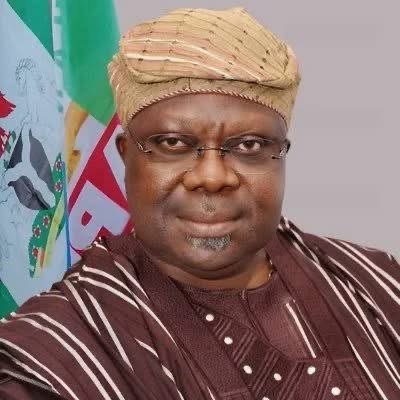
Their intervention, however, centred on allegations concerning Senator Fadahunsi, who represents Osun East in the National Assembly and is a prominent political figure in the state.
The organisations stressed that the allegations should not be treated as established fact without proper investigation. Rather, they urged law-enforcement authorities to independently establish what was said, the circumstances in which it was said, its intended meaning and whether it amounted to an offence under Nigerian law.
CSOs Seek Independent Investigation
According to the civil society organisations, a video circulating ahead of the election allegedly showed Fadahunsi making comments in Yoruba that were interpreted as encouraging supporters to attack members of the Accord Party, including voters.
Vanguard reported that the groups specifically called on the Nigeria Police Force to investigate the allegations thoroughly and take appropriate legal action if credible evidence establishes that an offence was committed.
The organisations said the matter should not end merely because the senator had reportedly been interviewed by the police.
They argued that a formal investigation should establish the facts and determine whether the comments violated any applicable law.
This distinction is important in maintaining due process. An allegation, even one involving a public figure, does not constitute proof of criminal wrongdoing. Any eventual prosecution would require evidence capable of establishing an offence before a competent court.
The CSOs nevertheless argued that allegations involving political violence should receive serious attention because statements made by influential political actors can have consequences in an already tense electoral environment.
They also called on the Inspector-General of Police to ensure that any investigation is conducted professionally, transparently and without political interference.
Fadahunsi Denies Inciting Violence
The controversy has also generated a response from Senator Fadahunsi.
Premium Times reported that the senator denied inciting violence and said he had been wrongly interpreted. The newspaper, however, said its own review of the circulated video found that he did urge supporters to attack opponents.
That conflicting interpretation makes an independent investigation particularly important.
Rather than allowing competing political narratives to determine the meaning of the statement, investigators would be expected to establish the full context, including the original language, the circumstances surrounding the remarks and whether the statement meets the legal threshold for incitement or another offence.
The Save Democracy Group, a group of serving members of the House of Representatives, has separately called for investigation of the same allegations.
Premium Times reported that the lawmakers urged the Inspector-General of Police, the Department of State Services, the National Human Rights Commission and other relevant authorities to examine the senator’s remarks.
The group said that if evidence establishes that an offence occurred, Fadahunsi should face prosecution in accordance with the law.
Election Violence Remains a Major Concern
The call for an investigation comes against the background of wider concerns about political violence in Osun.
The 2026 governorship election was preceded by allegations of killings, attacks, intimidation and politically motivated violence involving supporters of rival political parties.
The Save Democracy Group said the Nigeria Police Force had reported investigating 30 cases of suspected politically motivated killings linked to the build-up to the election.
It further cited civil society documentation of 56 politically related violent incidents and 14 fatalities before the poll.
The figures, if independently established, underline the scale of the security concerns surrounding the election.
One of the incidents cited by the lawmakers occurred in Esa-Oke on August 13, two days before the election, where one person was reportedly killed and another injured in a shooting. The incident was said to have been confirmed by the police.
For civil society organisations, the significance of these incidents extends beyond the immediate election.
They argue that failure to investigate political violence creates an environment in which perpetrators may believe they can act without consequences.
‘Impunity’ and the Cost of Electoral Violence
ActionAid Nigeria and The Abuja School of Social and Political Thought said the alleged comments attributed to Fadahunsi should be viewed within the broader challenge of impunity surrounding electoral offences.
They argued that when threats, intimidation and violence are not investigated or prosecuted, political actors may be encouraged to deploy similar tactics in future elections.
The organisations said allegations of threats against citizens because of their political affiliations should be handled under the relevant laws and through due process.
Their position reflects a wider concern about Nigeria’s electoral environment, where political competition can sometimes become associated with violence, particularly during high-stakes contests.
The challenge is not limited to one party.
The CSOs explicitly cautioned against focusing only on Fadahunsi, saying inflammatory rhetoric and attempts to restrict political participation have occurred across political parties.
They therefore called for consistent enforcement of the law regardless of the identity or political affiliation of the person involved.
A Broader Test for Democratic Accountability
The controversy presents an important test of Nigeria’s commitment to electoral accountability.
Political office holders enjoy constitutional rights to freedom of expression and political participation, just as ordinary citizens do. Those rights, however, operate within the boundaries of the law.
The key issue for investigators is therefore whether the words attributed to Fadahunsi crossed that boundary.
A transparent investigation could help resolve the competing interpretations surrounding the video and prevent the controversy from becoming another unresolved political dispute.
If investigators find no criminal wrongdoing, such a finding would also be important because it would prevent an unproven allegation from permanently defining the reputation of a public official.
If, on the other hand, investigators establish that an offence occurred, prosecution would demonstrate that political influence does not place anyone beyond the reach of the law.
That is the principle the CSOs are seeking to reinforce.
Fadahunsi’s Political Profile
Fadahunsi is a prominent figure in Osun politics and has represented Osun East in the Senate.
The National Assembly’s official profile identifies him as the senator for Osun East and records his membership of the Peoples Democratic Party at the time of the profile’s publication.
His political role has extended beyond the immediate 2026 governorship contest.
Before the election, Fadahunsi was active in discussions about the political direction of Osun and had publicly expressed confidence in the APC’s ability to win the governorship.
In February 2026, The PUNCH reported that Fadahunsi declared that the APC was prepared to defeat Governor Ademola Adeleke, saying the party was strengthening its influence across communities through voter sensitisation.
His subsequent political transition is also significant. In May 2026, The PUNCH reported that Fadahunsi won the APC’s senatorial ticket for Osun East ahead of the 2027 general elections after previously serving as a PDP senator.
That political prominence helps explain why statements attributed to him have attracted considerable attention from civil society groups and other political stakeholders.
Election Outcome and the Post-Poll Debate
The investigation demand comes immediately after Osun voters participated in the governorship election scheduled by INEC for August 15, 2026.
INEC’s official website confirms the August 15 date for the Osun governorship election and identifies the commission’s constitutional responsibility to organise elections in Nigeria.
The election itself was conducted amid intense competition between Governor Ademola Adeleke and APC candidate Munirudeen Bola Oyebamiji, alongside other candidates.
Before the poll, INEC had publicly assured stakeholders that the result would reflect the will of the people and that the election would comply with the Constitution and Electoral Act.
The post-election period has therefore shifted attention from campaigning to accountability.
For civil society organisations, the credibility of an election cannot be measured only by the declaration of a winner. It also depends on whether violations, threats and incidents of violence associated with the electoral process are properly documented and addressed.
Why the Investigation Matters Ahead of 2027
The demand is also significant because Nigeria is already moving toward the 2027 general elections.
Lessons from Osun will likely influence preparations for the next nationwide electoral cycle.
The ActionAid-led coalition urged political parties, security agencies, civil society organisations and other stakeholders to work together to promote a peaceful electoral environment.
The groups warned that the rights to freedom of movement, association, expression and political participation must be protected irrespective of political affiliation.
This is particularly important in a country where voter apathy remains a concern.
The CSOs noted that although participation in Osun was encouraging, about one million registered voters who had collected their Permanent Voter Cards did not cast ballots.
They suggested that fear generated by violence and inflammatory political rhetoric could be among the factors discouraging citizens from participating in elections.
If citizens believe voting exposes them to threats or violence, democratic participation suffers.
Security Agencies Under Pressure
The calls also place renewed responsibility on security agencies.
The Inspector-General of Police and other relevant authorities are being asked not merely to interview political figures but to investigate allegations comprehensively and, where appropriate, pursue prosecution.
The Save Democracy Group also called for every death linked to the Osun election to be investigated and for perpetrators to be prosecuted regardless of political affiliation or status.
Such a process would require evidence gathering, witness interviews, digital and video analysis, identification of suspects and, where necessary, presentation of evidence before the courts.
The objective should not be political punishment but accountability under the law.
Wengglobal Perspective
The demand by civil society organisations for an investigation into Senator Francis Fadahunsi highlights a central challenge facing Nigeria’s democracy: ensuring that political competition does not become a justification for threats, intimidation or violence.
At the same time, responsible journalism requires that allegations against public officials remain allegations until competent authorities establish the facts.
The appropriate response to the controversy is therefore neither automatic condemnation nor dismissal of the claims on political grounds.
It is investigation.
The authorities should establish what was said, whether the circulating footage is authentic and complete, the context in which the statement was made, whether it was directed at a specific group, and whether it breached Nigerian law.
Fadahunsi’s denial should be considered alongside the available evidence, just as the accusations against him should be tested rather than accepted as proven.
The broader issue is bigger than one senator or one election.
If Nigeria is serious about strengthening electoral democracy ahead of 2027, political violence must carry consequences regardless of who is responsible.
That principle must apply equally to ruling parties, opposition parties, elected officials, candidates, political supporters and influential individuals.
The Osun election therefore offers an opportunity for institutions to demonstrate that democratic competition can coexist with accountability.
A transparent investigation, conducted without political interference and based on evidence, would help establish the facts surrounding the allegations against Fadahunsi.
It would also send an important message to political actors across Nigeria: political influence does not remove the obligation to respect the law, while allegations of wrongdoing should be resolved through credible institutions rather than partisan narratives.
For wengglobal, that balance remains essential.
The ultimate measure of the Osun election will not only be who won the ballot. It will also be whether Nigeria’s institutions can protect citizens’ right to participate freely, investigate electoral offences impartially and ensure that those found responsible are held accountable through due process.
As the country looks toward 2027, the handling of the Fadahunsi allegations could become an important indicator of whether Nigeria is prepared to move beyond the culture of electoral impunity and build a political system in which competition is fierce, but democratic rights remain protected.
Sources
- Vanguard — “Osun Election: CSOs demand thorough investigation of Senator Fadahunsi”
- Premium Times — “Lawmakers demand probe into Osun election violence, security deployment”
- The PUNCH — “Osun poll: CSOs, lawmakers demand violence probe, campaign funds audit”
- Independent National Electoral Commission (INEC)
- The PUNCH — “APC ready for 2026 gov election, Senator declares”
- The PUNCH — “Incumbent senator loses Osun APC senatorial ticket”
Tags: Osun Election 2026, Senator Francis Fadahunsi, Osun Political Violence, CSOs Nigeria, Electoral Accountability Nigeria
Meta Description: