Reported by Simon yusuph,| Journalist at wengglobal
As political activities intensify ahead of the 2026 Osun State governorship election, Governor Ademola Adeleke has drawn national attention by incorporating music from his nephew, Nigerian Afrobeats superstar Davido, into his campaign messaging. The move, centered around Davido’s “Oriadé” tracks, has generated widespread discussion across political and entertainment circles while reinforcing the governor’s efforts to connect with younger voters and supporters through popular culture.
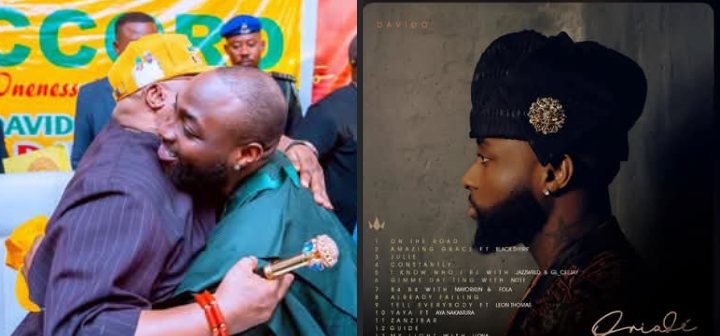
Speaking during campaign engagements, Governor Adeleke confidently declared, “I know who I be,” a phrase that echoed the confidence and celebratory tone associated with Davido’s music. The governor used the moment to dismiss criticisms from political opponents while emphasizing what he described as his administration’s record of governance, infrastructure development, social welfare initiatives, and public service reforms.
The campaign strategy reflects a growing trend in Nigerian politics, where music, celebrity influence, and digital engagement increasingly intersect with electoral campaigns. By referencing one of Nigeria’s biggest music exports, Adeleke seeks to strengthen his appeal among the state’s youthful demographic while reinforcing the close relationship between politics, culture, and entertainment.
Music and Politics Converge
Music has long played an influential role in African politics, serving as a powerful medium for mobilization, identity, and public engagement. In Nigeria, campaign songs have historically helped candidates communicate messages beyond conventional political speeches.
Governor Adeleke’s latest campaign appearance continued that tradition, with supporters singing along to Davido’s “Oriadé” tracks during rallies. The songs created an energetic atmosphere as party loyalists celebrated the administration’s achievements and expressed confidence ahead of the next governorship election.
Political analysts note that the governor’s use of popular music reflects an understanding of changing campaign dynamics in the digital era. Viral content, social media engagement, and celebrity endorsements now shape public conversations as much as traditional campaign rallies.
Davido, whose global profile continues to grow through international collaborations and chart success, remains one of Nigeria’s most influential entertainers. His connection to Governor Adeleke as a family member has frequently attracted public attention during previous elections and major political events.
Adeleke Defends His Record in Office
Beyond the symbolism of the music, Governor Adeleke used the campaign event to focus on governance. He maintained that his administration has fulfilled numerous campaign promises since assuming office, pointing to investments in infrastructure, education, healthcare, workers’ welfare, and rural development.
According to the governor, the administration remains committed to delivering people-centered policies despite criticism from opposition parties. He argued that measurable projects executed across various communities demonstrate his government’s commitment to improving living standards throughout Osun State.
Supporters at the event applauded the administration’s efforts, insisting that ongoing development projects justify another term in office. They described the governor as accessible and responsive to public concerns while praising initiatives aimed at strengthening education, transportation, and local economic development.
The governor also urged residents to evaluate political candidates based on performance rather than rhetoric, insisting that accountability and visible achievements should remain central issues during the forthcoming election campaign.
Opposition Criticism Continues
As expected, opposition parties have challenged the governor’s claims, arguing that several campaign promises remain unfulfilled and questioning aspects of the administration’s performance.
Political rivals have also criticized what they describe as the growing personalization of political campaigns through celebrity influence. Some contend that governance should remain the dominant issue rather than entertainment.
However, supporters of the governor reject those criticisms, arguing that music merely serves as a communication tool while the administration’s performance remains the principal basis for seeking re-election.
Observers note that campaign narratives are likely to intensify as political parties formally unveil their candidates and manifestos ahead of the election.
Celebrity Influence in Nigerian Elections
Celebrity participation in politics has become increasingly visible across Nigeria over the past decade. Musicians, actors, comedians, and digital influencers frequently participate in voter education campaigns, political endorsements, and civic engagement initiatives.
Davido has previously appeared at political gatherings involving Governor Adeleke and other members of the Adeleke political family. His appearances often attract substantial media coverage and significant online engagement due to his enormous fan base across Africa and the global diaspora.
Political communication experts suggest that celebrity involvement can increase campaign visibility, particularly among first-time voters and young Nigerians who consume political information through social media platforms.
Nevertheless, analysts caution that celebrity endorsements rarely determine election outcomes on their own. Factors such as governance performance, economic conditions, party structures, grassroots mobilization, and voter turnout continue to play more decisive roles.
Youth Engagement and Digital Campaigns
Nigeria possesses one of Africa’s youngest populations, making youth participation a critical factor in electoral politics. Campaigns increasingly rely on digital platforms including X, Facebook, Instagram, TikTok, and YouTube to reach voters.
Governor Adeleke’s campaign has embraced these platforms by sharing videos of rallies, policy achievements, and campaign messages that resonate with digitally connected audiences. The incorporation of Davido’s music further enhances online engagement, as supporters frequently create and share campaign-related content.
Political analysts believe such strategies help campaigns remain relevant in an increasingly competitive information environment where public attention is fragmented across multiple digital channels.
Looking Ahead to Osun’s Political Future
Although electioneering activities continue to gather momentum, the coming months are expected to feature increased scrutiny of all political parties and candidates. Voters are likely to assess competing visions for economic growth, infrastructure expansion, education, healthcare, security, agriculture, and employment.
Governor Adeleke’s campaign has positioned continuity as its central message, arguing that ongoing projects require sustained leadership to reach completion. Opposition parties, meanwhile, are expected to focus on presenting alternative policy proposals and highlighting perceived shortcomings of the current administration.
For many observers, the use of Davido’s “Oriadé” tracks represents more than a campaign soundtrack. It illustrates how modern African politics increasingly blends governance, youth culture, digital engagement, and entertainment to communicate political messages.
Ultimately, however, political analysts emphasize that campaign slogans, celebrity appearances, and musical performances are unlikely to outweigh voters’ assessment of governance, service delivery, and policy outcomes. As Osun State prepares for another important electoral contest, the electorate is expected to determine whether the incumbent’s record justifies another mandate.
Sources
- Premium Times
- The Punch
- Vanguard Nigeria
- Channels Television
- TheCable
- Daily Trust