Reported by Weng Patrick Atokor | Journalist at Weng Global
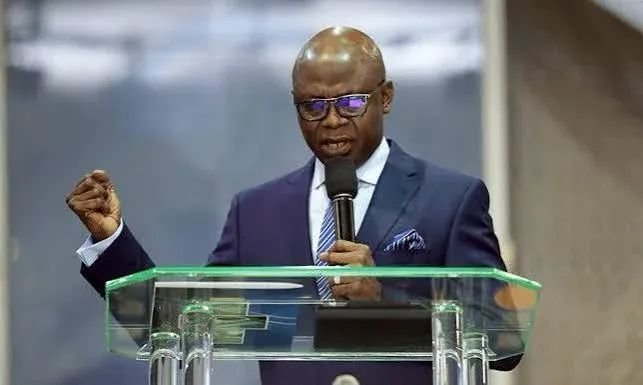
Nigeria’s quest for sustainable development will remain elusive unless the country embraces leadership continuity, institutional strength, and long-term national planning, the Serving Overseer of the Citadel Global Community Church, Pastor Tunde Bakare, has said.
Speaking during a public engagement on governance and national development, Bakare stressed that frequent policy reversals and the abandonment of projects initiated by previous administrations have significantly slowed Nigeria’s progress over the decades.
According to the cleric, meaningful transformation cannot be achieved when successive governments focus on replacing rather than improving the policies of their predecessors. He argued that national development should transcend political interests and remain anchored on a shared vision that survives changes in government.
Bakare noted that countries that have experienced remarkable economic growth did so because they maintained consistency in governance, strengthened democratic institutions, and ensured that development plans extended beyond individual administrations.
He explained that Nigeria possesses enormous human and natural resources capable of driving economic prosperity but said the country’s leadership culture has prevented those resources from being fully harnessed.
“The future of Nigeria depends on leaders who think beyond election cycles and commit themselves to building institutions that outlive individuals,” Bakare said.
Leadership Beyond Politics
The senior pastor maintained that political office should not be viewed as an opportunity for personal ambition but as a platform for national service.
He urged elected officials to prioritize policies that improve education, healthcare, infrastructure, security, agriculture, and economic opportunities rather than pursuing short-term political gains.
Bakare argued that continuity in governance does not necessarily mean the same political party must remain in power. Instead, he said governments should preserve policies and projects that serve the national interest regardless of which administration initiated them.
According to him, nations that consistently review and discard previous development plans struggle to achieve sustained economic growth because valuable time and resources are lost restarting abandoned programmes.
He called for a national consensus on critical sectors that should remain insulated from partisan politics.
Strong Institutions Over Strong Individuals
Bakare emphasized that Nigeria’s democratic future depends more on the strength of its institutions than on the personalities occupying public office.
He urged leaders to empower public institutions through transparency, accountability, and adherence to the rule of law.
According to him, stable institutions create confidence among investors, encourage economic growth, and improve public trust in government.
He also stressed the need for judicial independence, efficient public service, and stronger anti-corruption mechanisms to promote good governance.
The cleric warned that without institutional reforms, even visionary leaders could struggle to achieve lasting national transformation.
Call for Long-Term National Planning
Bakare advocated for a development strategy extending beyond four-year electoral cycles.
He recommended the adoption of long-term economic and infrastructure plans that remain legally protected irrespective of changes in political leadership.
Such continuity, he argued, would accelerate industrialisation, attract foreign investment, improve infrastructure delivery, and create employment opportunities for millions of Nigerians.
He also encouraged greater collaboration between the federal, state, and local governments to ensure coordinated implementation of development programmes.
Youth and Civic Responsibility
Addressing Nigeria’s growing youth population, Bakare urged young people to actively participate in governance and democratic processes.
He encouraged citizens to hold public officials accountable while supporting policies designed to strengthen national institutions.
According to him, sustainable nation-building requires responsible leadership and active citizenship working together toward common national objectives.
He further appealed to civil society organisations, religious institutions, and the private sector to contribute meaningfully to policy advocacy and national development.
Building a Better Nigeria
Bakare concluded that Nigeria’s future remains promising if leaders embrace continuity, integrity, and institutional reforms.
He expressed optimism that the country can overcome longstanding governance challenges by placing national interest above partisan politics and ensuring that worthwhile policies are preserved across administrations.
Political analysts have repeatedly argued that inconsistent policy implementation has contributed to delays in infrastructure projects, reduced investor confidence, and slower economic growth. Development experts also maintain that strengthening institutions and maintaining policy consistency are essential ingredients for sustainable national development.
As Nigeria continues to confront economic, security, and governance challenges, Bakare’s remarks add to ongoing discussions about how leadership continuity and institutional reforms can shape the country’s long-term future.
His message reinforces the belief that lasting progress is not built on individual administrations alone but on enduring institutions, consistent policies, and a collective commitment to national development.
Sources: Punch Newspapers, The Guardian Nigeria, Channels Television.